Halloween
October 31, 2025

Halloween, observed on October 31, is a tapestry woven from ancient Celtic rituals, medieval Christian observances, and modern popular culture. Its origins trace back to the Gaelic festival of Samhain, marking the end of the harvest and the onset of winter in what is now Ireland, Scotland, and parts of Britain. Celts believed that on the night before their new year, the boundary between the worlds of the living and the dead grew thin, allowing spirits to return. People lit bonfires, wore animal skins as disguises, and left food offerings to appease wandering souls.
As Christianity spread, the church established All Saints’ Day on November 1 and All Souls’ Day on November 2 to honor the departed. The evening before became known as All Hallows’ Eve—eventually shortened to Halloween. Over time, old and new traditions merged. In medieval Britain, “souling” involved going door to door offering prayers for the dead in exchange for food, while mummers performed in costume. Immigrants from Ireland and Scotland carried these customs to North America in the 19th century, where Halloween gradually evolved into a community celebration filled with parades, games, and parties.
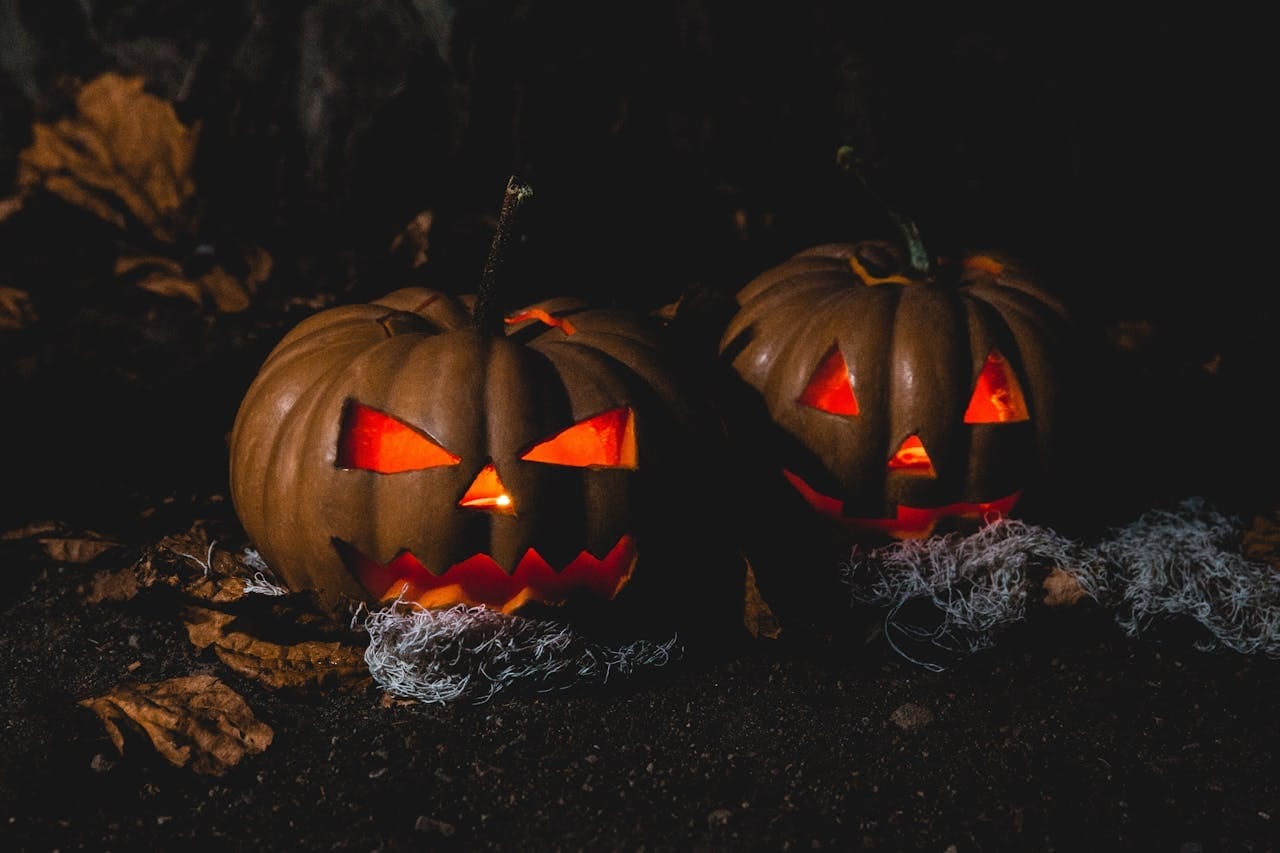
By the early 20th century, civic leaders sought to make Halloween more neighborly and family-friendly, replacing mischief and pranks with costumes, games, and gatherings. Trick-or-treating rose to popularity after World War II, when sugar rationing ended and candy once again flowed freely. Meanwhile, the jack-o’-lantern—originally carved from turnips and beets—found its perfect American form in the pumpkin, abundant and easy to carve. The legend of Stingy Jack, a trickster doomed to wander the earth with a glowing lantern, helped shape the custom of placing lit pumpkins on doorsteps to ward off spirits.
As decades passed, Halloween grew into a national celebration and economic powerhouse. Today, it’s a multi-billion-dollar industry featuring haunted houses, horror films, elaborate costumes, and yard displays that transform neighborhoods into playful spectacles. Yet at its heart, the holiday remains an invitation to revel in mystery and imagination—a night when ordinary rules loosen and creativity reigns.
Beyond candy and costumes, Halloween still carries echoes of its deeper themes: death and renewal, light and darkness, fear and play. It offers a safe space to explore mortality and the unknown through ghost stories, scary movies, and make-believe. For many, the holiday fosters a sense of community as neighbors open their doors to trick-or-treaters and share laughter and sweets under flickering porch lights.
In recent years, some have sought to reconnect Halloween with its spiritual roots through Samhain-inspired practices—setting an extra place at the table for ancestors, lighting candles for departed loved ones, or writing messages to those who have passed. Others express themselves through costume-making, creative makeup, or transforming their homes into works of seasonal art. Halloween endures because it unites mischief, memory, and creativity in equal measure.
Halloween is more than a night of costumes and candy; it’s a reflection of humanity’s relationship with the cycles of life and nature. It reminds us that joy and fear can coexist—that by confronting darkness with laughter, we find renewal. Whether celebrated with quiet remembrance or boisterous revelry, Halloween invites us to embrace imagination, community, and the eternal dance between life and death.
