National Hot Pastrami Sandwich Day
January 14, 2027

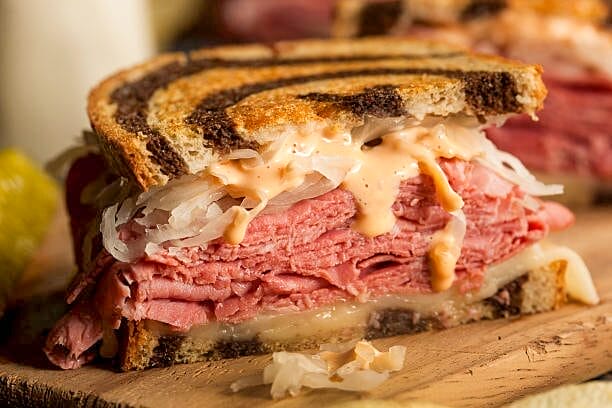
Hot pastrami sandwiches are inseparable from the history of New York City and the immigrant communities that shaped its food culture. Pastrami itself traces back to Eastern Europe, particularly Romania, where Jewish communities developed methods of curing and smoking meat as a way to preserve it before refrigeration. The original version was often made from goose or mutton, cured with salt and spices, then smoked to extend its shelf life and intensify flavor.
In the late nineteenth century, waves of Jewish immigrants arrived in the United States, settling in dense neighborhoods like Manhattan’s Lower East Side. They brought their food traditions with them, adapting old recipes to new circumstances. Beef brisket, plentiful and relatively affordable in America, became the preferred cut for pastrami. Immigrant butchers refined the process, brining brisket for days in a mixture of salt, sugar, garlic, coriander, and black pepper, then smoking it and finishing it with steaming to achieve its signature tenderness.
As Jewish delicatessens began to open across New York, pastrami emerged as a centerpiece. Delis were more than places to eat. They were community hubs where immigrants gathered to speak their language, read newspapers, debate politics, and maintain a sense of identity in a new country. The hot pastrami sandwich became both sustenance and symbol, representing resourcefulness, craftsmanship, and cultural continuity.
The enduring appeal of a hot pastrami sandwich lies in its balance of technique and indulgence. Proper pastrami is not rushed. The curing process penetrates the meat slowly, seasoning it throughout. Smoking adds depth and aroma, while steaming renders the brisket tender enough to pull apart with minimal resistance. When sliced thick and served warm, the meat releases juices and spice oils that define the experience.
Traditionally, the sandwich is simple by design. Thick slices of pastrami are piled high on seeded rye bread and finished with mustard. The rye offers chew and subtle bitterness that offsets the richness of the meat. Mustard cuts through the fat with acidity and heat. A pickle on the side refreshes the palate. Nothing is extraneous, and nothing is missing.
Institutions like Katz’s Delicatessen, founded in 1888, helped cement the pastrami sandwich as an icon. Generations of diners have stood in line, watched meat carved by hand, and received towering sandwiches wrapped in paper. The ritual matters as much as the food. Ordering pastrami on rye is an act of participation in a shared tradition that spans more than a century.
Over time, variations developed without eclipsing the classic. The Reuben added Swiss cheese, sauerkraut, and Russian dressing, creating a richer, layered version. Other delis incorporated coleslaw or served pastrami with eggs at breakfast. Yet even with these adaptations, the heart of the dish remains unchanged. It is still about carefully prepared meat, served hot, meant to be eaten with both hands and full attention.
National Hot Pastrami Sandwich Day on January 14 is an invitation to slow down and appreciate one of America’s great immigrant foods. Celebrating does not require a trip to New York, though visiting a traditional deli is a memorable way to honor the day. Many cities now have Jewish delis or specialty butchers who prepare pastrami using time honored methods.
At home, the key is respect for the meat. High quality pastrami should be warmed gently, ideally by steaming, so the fat softens and the spices bloom without drying out the slices. Rye bread should be lightly toasted or warmed, never crisp to the point of shattering. Mustard should be assertive but not overpowering. The goal is harmony, not excess.
For those who enjoy cooking projects, making pastrami from scratch can be a rewarding undertaking. It involves curing brisket over several days, applying a spice crust, smoking slowly, and steaming before slicing. The process offers insight into the patience and skill that earlier generations relied on to transform tough cuts into deeply satisfying food.
National Hot Pastrami Sandwich Day is also a moment to reflect on the broader story behind the sandwich. It represents migration, adaptation, and the way food carries memory across borders. Every bite connects the present to the crowded streets of early twentieth century New York, to family owned delis, and to communal tables where stories were shared alongside meals. When you lift a hot pastrami sandwich and feel its weight in your hands, you are holding more than lunch. You are holding a living piece of cultural history.
