National Peanut Brittle Day
January 26, 2030

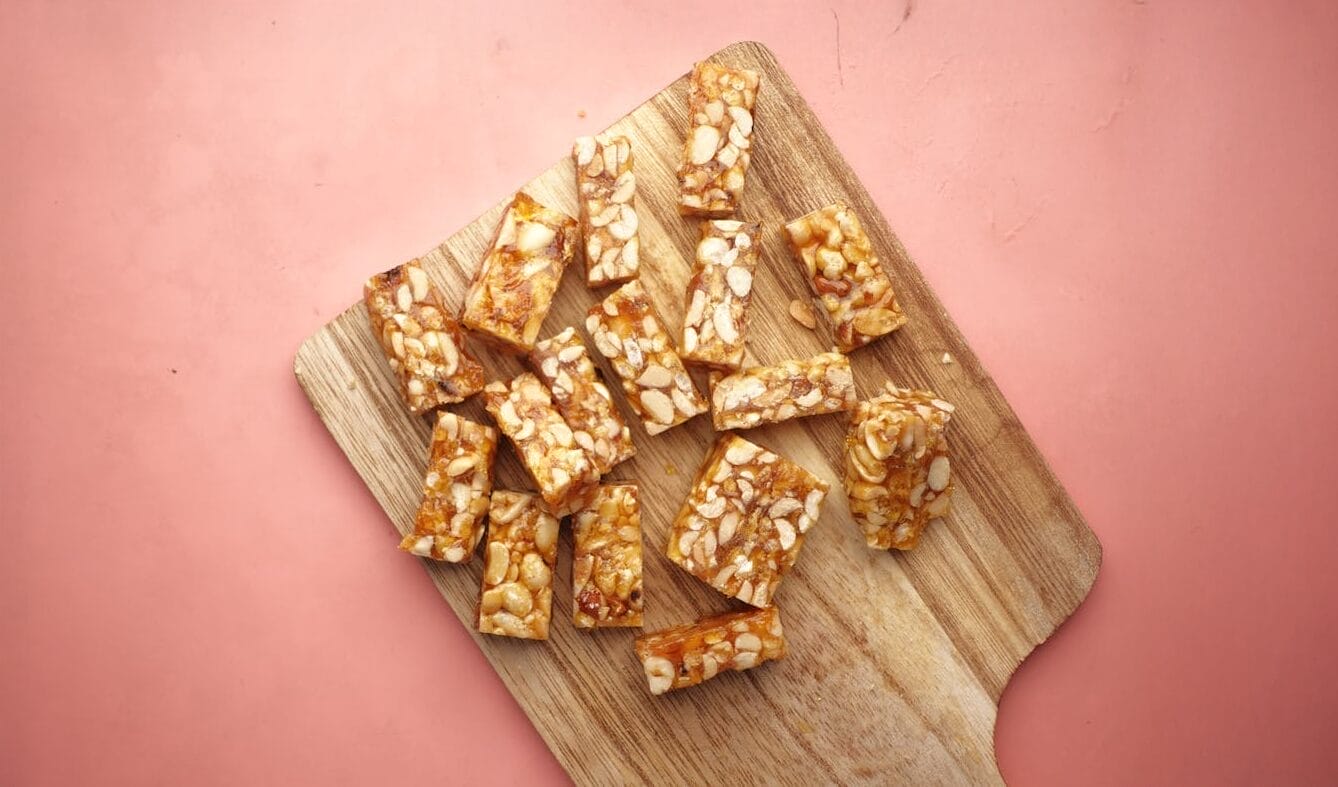
Peanut brittle is one of those candies that feels both rustic and precise, the result of simple ingredients transformed by careful timing and heat. Its exact origin is difficult to pin down, but most food historians agree that peanut brittle emerged in the United States during the late 19th century, when sugar, peanuts and basic candy making techniques became widely accessible to home cooks. Peanuts themselves were well established in American agriculture by this time, particularly in the South, where they were grown as a reliable, affordable crop.
One popular origin story credits a Southern cook who accidentally added baking soda to a batch of boiled sugar meant for taffy. The chemical reaction caused the mixture to foam and harden into a lighter, more brittle candy. Whether or not the story is true, it captures the spirit of early candy making, which often relied on trial, error and improvisation. Another theory suggests that brittle evolved from earlier nut toffees, as confectioners experimented with adding peanuts to caramelized sugar for flavor and texture.
What is certain is that by the 1890s, recipes for peanut brittle were appearing in American cookbooks and newspapers. These early versions closely resemble the candy we know today, calling for sugar or corn syrup cooked to a deep amber color, peanuts stirred in near the end, and baking soda added just before pouring. The baking soda is key. When it reacts with the hot sugar, it releases carbon dioxide, creating tiny bubbles that give brittle its characteristic lightness and snap.
By the early 20th century, peanut brittle had become a common homemade treat, especially around the holidays. It required no specialized equipment beyond a sturdy pot and a watchful eye, and it could be made in large batches to share. In an era before mass produced candy was widely available, brittle offered an affordable way to create something indulgent from pantry staples.
Despite its humble ingredients, peanut brittle is a candy that demands attention. Sugar work leaves little room for distraction, and the window between perfectly caramelized and burnt is narrow. Traditional recipes combine sugar and corn syrup, which helps prevent crystallization, and heat the mixture until it reaches the hard crack stage, around 300 degrees Fahrenheit. At this point, the sugar has developed deep caramel notes and will harden quickly as it cools.
Butter and vanilla are often added for richness and aroma, followed by roasted peanuts. The choice of peanut matters. Many cooks prefer dry roasted or lightly salted peanuts, which add depth and balance to the sweetness of the sugar. The nuts must be stirred in quickly and evenly so they are fully coated before the mixture sets.
The final and most dramatic step is the addition of baking soda. When stirred into the hot sugar, it causes the mixture to foam and lighten almost instantly. This aeration is what makes brittle easier to bite and gives it that satisfying snap instead of a tooth breaking hardness. Once the baking soda is incorporated, the candy must be poured immediately onto a greased surface or silicone mat and spread thin before it cools.
As the brittle hardens, it becomes glossy and glass like. Once cool, it is broken into irregular shards by hand, a process that feels almost ceremonial. The sound of brittle cracking is part of its appeal, signaling that the candy has set properly. Well made peanut brittle should shatter cleanly, with visible peanuts suspended throughout the caramel.
Modern variations play with this foundation. Some recipes add sea salt for contrast, while others incorporate spices like cayenne, cinnamon or smoked paprika for subtle heat. Chocolate dipped peanut brittle offers another layer of richness, while substitutions like cashews or almonds create entirely different profiles. Even with these variations, the essential technique remains the same, relying on temperature, timing and chemistry.
National Peanut Brittle Day, observed on January 26, is a celebration of this classic American candy and the hands on tradition behind it. It is an ideal occasion to revisit old family recipes or to try making brittle for the first time. Unlike many candies, peanut brittle does not require molds, tempering or extended cooling times. From start to finish, it can be made in under an hour, yet it rewards patience and focus.
For home cooks, the day is an opportunity to slow down and engage with the process. Measuring ingredients carefully, watching sugar change color, and reacting quickly at the final stages creates a sense of involvement that prepackaged sweets cannot offer. There is also satisfaction in producing a candy that looks impressive but relies on basic tools and ingredients.
Peanut brittle is also meant to be shared. Traditionally, it is wrapped in wax paper or tucked into tins and given as gifts to neighbors, coworkers and friends. Its long shelf life makes it practical, while its bold flavor makes it memorable. Serving it alongside coffee or tea highlights the contrast between bitterness and sweetness, while crumbling it over ice cream or yogurt adds texture and caramel notes.
The holiday also invites appreciation for the role of peanuts in American food culture. From boiled peanuts and peanut butter to brittle and confections, peanuts have been a versatile and dependable ingredient. Peanut brittle, in particular, reflects a time when candy making was a domestic craft rather than an industrial process.
On National Peanut Brittle Day, whether you cook a batch yourself or enjoy a piece made by someone else, take a moment to notice its balance. The roasted nuttiness, the deep caramel flavor, the clean snap between your teeth. It is a candy that does not hide behind excess sweetness. Instead, it celebrates contrast, texture and technique. In that way, peanut brittle remains timeless, a reminder that a few well handled ingredients can create something both simple and special.
