National Peking Duck Day
January 18, 2026

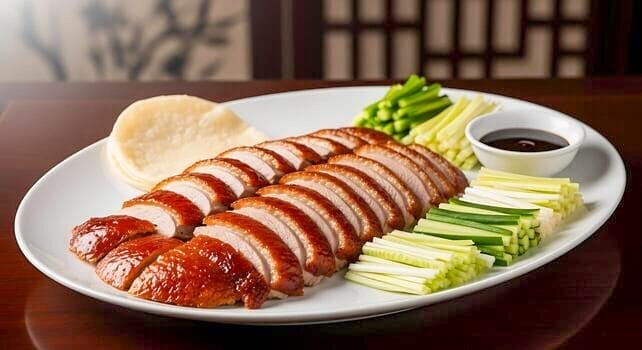
National Peking Duck Day celebrates one of the most iconic and carefully refined dishes in Chinese cuisine. Peking duck traces its roots to imperial China, with written records dating back more than six hundred years to the Ming Dynasty. Ducks were originally raised in the wetlands surrounding Beijing, then known as Peking, where the birds developed a rich layer of fat and tender meat that made them ideal for roasting. What began as regional fare eventually became a centerpiece of court cuisine, served to emperors and visiting dignitaries as a demonstration of culinary mastery.
The dish reached prominence during the fifteenth century, when cooks in the imperial kitchens refined techniques to emphasize crisp skin and delicate meat. Unlike many roasted meats, the focus of Peking duck is not the flesh itself but the skin, which is prized for its glassy crispness and deep, savory flavor. Achieving that texture required experimentation with air drying, glazing and precise roasting methods that elevated the dish from everyday food to ceremonial centerpiece.
As Beijing grew into a political and cultural capital, Peking duck became a symbol of refinement and hospitality. Specialized restaurants emerged to serve the dish to officials, scholars and wealthy patrons. One of the most famous, Quanjude, was founded in 1864 and remains synonymous with traditional Peking duck preparation. These establishments treated duck roasting as both craft and performance, often carving the bird tableside to showcase the chef’s skill.
National Peking Duck Day honors this long history and the generations of cooks who preserved and perfected the dish. It highlights how food can function as cultural identity, political symbol and shared experience. Peking duck is not simply a recipe but a culinary expression shaped by geography, imperial tradition and meticulous technique.
The defining feature of Peking duck is its thin, crackling skin, and achieving it requires a series of deliberate steps that distinguish the dish from other roast duck preparations. After slaughter, air is carefully pumped between the skin and meat to separate the layers. This process allows fat to render away from the skin during roasting, which is essential for crispness. The duck is then blanched briefly to tighten the skin before being coated with a light glaze, traditionally made from maltose syrup.
Drying is a critical stage. The duck is hung in a cool, ventilated space for many hours, sometimes overnight, until the skin is completely dry. Moisture is the enemy of crispness, and this drying period ensures that the skin will blister and harden when exposed to heat. Historically, ducks were roasted in closed brick ovens fueled by fruitwood, which imparted subtle aroma while maintaining even heat.
Modern kitchens may use open ovens or specialized rotisseries, but the principles remain the same. Controlled temperature allows fat to slowly render without burning the skin. The result is a mahogany colored bird with skin that shatters when bitten. The meat beneath stays moist, though it plays a supporting role to the skin.
Serving Peking duck is an art in itself. Skilled carvers slice the skin into thin pieces, often presenting them first before moving on to the meat. Traditional accompaniments include thin pancakes, sliced scallions, cucumber and sweet bean sauce. Diners assemble each bite by wrapping skin and meat with condiments, creating a balance of textures and flavors.
National Peking Duck Day invites appreciation for this technique driven cuisine. It celebrates patience, precision and respect for process. In an era of fast meals, Peking duck stands as a reminder that some foods reward time, discipline and craftsmanship.
While deeply rooted in Chinese history, Peking duck has become a global symbol of fine dining and cultural exchange. As Chinese communities spread around the world, they brought culinary traditions with them. Peking duck restaurants now appear in major cities across Asia, Europe and North America, often adapting techniques to local ingredients and equipment while preserving the essence of the dish.
International chefs have drawn inspiration from Peking duck, incorporating its elements into modern menus. Duck skin may appear crisped as a garnish, while pancakes and hoisin based sauces influence fusion dishes. Despite reinterpretations, the classic presentation remains revered and is often reserved for special occasions, business celebrations and family milestones.
National Peking Duck Day encourages diners to experience the dish thoughtfully rather than treating it as novelty. Whether enjoyed in a traditional restaurant or recreated at home with care, the dish invites slower eating and shared participation. It is meant to be eaten communally, assembled bite by bite, reinforcing connection at the table.
The holiday also provides an opportunity to learn about Chinese culinary philosophy. Balance of texture, respect for ingredients and mastery of technique are central values. Peking duck demonstrates how simplicity in seasoning can coexist with complexity in execution. The duck itself remains the focus, supported rather than overwhelmed by sauces and garnishes.
Celebrating National Peking Duck Day can be as simple as visiting a local Chinese restaurant known for the dish or reading about its preparation and history. It can also inspire home cooks to attempt elements of the process, gaining respect for the skill involved even if the result is imperfect. Each encounter with Peking duck connects the present to centuries of culinary tradition.
Ultimately, National Peking Duck Day honors more than a famous roast. It celebrates cultural continuity, technical excellence and the idea that food can carry history on a plate. With every crisp bite, diners participate in a tradition shaped by time, place and human ingenuity.
