National Green Week
February 24, 2027

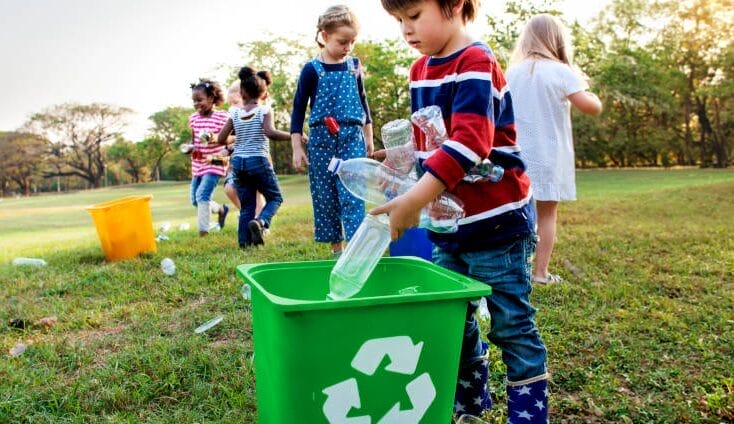
National Green Week is observed annually in the United States during the first full week of February. The observance was established in 2008 by the Green Education Foundation, a nonprofit organization focused on sustainability education in K through 12 schools. The first full week of February is calculated as the Sunday through Saturday period entirely contained within the month. If February 1 falls on a Sunday, that date marks the beginning of National Green Week for that year. If February 1 falls midweek, the observance begins on the first Sunday that allows seven consecutive days within February.
The Green Education Foundation introduced National Green Week to provide structured environmental education programming in schools. The initiative was developed in response to growing national attention to climate science, energy conservation, and environmental literacy in educational policy discussions during the mid 2000s.
National Green Week is nonprofit initiated rather than federally mandated. It is not codified in United States statute and does not originate from congressional resolution. Participation by schools and institutions is voluntary and typically coordinated through educational networks.
The geographic scope of National Green Week is primarily the United States. While environmental education initiatives occur globally, the title National Green Week is associated with the Green Education Foundation’s U.S. programming model.
The observance was designed to integrate environmental curriculum themes into classroom instruction. Topics often include renewable energy, waste reduction, water conservation, and sustainable consumption. These topics align with existing science and environmental standards rather than creating new regulatory requirements.
National Green Week remains defined by its February placement, its establishment in 2008 by the Green Education Foundation, and its nonprofit education focus within U.S. schools.
Environmental education in the United States is shaped by state level curriculum standards and federal science education guidance. National Green Week materials are typically aligned with these standards but are not mandated components of public school curricula.
Federal environmental policy, including legislation such as the Clean Air Act and Clean Water Act, provides regulatory frameworks that are sometimes referenced during educational programming. National Green Week does not create statutory obligations but may highlight existing environmental laws for instructional purposes.
Energy efficiency standards for buildings and appliances are established through federal and state regulations. Educational discussions during National Green Week may reference these policies as examples of environmental governance.
Climate commitments under international agreements such as the Paris Agreement influence national environmental strategies. While National Green Week is not a treaty based observance, its themes align with broader sustainability objectives recognized in policy frameworks.
Statistical data on greenhouse gas emissions, renewable energy adoption, and waste generation are often incorporated into classroom materials during the observance. These data are drawn from federal agencies such as the Environmental Protection Agency and the Department of Energy.
National Green Week functions as an educational reinforcement period within established environmental policy and scientific research landscapes rather than as an independent regulatory initiative.
Participation in National Green Week typically involves schools conducting themed lessons, sustainability projects, or conservation activities. Engagement levels vary depending on district resources and institutional priorities.
The Green Education Foundation coordinates national messaging and provides curricular materials. Individual schools retain discretion over implementation.
Some state education departments acknowledge National Green Week in communications to school districts, though formal proclamations are not uniform nationwide.
Public discourse during National Green Week may intersect with broader environmental policy debates. The observance itself remains focused on educational documentation rather than legislative advocacy.
Private sector partners occasionally support National Green Week through sponsorship of educational materials or school programs. Such participation is voluntary and not required by law.
National Green Week continues annually during the first full week of February as a nonprofit coordinated environmental education observance in the United States.

