Lantern Festival
March 3, 2026

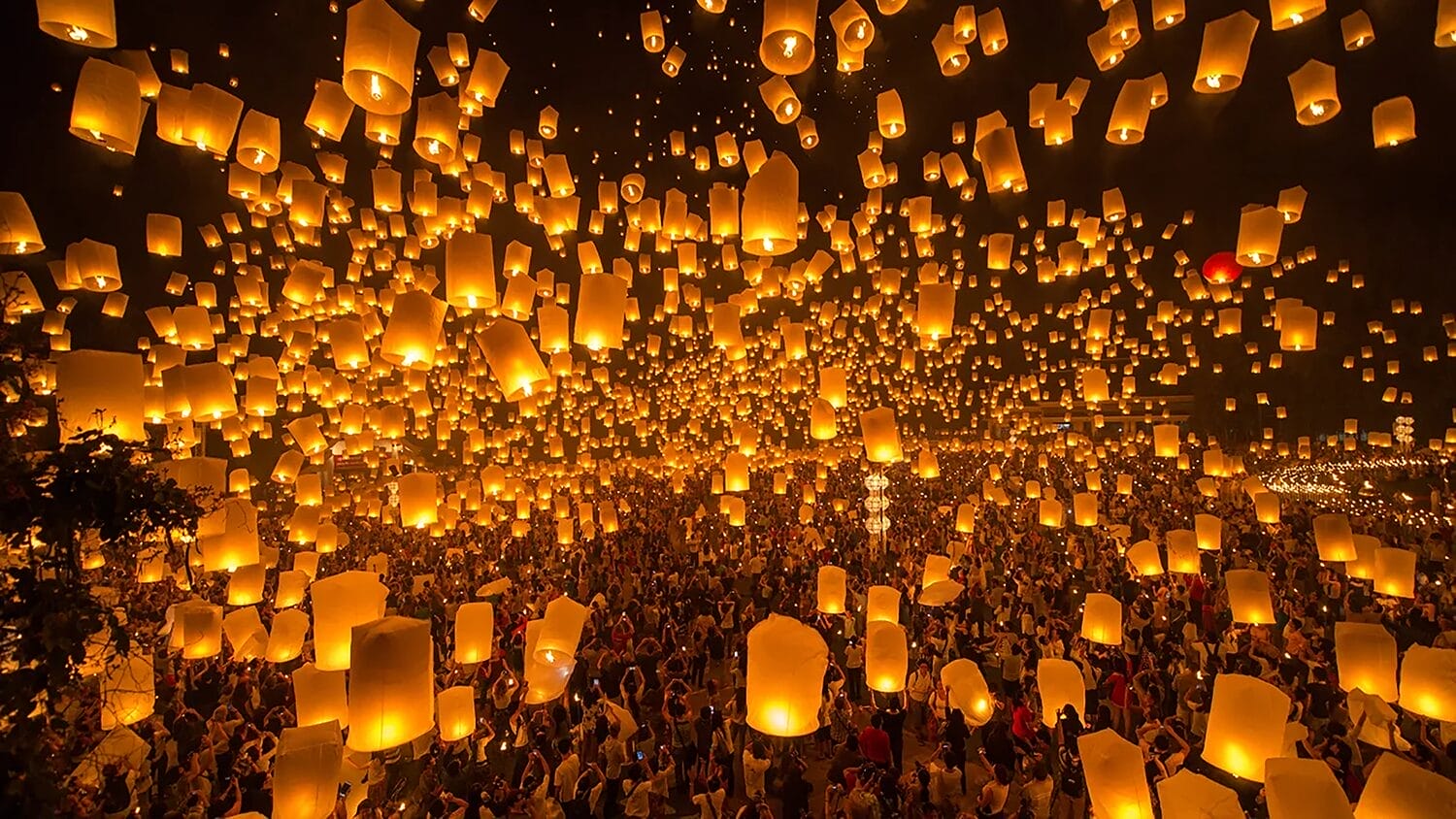
The Lantern Festival glows on the 15th day of the first lunar month, marking the joyful close of Chinese New Year celebrations. It is a night when lanterns rise, riddles dance across paper, and families gather under the first full moon of the lunar year. Rooted in over two millennia of history, the festival blends myth, spirituality, and communal joy — creating one of the most enchanting evenings in the lunar calendar.
Historical accounts trace the festival back to the Han dynasty (206 BCE–220 CE). One widely shared story tells of Emperor Ming, a devout Buddhist ruler who observed monks lighting lanterns on the fifteenth day of the lunar month to honor the Buddha. Inspired, he ordered the entire empire to hang lanterns in celebration — a practice that quickly spread.
Another beloved folktale recounts how the Jade Emperor planned to destroy a village. A compassionate fairy warned the villagers, urging them to hang red lanterns and light firecrackers so the emperor’s troops would believe the town was already burning. The clever ruse saved the people, and the tradition of lantern-lighting became a symbol of wisdom, unity, and light triumphing over darkness.
The festival’s heart is its lanterns — crafted in countless shapes, styles, and hues. Traditional lanterns feature bamboo frames covered in silk or paper, painted with birds, lotus flowers, dragons, or elegant calligraphy. Modern celebrations introduce electric lanterns shaped like storybook characters, constellations, and mythical beasts.
Parks and temples host lantern fairs where families stroll beneath tunnels of glowing spheres. Children parade with rabbit-shaped lanterns on sticks, while couples admire tall, ornate palace lanterns painted in shimmering red and gold. In Taiwan’s Pingxi District, tens of thousands of sky lanterns rise into the night, each carrying handwritten wishes — floating prayers that drift upward to join the stars.
Food plays a central symbolic role. Families eat tangyuan — glutinous rice balls filled with black sesame, peanut paste, red bean, or even modern flavors like chocolate. Their roundness represents unity, wholeness, and the hope that the coming year will be smooth and harmonious.
Festivities may also include lion and dragon dances, their movements guided by pounding drums and gongs. Performers leap, weave, and whirl to invite good fortune and ward off bad spirits. Lantern riddles — clever word puzzles written on lanterns — challenge festival-goers to test their wit, and solving them is said to bring luck.
Today, the Lantern Festival thrives in both ancient and modern forms. Cities incorporate laser shows, LED installations, and lanterns powered by solar energy. Rural communities preserve artisanal lantern-making and oral storytelling traditions passed down through generations. Whether amid urban skylines or quiet village courtyards, the warm glow of lanterns transforms the night into something magical.
As the first full moon of the lunar year shines overhead, the festival invites everyone to pause, look upward, and wish for harmony, prosperity, and new beginnings. The Lantern Festival’s radiance — carried by flame, electric light, or hope itself — continues to connect people across cultures and centuries.

