National Agriculture Day
March 19, 2026

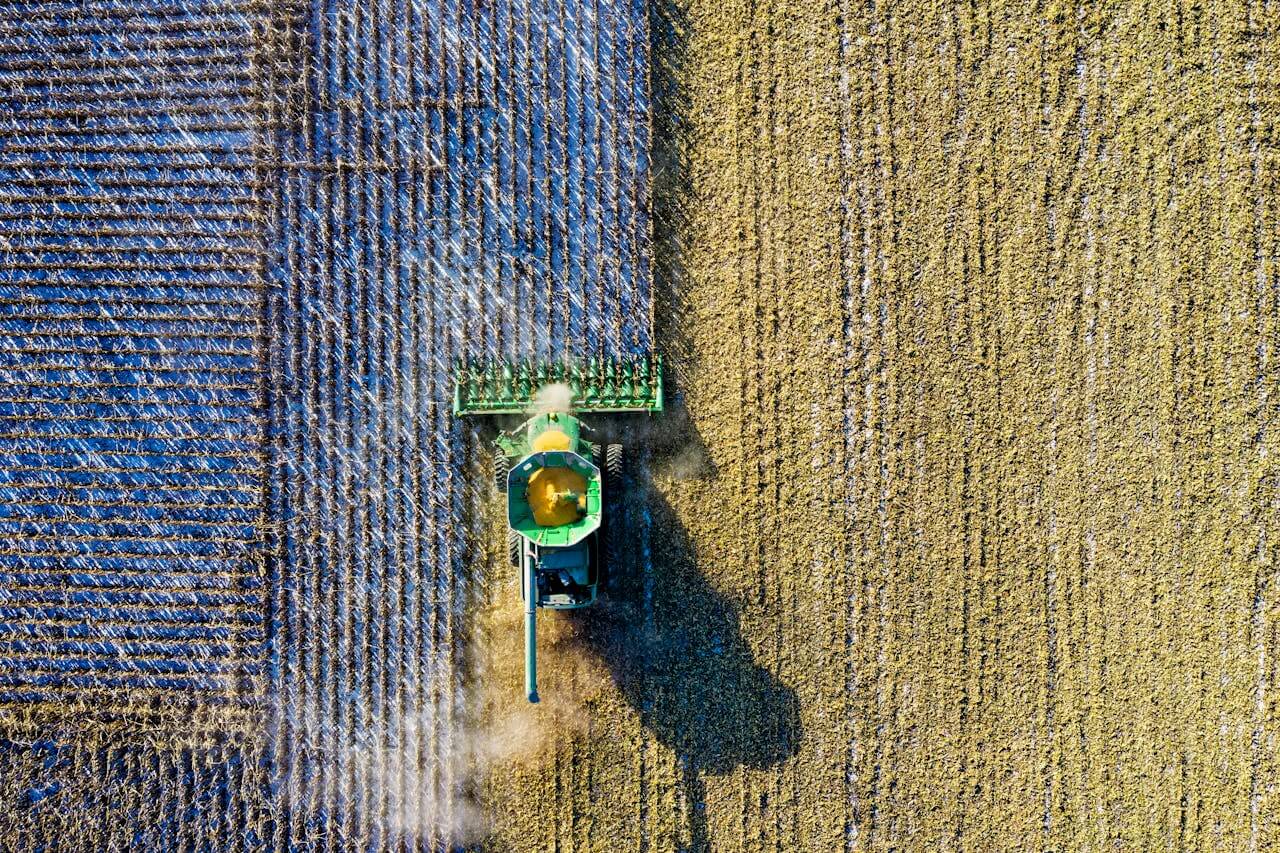
National Agriculture Day recognizes the people, systems, and scientific knowledge that make modern food production possible. National Agriculture Day is observed in March in the United States and is designed to increase public understanding of how agriculture supports food, fiber, fuel, and numerous materials used in everyday life. The day is often discussed in simple terms, but the reality is much larger and stranger, because agriculture is not just farming. It is an immense network of land management, biology, machinery, logistics, labor, research, and policy.
The deepest historical layer behind National Agriculture Day is the shift from hunting and gathering to cultivation and domestication. That transition did not happen everywhere at once, and it did not involve a single crop or a single civilization. Different regions developed agriculture in different ways, depending on climate, water access, native plant species, and animal behavior. What they shared was the discovery that human communities could shape the growth cycles of plants and animals over time rather than relying only on wild abundance.
The ingredient microhistory most central to agriculture is grain. Wheat, rice, barley, millet, corn, and other cereals became foundational because they stored well, delivered concentrated calories, and could be processed into multiple foods. Grain is not glamorous on its own, but it is civilizational infrastructure. Stable grain production allowed populations to settle, grow, specialize, and eventually build cities, states, and trade systems.
Domestication changed plants and animals dramatically. Wild grasses were selected for larger seeds and easier harvesting. Animals were selected for temperament, productivity, or meat yield. Over generations, agriculture altered biology itself, producing crops and livestock that would not exist in the same form without sustained human intervention. This is one reason agriculture belongs as much to history and ecology as it does to economics.
Migration and trade spread agricultural knowledge across continents. Wheat moved through Eurasia and into the Americas. Rice expanded across Asia and later beyond it. Corn, domesticated in the Americas, eventually became one of the most important crops in the world. Livestock breeds moved with empires, merchants, settlers, and displaced peoples. Agriculture has always traveled with humans because food security travels with power.
National Agriculture Day reflects that enormous historical arc. It is not simply a celebration of farmers with tractors in neat rows. It is an acknowledgment that agriculture changed the human species by changing what people ate, where they lived, how they worked, and how societies organized themselves around land, water, and time.
National Agriculture Day highlights agriculture as one of the most important economic systems on Earth. Agriculture produces direct food crops such as fruits, vegetables, grains, and legumes. It also supports livestock systems, feed markets, textile fibers, timber byproducts, fuel inputs, and industrial raw materials. A field does not end at harvest. It extends into transportation, storage, packaging, retail, export, and waste management.
From an agricultural perspective, farming is highly regional because climate determines possibility. Mediterranean climates support olives, grapes, and certain citrus. Tropical climates support cacao, bananas, and sugarcane. Temperate regions support wheat, dairy, and orchard crops. Semi-arid areas rely more heavily on irrigation and drought-adapted varieties. This is why National Agriculture Day can never be about one image of farming. Agriculture in Iowa, California, Florida, and Arizona are all operating under different environmental logic.
Sensory anthropology offers another way to understand agriculture. Food does not begin on a plate. It begins in soil chemistry, rainfall patterns, seed genetics, and sunlight exposure. The sweetness of a strawberry, the texture of bread, the oiliness of an olive, and the starch content of a potato are all agricultural outcomes before they are culinary ones. National Agriculture Day matters partly because taste itself is agricultural history made edible.
Economically, agriculture is both stable and fragile. It is stable because people always need food. It is fragile because production depends on weather, pests, labor, fuel, fertilizer, disease control, water allocation, and commodity pricing. A farmer may do everything right and still lose yield to drought, flood, late frost, avian influenza, citrus greening, or market collapse. The public often sees finished food but not the volatility behind it.
A common misconception is that agriculture today is purely industrial and therefore detached from nature. That is too simplistic. Modern agriculture absolutely uses machinery, chemical inputs, genetics, and data systems at large scale, but it remains bound to ecological limits. Soil still erodes. Water still runs short. Pollinators still matter. Disease still spreads. Technology can manage risk, but it cannot fully repeal biology or climate.
National Agriculture Day also highlights labor, which is often under-discussed. Agriculture depends on farmers, ranchers, veterinarians, agronomists, irrigation specialists, truck drivers, produce pickers, equipment mechanics, food scientists, and many others. The romantic image of a single farmer doing everything is historically powerful, but modern agriculture is a coordinated labor system. Without labor, land alone produces nothing useful at scale.
Approximately 10,000 years ago, early agricultural societies in several regions began domesticating crops and animals. This period, often described as part of the Agricultural Revolution, changed food production from foraging-based uncertainty to managed cycles of planting, tending, and harvesting.
In ancient river valley civilizations, irrigation became a major technological breakthrough. Systems in places such as Mesopotamia and Egypt allowed farmers to control water more effectively, increasing yields and making large-scale settlement more sustainable. Agriculture was no longer only about land. It became equally about water engineering.
During the medieval period and after, crop rotation and improved soil management increased productivity in parts of Europe and elsewhere. The idea that land could be managed through sequence and rest rather than simply exhausted was a major agricultural insight. Better planning meant more stable yields and fewer catastrophic failures.
The eighteenth and nineteenth centuries brought major mechanization. The steel plow, mechanical reaper, improved seed drills, and later tractors transformed the labor equation. Farmers could work more acreage with fewer people, radically changing rural economies and accelerating the scale of production.
The twentieth century intensified agricultural transformation through fertilizers, pesticides, hybrid seeds, irrigation expansion, and scientific breeding. Later developments included genetics, improved animal nutrition, and global commodity systems that made agriculture part of a tightly linked international marketplace rather than only a local one.
In the twenty-first century, precision agriculture introduced sensors, satellite imagery, yield mapping, variable-rate application systems, and data-driven management. These tools do not replace farming knowledge, but they refine it. National Agriculture Day sits inside this modern phase, where agriculture is still ancient in purpose but increasingly technical in execution.
National Agriculture Day matters today because food security is no longer something most urban consumers think about until it falters. Grocery shelves, restaurant menus, and global imports can create the illusion that food simply appears. Agriculture interrupts that illusion. It reminds people that food depends on season, labor, fuel, water, storage, policy, and time. None of that is automatic.
The day also matters because agriculture now sits at the center of major public questions. Climate change is altering planting calendars, increasing heat stress, changing pest ranges, and intensifying drought in some regions while increasing flood risk in others. Agriculture is both vulnerable to climate change and implicated in larger environmental debates about land use, emissions, fertilizer runoff, and biodiversity. That makes it impossible to treat farming as a nostalgic background topic.
National Agriculture Day is also relevant because it highlights resilience. Agriculture survives through adaptation. Farmers change crop varieties, diversify income streams, adopt irrigation technologies, alter feed strategies, and use data to reduce risk. The history of farming is full of failure, adjustment, and partial recovery. That resilience is part of why agriculture remains one of the most durable human systems ever built.
Another reason National Agriculture Day matters is that it corrects a cultural blind spot. Many people understand technology companies or financial markets in greater detail than they understand the systems that feed them. Yet agriculture underlies every school lunch, restaurant meal, snack aisle, and holiday table. The day pushes that hidden foundation back into view, where it belongs.
Sensory anthropology matters here too. Agriculture shapes what people think of as normal food. It determines whether tomatoes are watery or dense, whether bread flour is strong or weak, whether beef is grain-finished or grass-finished, whether apples store well, and whether strawberries travel without collapsing. Modern food identity begins on farms, not in branding meetings.
National Agriculture Day matters because it honors the land, labor, and science that make modern civilization physically possible. It is a reminder that behind every meal is a chain of biological, economic, and human decisions. Strip those away, and the neat little illusion of abundance falls apart fast.


