National Corned Beef and Cabbage Day
March 17, 2026

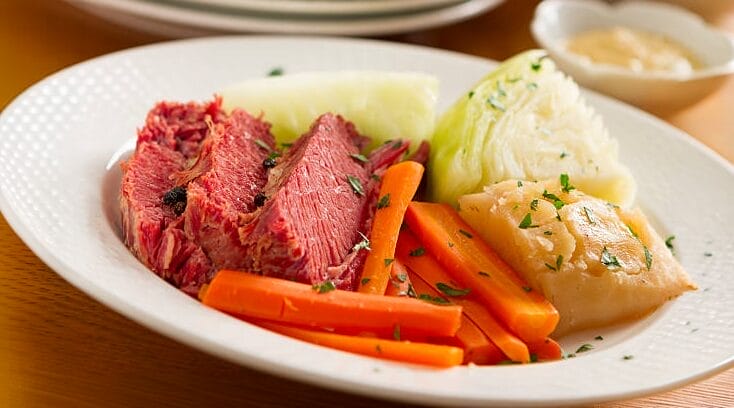
National Corned Beef and Cabbage Day celebrates a dish strongly associated with Irish-American culinary identity. Observed in March, the holiday reflects the historical relationship between immigration, affordable ingredients, and the adaptation of traditional recipes in new environments.
Corned beef refers to beef that has been cured with salt crystals known historically as “corns” of salt. This curing method preserved meat before refrigeration became common. While beef curing traditions existed in Ireland and Britain, the pairing of corned beef with cabbage became especially popular in the United States.
The ingredient microhistory central to the dish involves both beef preservation and cabbage cultivation. Cabbage is a hardy vegetable that grows well in cooler climates and stores effectively for long periods. Its affordability made it a staple among working-class households.
Migration shaped the dish’s identity. Irish immigrants arriving in the United States during the nineteenth century encountered abundant beef compared with Ireland, where pork was historically more common. Corned beef became an accessible alternative, and cabbage remained a familiar vegetable that complemented the dish.
Technological inflection points such as commercial refrigeration and industrial meat processing expanded corned beef availability. These developments allowed the dish to become a staple of delicatessens and home cooking.
National Corned Beef and Cabbage Day reflects how migration and economic adaptation can transform food traditions.
National Corned Beef and Cabbage Day highlights the role of affordable ingredients in immigrant cuisine. Beef brisket, once considered a less desirable cut, became valuable when cured and slow-cooked. Cabbage added volume and nutritional balance.
Sensory anthropology explains the dish’s comfort appeal. Slow cooking softens the beef and allows spices to infuse the meat. Cabbage absorbs the savory broth, creating a balanced meal with layered flavors.
Agriculturally, the dish reflects livestock farming and vegetable cultivation working together. Beef production depends on cattle ranching and feed systems, while cabbage grows in temperate agricultural regions.
Regional comparisons show variations in preparation. Some recipes include potatoes and carrots, while others emphasize mustard or horseradish condiments.
A misconception worth correcting is that corned beef and cabbage originated in Ireland exactly as served today. The dish’s current form largely developed within Irish-American communities.
Economic resilience appears through the use of preserved meat and durable vegetables that remain accessible during periods of economic hardship.
17th century: Salt-curing techniques preserve beef in Britain and Ireland.
19th century: Irish immigrants in the United States adopt corned beef as an accessible meat.
Late 19th century: Delicatessens popularize corned beef dishes in American cities.
Early 20th century: Refrigeration and industrial meatpacking expand distribution.
Mid 20th century: Corned beef and cabbage becomes associated with St. Patrick’s Day celebrations.
Late 20th century: Restaurants and home cooks continue the tradition as a seasonal dish.
21st century: Culinary historians highlight the immigrant origins of the dish.
National Corned Beef and Cabbage Day matters today because it reflects how immigrant communities adapt food traditions to new environments.
Modern supply chains keep both beef and cabbage widely available, though livestock production and vegetable farming remain sensitive to climate and economic factors.
Sensory anthropology reinforces the comfort of slow-cooked meals shared during celebrations.
Misconceptions about the dish’s origin can be corrected by recognizing its Irish-American evolution.
Economic resilience continues through the dish’s reliance on affordable ingredients.
National Corned Beef and Cabbage Day matters because it honors the role of migration in shaping culinary traditions.
