National Pears Helene Day
March 15, 2026

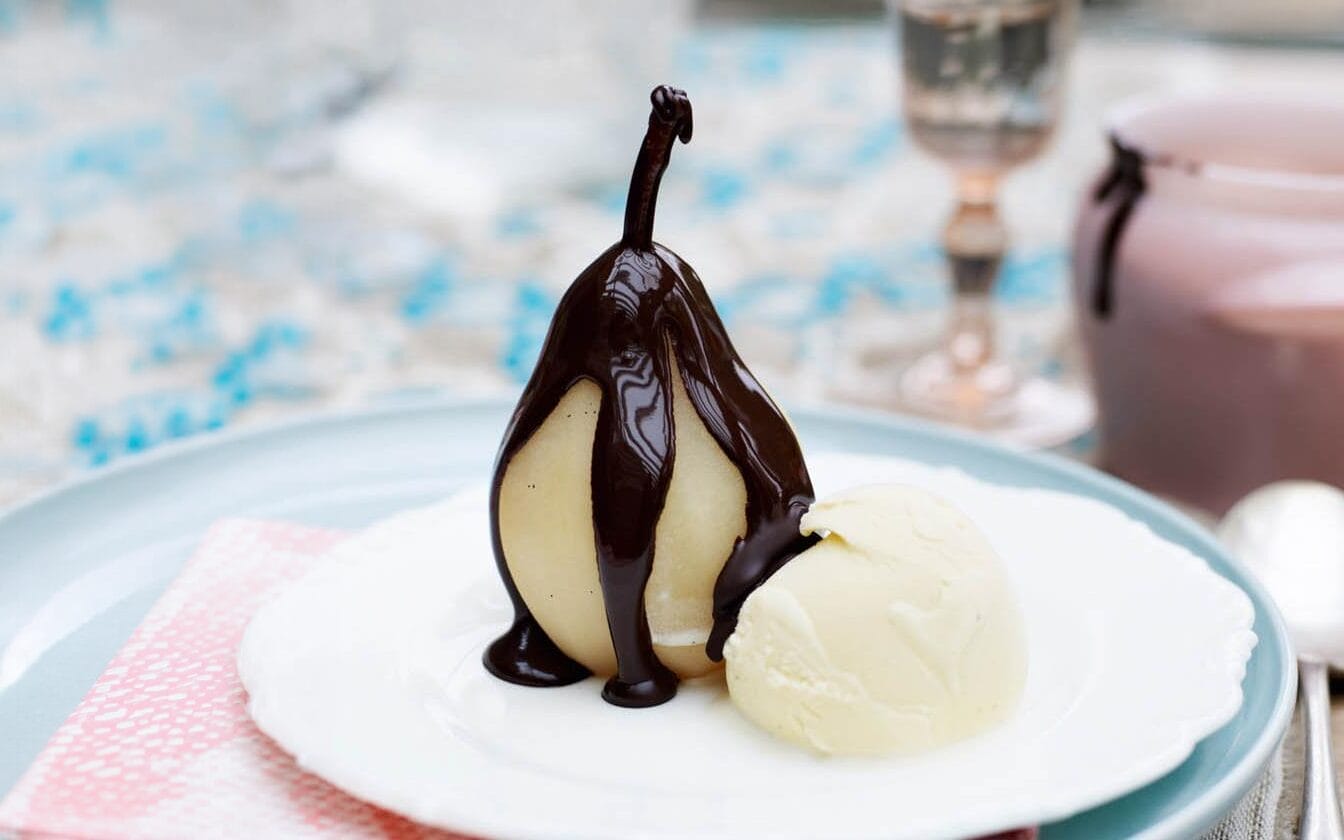
Pears Helene Day celebrates a classic dessert that reflects the intersection of fruit cultivation, French culinary tradition, and confectionery technique. The dish known as Poires Belle Hélène consists of poached pears served with chocolate sauce and often vanilla ice cream. Pears Helene Day highlights how a simple fruit dessert became associated with elegance through careful preparation and presentation.
The dessert originated in nineteenth-century France and is often attributed to the famous chef Auguste Escoffier. Escoffier named the dish after the operetta “La Belle Hélène,” which was popular during the same era. By combining poached pears with chocolate sauce, he created a dessert that balanced fruit freshness with rich sweetness.
The ingredient microhistory central to Pears Helene is the pear itself. Pear cultivation dates back thousands of years and spread throughout Europe and Asia. Pear trees thrive in temperate climates and produce fruit with high natural sugar content and delicate texture when ripe.
Migration and agricultural exchange expanded pear varieties across continents. European settlers introduced pear trees to North America, where orchards developed in regions with suitable climates. Today, pears remain an important fruit crop in areas such as Washington State and parts of Europe.
Technological inflection points shaped the dessert’s preparation. Controlled poaching techniques allow pears to soften while maintaining structure. Refrigeration and modern transport systems ensure that fresh pears can reach markets far from orchards.
Pears Helene Day reflects the union of orchard agriculture and classic French dessert craftsmanship.
Pears Helene Day highlights the economic significance of pear orchards. Pear trees require several years to mature before producing fruit, making orchard farming a long-term agricultural investment.
Sensory anthropology explains why pears pair well with chocolate. The fruit’s mild sweetness and soft texture contrast with the richness of chocolate sauce. When poached, pears absorb flavor while maintaining a delicate structure.
Economically, pear desserts demonstrate how fruit crops can gain value through culinary preparation. Fresh pears may be sold directly, but transforming them into desserts adds complexity and higher retail value.
Regional comparisons show variation in pear desserts. French cuisine emphasizes poached pears with chocolate. Other cultures may bake pears in pastries or cook them into preserves.
A misconception worth correcting is that pears must be eaten raw to be appreciated. Cooking techniques such as poaching enhance the fruit’s natural sweetness and aroma.
Economic resilience appears in pear farming through diversified uses including fresh fruit sales, preserves, and dessert preparation.
Ancient era: Pear cultivation spreads throughout Europe and Asia.
18th and 19th centuries: European orchards expand and diversify pear varieties.
Late 19th century: Auguste Escoffier develops Poires Belle Hélène as a refined dessert.
Early 20th century: French culinary techniques spread internationally through cookbooks and culinary schools.
Mid 20th century: Refrigeration and transport expand global fruit distribution.
Late 20th century: Pear desserts appear in restaurants and home kitchens worldwide.
21st century: Renewed interest in classic French desserts highlights historical recipes.
Pears Helene Day matters today because it celebrates a dessert that demonstrates the elegance of simple ingredients prepared with care.
Modern supply chains ensure that pears remain widely available, though orchard harvests can be affected by weather conditions and agricultural challenges.
Sensory anthropology reinforces the appeal of warm chocolate paired with tender fruit.
Misconceptions about fruit desserts being overly simple can be addressed through appreciation of poaching techniques and presentation.
Economic resilience continues through the multiple uses of pears in both fresh and processed foods.
Pears Helene Day matters because it honors the relationship between orchard agriculture and culinary artistry.
