Berries and Cherries Month
March 1, 2027

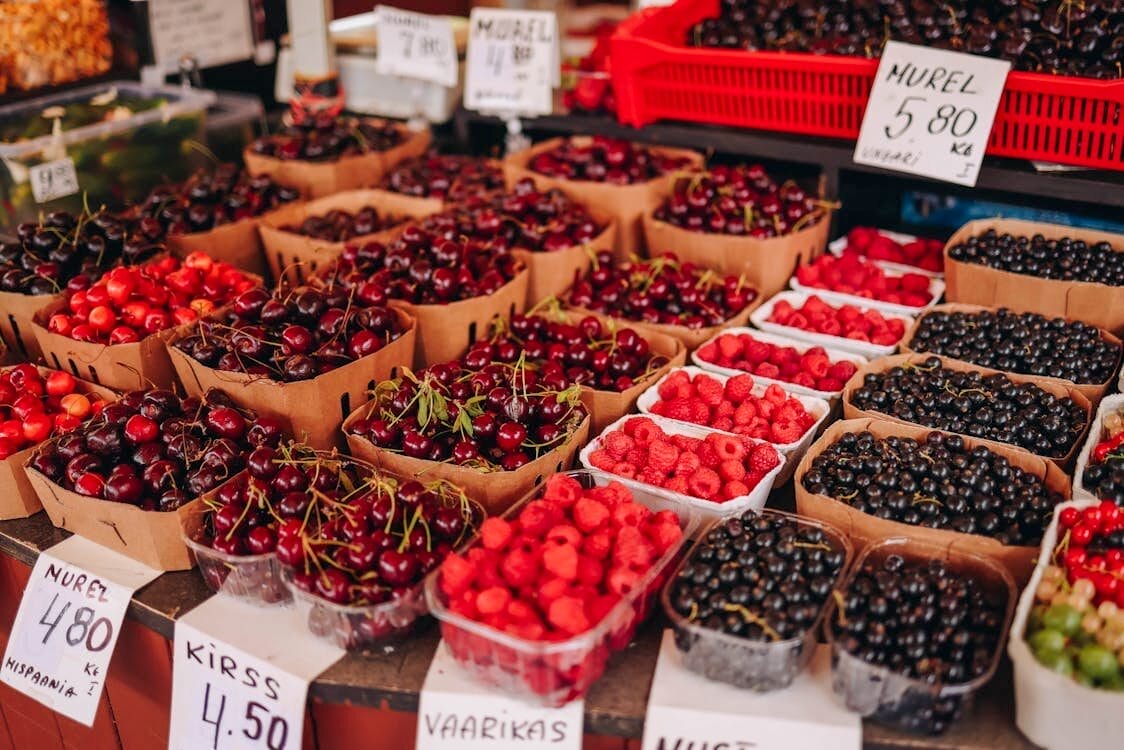
Berries and Cherries Month is observed in March and celebrates early season fruit cultivation, agricultural labor, and the global systems that support berry and cherry production. Berries and Cherries Month recognizes strawberries, blueberries, raspberries, blackberries, and cherries as crops shaped by botanical science, climate patterns, and international trade.
Wild berries were gathered long before formal agriculture emerged. Indigenous communities across North America and Eurasia incorporated berries into diets and seasonal rituals. Cherries trace back to Anatolia and were spread across Europe by Roman expansion. These early cultivation efforts marked the beginning of selective breeding.
The modern strawberry is itself a hybrid developed in eighteenth century France from North American and Chilean species. This botanical innovation increased fruit size and yield, making commercial production viable. The blueberry, once considered wild forage, became a cultivated crop in the early twentieth century through agricultural research in the northeastern United States.
Cherry cultivation expanded significantly in regions with temperate climates. Michigan, Washington, and California developed strong industries supported by irrigation and transportation infrastructure. Refrigerated rail cars in the nineteenth century extended distribution windows.
The ingredient microhistory of berries also intersects with soil management and pollination. Many berry crops rely heavily on bee pollination, linking fruit yields to ecological health.
Berries and Cherries Month reflects this layered agricultural development, acknowledging fruit cultivation as scientific, ecological, and economic enterprise.
Berries and cherries carry strong symbolic associations with renewal and abundance. Their early appearance in growing seasons reinforces seasonal celebration in many regions.
Agriculturally, berry production is labor-intensive. Many berries must be harvested by hand to avoid bruising. This labor demand shapes regional employment patterns and cost structures.
Technological inflection points such as cold chain logistics and flash freezing have expanded global availability. Frozen berries allow year-round consumption without reliance solely on fresh distribution.
Regional variation remains significant. Tart cherries in Michigan differ structurally and commercially from sweet cherries in California. Blueberry varieties vary by climate adaptation.
Misconceptions often conflate botanical classification. Not all berries are true berries in botanical terms. Strawberries and raspberries are aggregate fruits, while blueberries qualify botanically as berries.
Berries and Cherries Month also intersects with economic resilience. Diversified berry production can stabilize farm income across seasons when managed effectively.
Ancient Era: Wild berry gathering and early cherry domestication in Anatolia.
Roman Expansion: Spread of cherry cultivation throughout Europe.
18th Century: Hybridization of strawberries in France.
19th Century: Refrigerated transport expands berry trade.
Early 20th Century: Scientific cultivation of blueberries in North America.
Late 20th Century: Flash freezing and cold chain systems globalize berry markets.
21st Century: Sustainability efforts focus on soil health and pollinator protection.
Berries and Cherries Month remains relevant as climate change reshapes harvest timing and regional viability. Temperature fluctuations directly affect flowering and fruit set.
The observance highlights the ecological importance of pollinators, whose decline threatens berry yields.
Modern consumers increasingly seek local sourcing during peak season, reinforcing regional agricultural identity.
Nutrition research continues to examine berries for antioxidant properties and cherries for naturally occurring compounds associated with recovery and sleep cycles.
Berries and Cherries Month also draws attention to labor systems underpinning fruit production.
Berries and Cherries Month matters because it honors fruit cultivation as intersection of ecology, science, and seasonal tradition.

