Holi
March 4, 2025

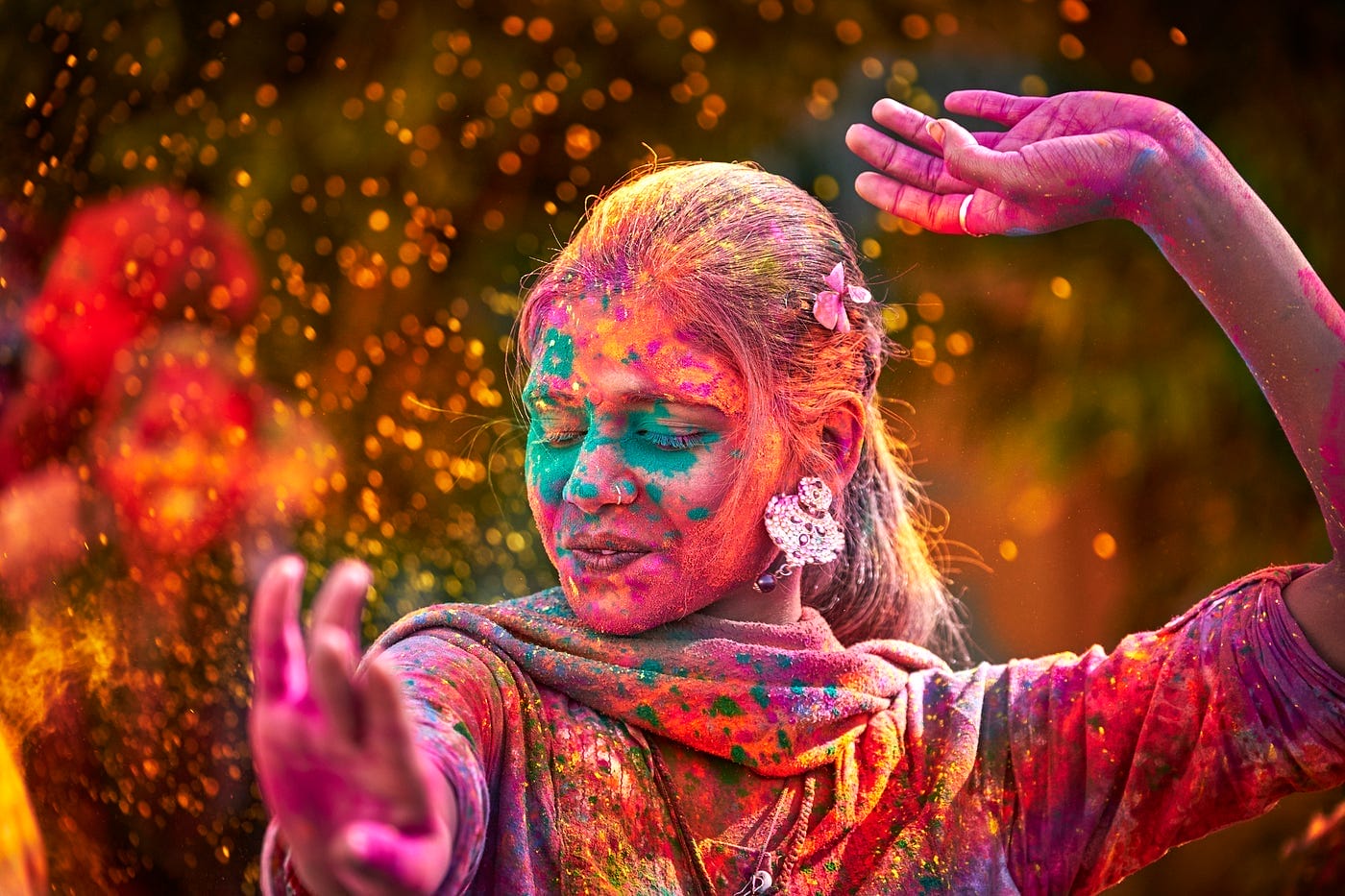
Holi, often called the Festival of Colors, arrives each spring like a watercolor painting flung into the sky. Rooted in ancient Hindu mythology and agricultural traditions, Holi celebrates renewal, community, and the triumph of good over evil. Its stories, rituals, and sensory delights intertwine to create one of the most exuberant festivals in the world.
One of the most enduring legends of Holi centers on Prahlad, a young devotee of Lord Vishnu. His father, the demon king Hiranyakashipu, demanded worship from all but grew enraged when his son refused. Hoping to kill Prahlad, the king enlisted his sister Holika, who possessed a magical cloak that made her immune to fire. But as the flames engulfed them, the cloak flew from Holika’s shoulders and wrapped around Prahlad, protecting him while she perished. This dramatic victory of devotion over cruelty is reenacted each year on Holika Dahan, the eve of Holi, when communities gather around bonfires and offer grains, coconuts, and prayers to the flames.
Another cherished tale celebrates the playful romance between Krishna and Radha. Insecure about his dark blue skin, Krishna mischievously smeared color on Radha’s cheeks to see if she would accept him. Their flirtatious exchange blossomed into the joyful tradition of throwing colored powders — a symbol of equality, affection, and childlike delight.
Holi falls on the last full moon of the Hindu month of Phalguna, usually in March. In rural villages, farmers greet the end of winter and the promise of new crops. In cities like Mathura and Vrindavan — sacred landscapes in the life of Krishna — devotees fill the streets for days of singing, dancing, and re-enactments of mythological scenes.
The morning after Holika Dahan, streets transform into kaleidoscopes of color. People dressed in old clothes gather with gulal (powdered pigments) in brilliant hues of magenta, emerald, saffron, and indigo. Water balloons burst; pichkaris (water guns) spray vibrant streams; elders laugh as children smear their cheeks with tiny, colorful hands. For a few hours, social boundaries dissolve — Holi belongs to everyone.
Food and drink are inseparable from the celebration. In northern India, revelers enjoy thandai — a fragrant milk drink infused with spices, almonds, and sometimes bhaang — and feast on gujiya, sweet dumplings filled with coconut or khoya. In West Bengal, Holi coincides with Dol Purnima, when idols of Radha and Krishna are carried in flower-laden processions. In Punjab, the Sikh community observes Hola Mohalla, a spirited showcase of martial arts, poetry, and community gatherings.
Today, Holi’s spirit extends far beyond India. South Asian communities and cultural organizations host color runs, concerts, and outdoor festivals in cities from London to New York, where thousands gather to throw powders, dance to Bollywood beats, and experience the festival’s exuberance. Many events emphasize eco-friendly colors and water conservation, ensuring the celebration remains vibrant and sustainable.
Though the colors wash off, the feeling of Holi endures. The festival invites people to let go of grudges, reconnect with loved ones, and welcome spring with an open heart. As cheeks return to their natural shades and rainbow-dyed hair is finally rinsed clean, a warm glow remains — proof that shared joy, freely given and received, can transform the spirit.

