Isaac Newton’s Birthday
January 3, 2027

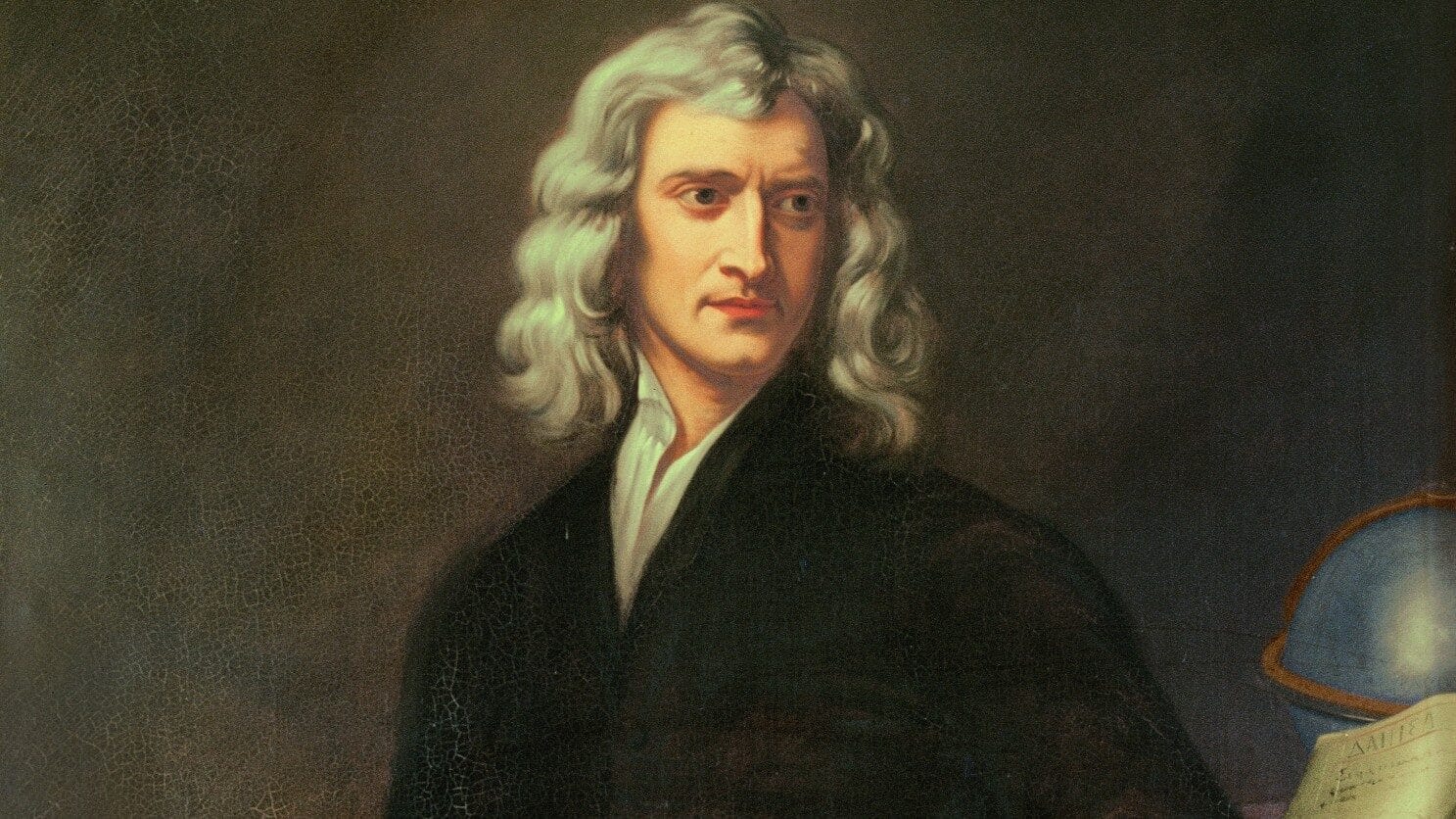
Isaac Newton was an English mathematician, physicist, and natural philosopher whose work fundamentally reshaped humanity’s understanding of the physical universe. He lived during a period when science was still closely intertwined with philosophy and theology, and his contributions helped establish a new way of thinking grounded in mathematics, observation, and systematic experimentation. Newton is often described as one of the most influential figures in intellectual history because his ideas did not merely explain isolated phenomena, but instead created a unified framework for understanding motion, force, light, and change.
Unlike many later scientists whose work was confined to narrow specialties, Newton’s influence extended across multiple disciplines. His theories altered how people understood everything from the movement of planets to the behavior of objects on Earth. Ideas that now feel intuitive, such as predictable orbits or consistent physical laws, were revolutionary in his time. Newton’s legacy endures not only through specific discoveries, but through the methodological structure he helped define, one that treats nature as something that can be described, tested, and understood through reason.
Isaac Newton was born in 1643 in Woolsthorpe, England, into a world marked by political instability and limited scientific infrastructure. His early life was shaped by isolation and self-directed learning, tendencies that later became defining features of his intellectual approach. He attended the University of Cambridge, where his studies were interrupted by outbreaks of plague that forced the university to close. During these periods away from formal instruction, Newton worked independently and developed many of the ideas that would later transform science, including early formulations of calculus, foundational concepts in optics, and the beginnings of his laws of motion.
Newton’s most influential work concerned motion and gravity. He formulated three laws of motion that described how objects move under the influence of force, and he proposed the law of universal gravitation, which explained that the same force governing falling objects on Earth also governs the motion of celestial bodies. This unification of terrestrial and celestial mechanics was a profound shift in thinking, suggesting that the universe operates according to consistent, discoverable principles rather than arbitrary or purely divine action.
His investigations into light and optics were equally transformative. Newton demonstrated that white light is composed of a spectrum of colors, challenging long-standing assumptions about vision and perception. His emphasis on controlled experimentation helped solidify experimental science as a cornerstone of knowledge production. In mathematics, his development of calculus, alongside other contemporaries, provided essential tools for describing change and motion, tools that remain foundational in science and engineering today.
Culturally and intellectually, Newton represents a turning point between medieval and modern worldviews. His work helped anchor the Enlightenment emphasis on reason and empirical evidence, while also reflecting the tensions of his era, including disputes over intellectual credit and the coexistence of scientific inquiry with religious belief. Remembered fully, Newton is not simply a figure of isolated genius, but a symbol of how disciplined inquiry can transform how humanity understands the world. His relevance persists because the scientific structures he helped build continue to support nearly every modern investigation of the physical universe.