Kwanzaa
December 26, 2025

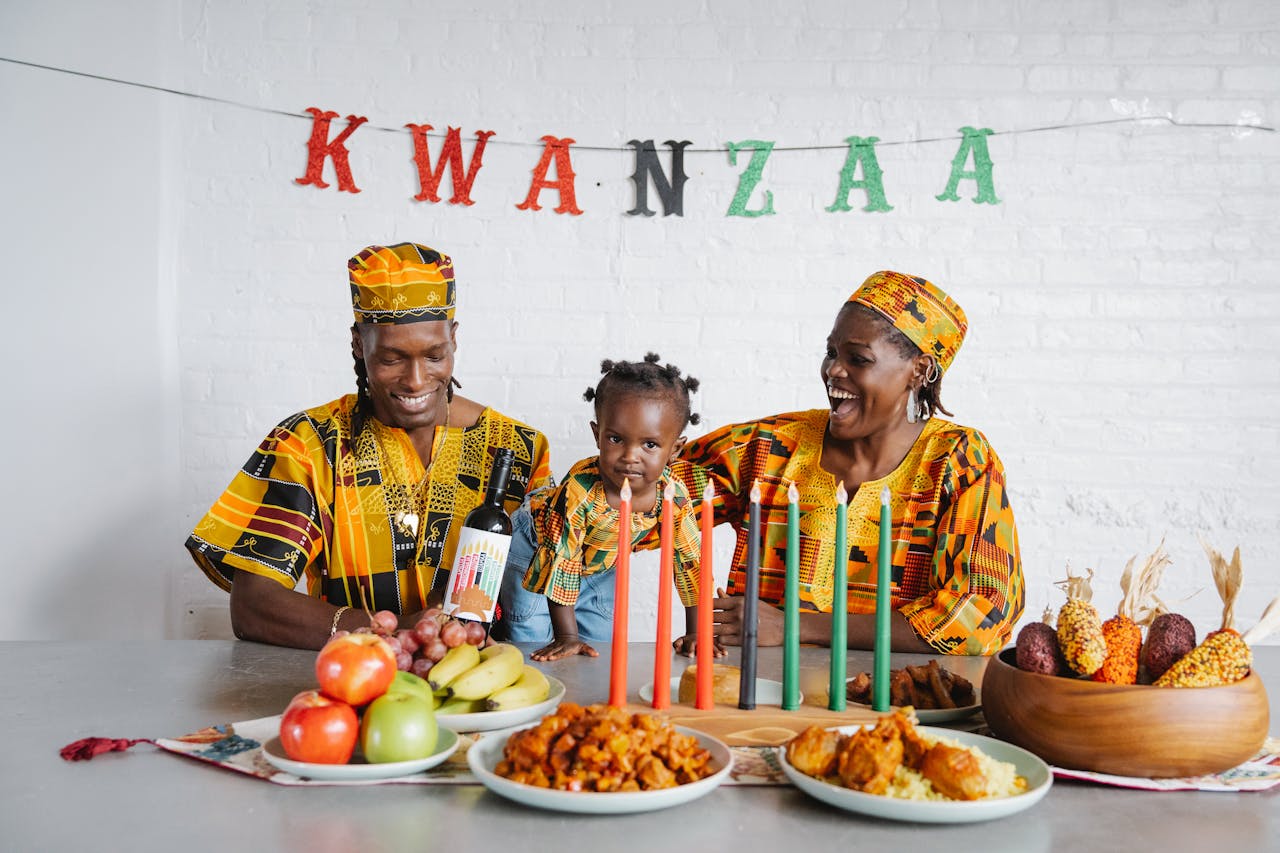
Kwanzaa is a week-long cultural observance that begins on December 26 and concludes on January 1. It was created in 1966 by scholar and activist Dr. Maulana Karenga during a period of profound social change in the United States. In the aftermath of the 1965 Watts rebellion in Los Angeles, Karenga sought to create a holiday that would help African Americans reconnect with their heritage, affirm cultural identity, and strengthen community bonds. Rather than looking backward in nostalgia, Kwanzaa was designed as a forward-looking celebration rooted in values that could guide daily life.
The name Kwanzaa comes from the Swahili phrase matunda ya kwanza, meaning “first fruits,” a reference to traditional African harvest festivals that celebrate community, gratitude, and continuity. Karenga added an extra “a” so that the word would have seven letters, allowing each child in his family to symbolically represent one of the holiday’s guiding values.
At the heart of Kwanzaa are the Nguzo Saba, or Seven Principles, each observed on a specific day:
These principles are meant not only to be discussed during the holiday but practiced throughout the year.
Each evening of Kwanzaa, families and communities gather to light a candle on the kinara, a seven-branched candleholder. The candles are colored red, black, and green, representing the blood shed in the struggle for freedom, the people, and the land of Africa. One candle is lit each night, and participants reflect on the principle associated with that day, discussing how it applies to their lives and communities.
Homes are often decorated with meaningful symbols, including a straw mat (mkeka) symbolizing tradition, ears of corn representing children and the future, and African art that honors cultural heritage. Importantly, Kwanzaa is not a religious holiday and does not replace Christmas or other faith-based observances; instead, it exists alongside them as a cultural celebration.
Community is central to Kwanzaa. Throughout the week, families pour libations to honor ancestors, share stories of resilience, and celebrate achievements both past and present. Drumming, dance, poetry, and storytelling bring the principles to life, especially for children, who often recite poems and songs that connect them to African and African American history.
On December 31, many observe the Karamu, a communal feast that highlights the African diaspora through food. Dishes may include jollof rice, gumbo, jerk chicken, collard greens, black-eyed peas, and sweet potato pie. The feast is both celebratory and reflective, reinforcing the idea that culture is sustained through shared experience.
Since its creation, Kwanzaa has evolved and spread far beyond its original context. While some early critics questioned its origins as a modern holiday, many families embraced it as a meaningful way to teach children about pride, responsibility, and self-reliance. Over time, Kwanzaa entered classrooms, community centers, and mainstream culture, appearing on postage stamps and in public celebrations across the country.
Today, Kwanzaa remains an intentional pause at the end of the year — a time to assess collective progress, honor cultural roots, and set purposeful intentions for the future. When the final candle is extinguished on January 1, the celebration does not end; the principles are meant to carry forward, shaping daily choices and strengthening communities long after the holiday week has passed.