Lunar New Year (Year of the Snake)
January 29, 2025

Lunar New Year is one of the world’s oldest and most widely celebrated holidays, observed across East and Southeast Asia and throughout global diasporas. Falling between late January and mid-February, its date is determined by the lunar calendar, marking the transition from one zodiac animal year to the next. For many, Lunar New Year is not just the start of a calendar cycle but a moment of renewal — a time to clear out the old, honor ancestors, and welcome luck, health, and prosperity for the year ahead.
The holiday’s roots stretch back thousands of years to agrarian societies in China, where winter’s end signaled the coming of spring and planting season. Legends tell of Nian, a mythical beast frightened away by firecrackers, bright colors, and loud drums — traditions that still shape today’s celebrations. Over time, neighboring regions developed their own customs. In China it is known as Chūnjié (Spring Festival), in Vietnam as Tết, in Korea as Seollal, and in Tibet as Losar. Each culture shares themes of reunion, respect, cleansing, and hope.
Lunar New Year preparations often begin weeks beforehand. Families deep-clean their homes to clear away bad luck, settle debts, buy new clothes, and hang red decorations symbolizing happiness and fortune. Offerings are made at ancestral altars, and oranges, tangerines, and blooming flowers fill living rooms with color and fragrance. On New Year’s Eve, families gather for a lavish reunion dinner — often the most important meal of the year — featuring dishes that symbolize long life, abundance, and unity: whole fish, dumplings, long noodles, rice cakes, and sweet rice balls.
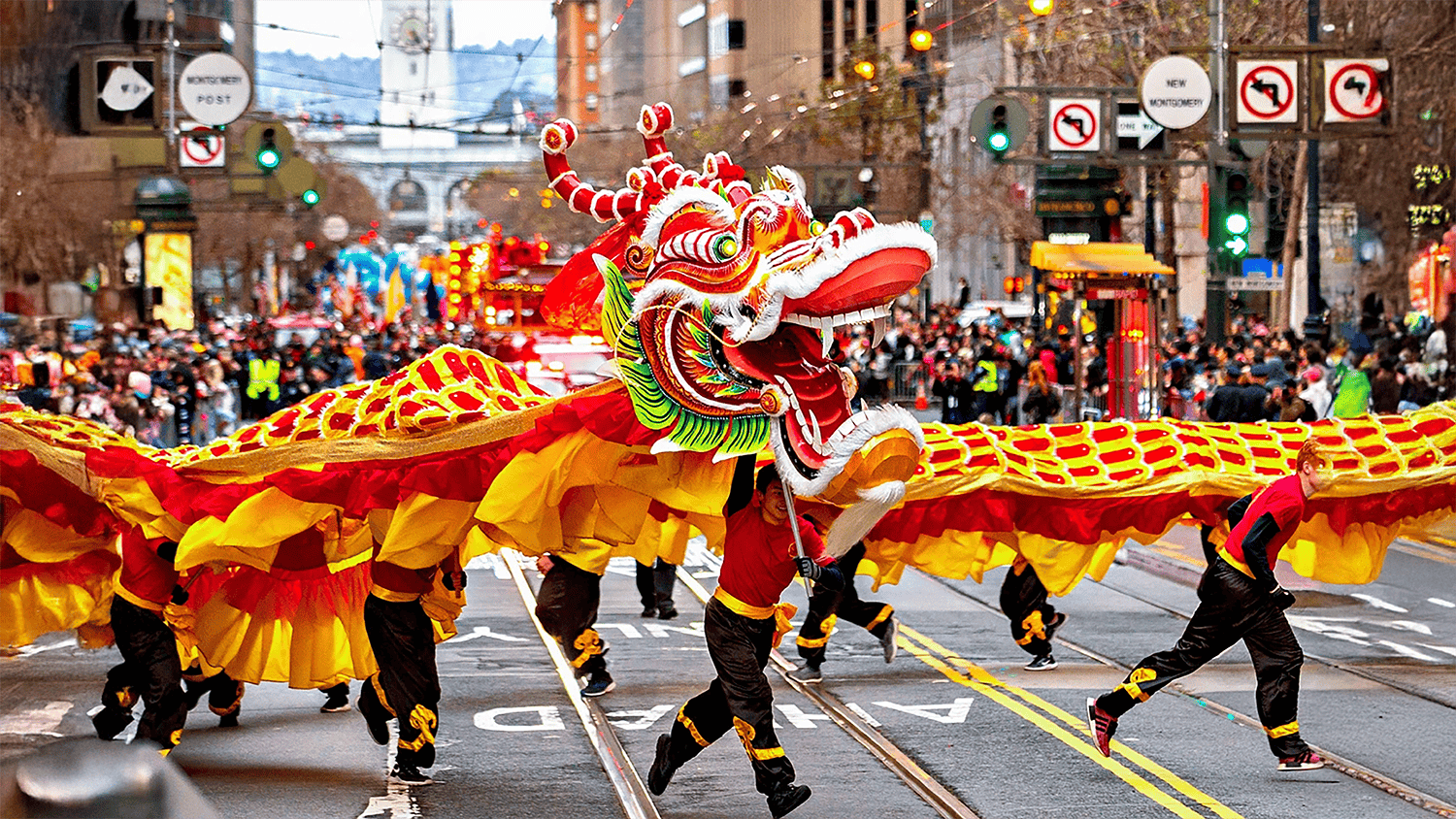
Festivities continue for 15 days or more, depending on the tradition. In many cities, lion and dragon dances wind through the streets as firecrackers burst overhead. Elders gift red envelopes (lì xì, hóngbāo, or sebae don) filled with money to children, symbolizing blessings and protection. In Vietnam, families display blooming peach branches or apricot flowers, while Koreans begin the morning with ancestral rites and a bowl of tteokguk. Lantern Festivals, parades, temple visits, and community feasts keep spirits high as people welcome the new year’s energy.
At its heart, Lunar New Year is about renewal — clearing space for hope, community, and good fortune in the year ahead. Whether celebrated through food, dance, prayer, or simple togetherness, the holiday reminds us that even in challenging times, traditions can carry joy forward. As people across the world exchange greetings of peace and prosperity, the Lunar New Year becomes more than a date — it becomes a shared invitation to begin again with intention, gratitude, and optimism.

