National Bootlegger’s Day
January 17, 2028

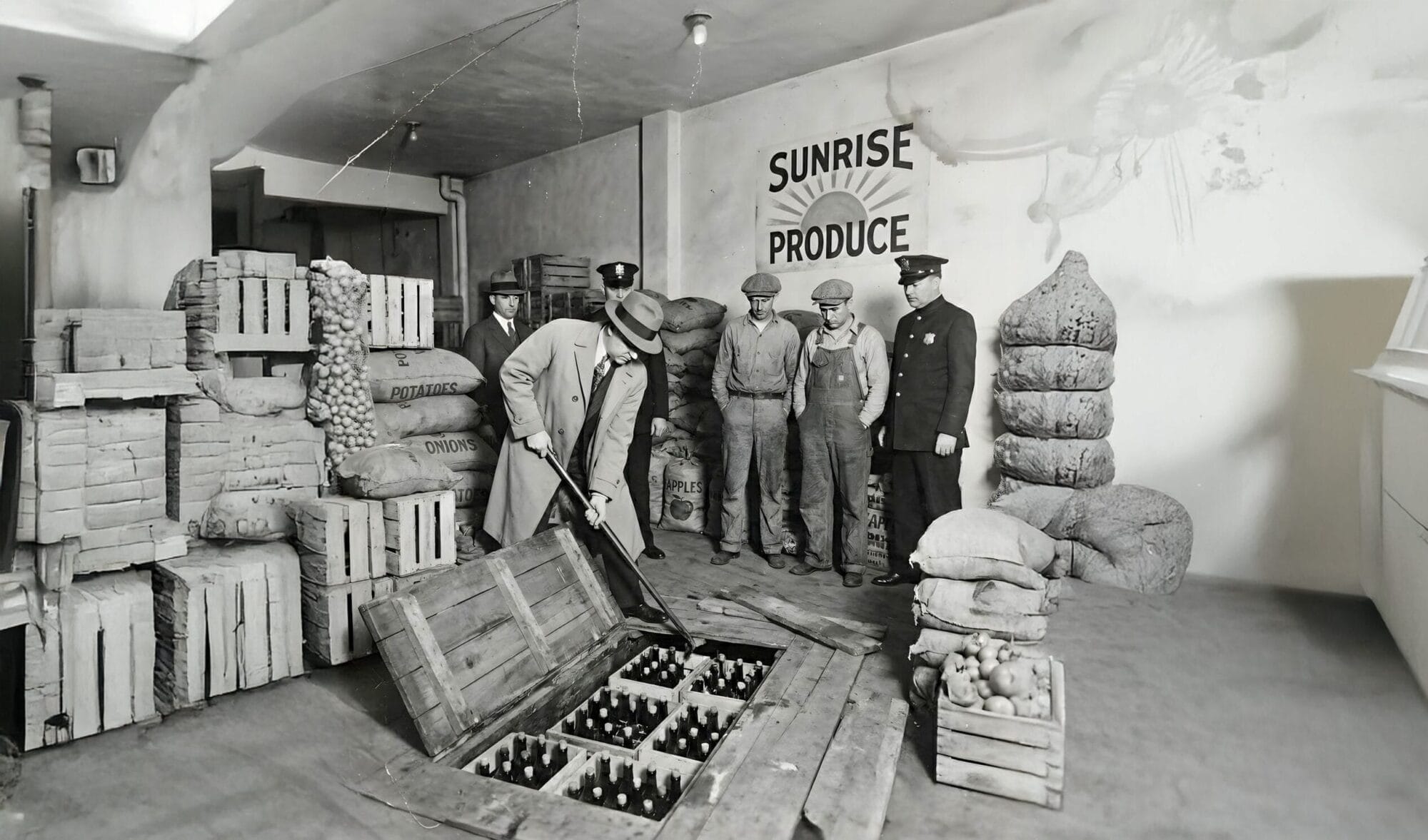
National Bootlegger’s Day, observed on January 17, looks back at a turbulent chapter in American history when alcohol was outlawed but never truly absent. The Eighteenth Amendment went into effect in 1920, banning the manufacture, sale, and transportation of alcoholic beverages across the United States. Supporters of Prohibition believed the ban would reduce crime, improve public morals, and strengthen families. Instead, it created a massive underground economy that reshaped law enforcement, organized crime, and everyday social life.
Bootleggers emerged as the essential link between supply and demand. The term itself is thought to come from smugglers who hid flasks inside their boots, but the practice quickly grew far beyond small scale concealment. Farmers converted barns into hidden distilleries, producing moonshine from corn, sugar, and yeast. Along the northern border, smugglers moved whiskey across frozen lakes from Canada, while rum runners transported liquor from the Caribbean into Florida and along the East Coast. Alcohol flowed through rivers, tunnels, and back roads, carried by people willing to risk arrest, fines, or worse.
Demand was fueled by speakeasies, secret bars that operated behind false storefronts and unmarked doors. These venues flourished in cities and rural towns alike, serving everyone from factory workers to politicians. Bootleggers became folk figures to some, villains to others, and indispensable entrepreneurs in a black market created by law. Prohibition unintentionally turned alcohol into a symbol of rebellion and freedom, and those who supplied it became central characters in a national drama.
Bootlegging was not a single uniform activity. At one end were small scale operators who distilled alcohol for neighbors and family, often viewing their work as harmless or even necessary. At the other were large criminal organizations that used violence, bribery, and intimidation to control territory and distribution. Figures like Al Capone became infamous for building vast empires that supplied thousands of speakeasies while corrupting police departments and city governments.
The era also shaped American drinking culture. Cocktails became popular partly because they masked the harsh flavors of poorly made alcohol. Drinks like the gin rickey, whiskey sour, and sidecar gained traction during this period. Home bartending flourished, and many classic cocktail recipes date back to Prohibition or the years immediately following it. Even the physical design of bars changed, with hidden rooms, secret entrances, and coded language becoming part of nightlife.
Not all bootleggers were gangsters. In rural areas, distilling alcohol was often seen as a continuation of long standing traditions. Some communities viewed federal agents as outsiders imposing unwanted rules. This tension reinforced regional identities and deepened mistrust of centralized authority. Bootlegging also exposed inequalities in enforcement, as wealthy patrons and connected individuals often avoided punishment while working class and immigrant communities bore the brunt of arrests.
One lasting product of this era was Templeton Rye, a whiskey distilled in Iowa that became widely known for its smoothness. According to lore, it was favored by politicians and found its way to high profile gatherings, including those in Washington. Stories like this highlight how Prohibition blurred the line between legality and hypocrisy, as many public supporters of the ban privately consumed the very products it outlawed.
By the early 1930s, public support for Prohibition had eroded. The Great Depression intensified criticism, as legal alcohol promised tax revenue and jobs. In 1933, the Twenty First Amendment repealed Prohibition, ending the nationwide ban and returning control over alcohol regulation to the states. Bootlegging operations largely disappeared, though organized crime had already gained lasting influence in some cities.
National Bootlegger’s Day was established in 2015 by Infinium Spirits, the company behind modern Templeton Rye. The date coincides with the birthday of Al Capone, tying the observance directly to the mythology and controversy of the era. While the day references colorful characters and daring exploits, it also serves as a reminder of the unintended consequences of sweeping social policy.
Today, the legacy of bootlegging lives on in regulated form through craft distilleries and revived regional spirits. Modern producers operate legally, focusing on quality, transparency, and heritage rather than secrecy. Many draw inspiration from Prohibition era recipes and techniques, transforming what was once illicit into a respected craft.
Observing National Bootlegger’s Day can take many forms. Some people choose to learn more about Prohibition history or visit a local distillery. Others enjoy a classic whiskey cocktail while reflecting on how laws shape behavior and markets. The day is not about glorifying crime, but about understanding a period when prohibition created opportunity, resistance, and cultural change.
Bootleggers existed because society demanded what the law denied. Their story is a case study in how regulation, morality, and economics collide. Remembering them offers insight into American resilience, ingenuity, and the complex relationship between law and everyday life.