National Buttercrunch Day
January 20, 2026

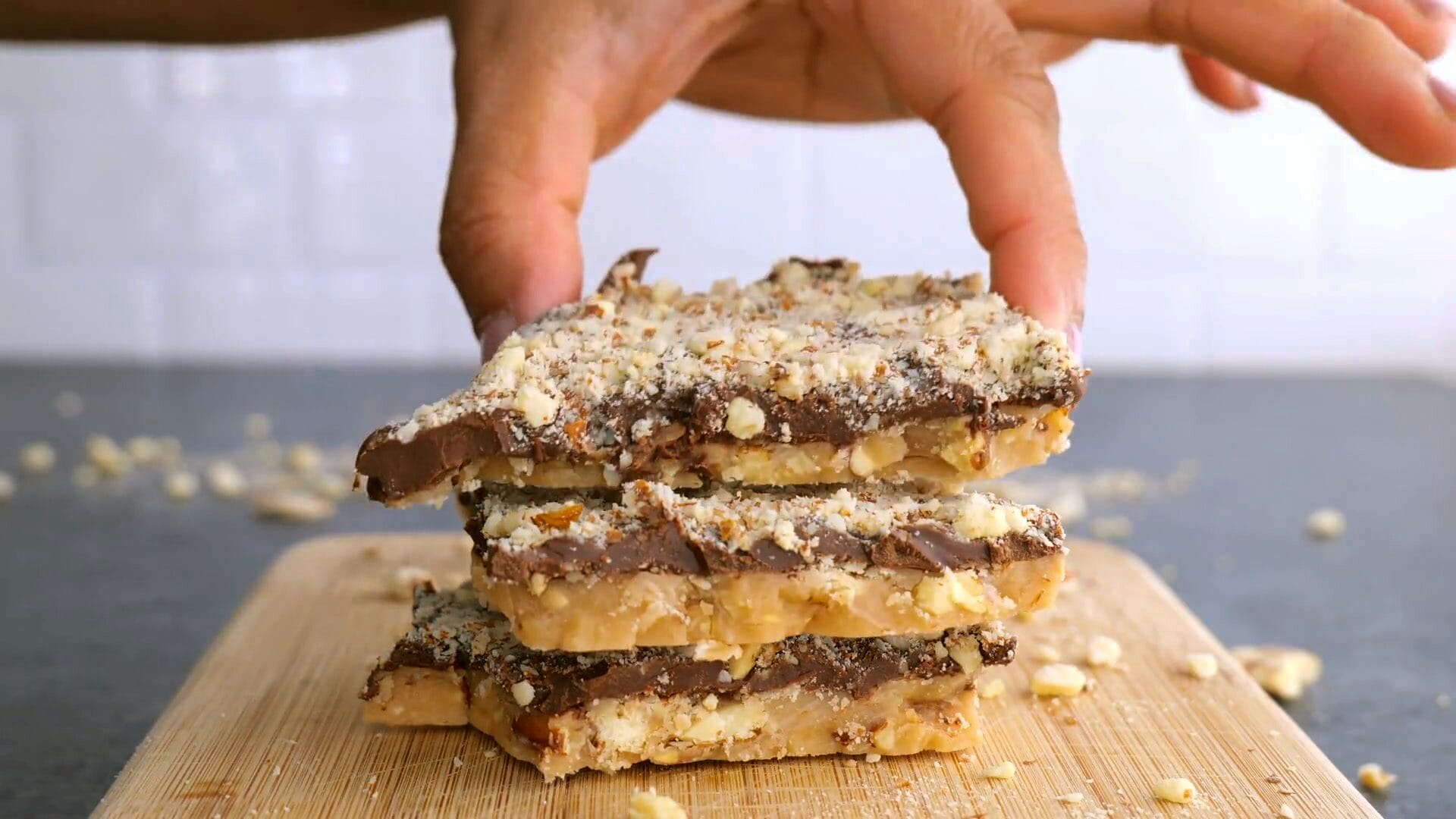
National Buttercrunch Day celebrates a candy defined by contrast: deep caramel sweetness paired with a crisp snap and rich butter flavor. Buttercrunch is often confused with toffee, but it occupies its own space in the candy family. While traditional English toffee is cooked to a very hard, brittle stage, buttercrunch is typically lighter, thinner and more delicate, often aerated slightly with baking soda and finished with chocolate and nuts.
The roots of buttercrunch trace back to nineteenth century confectionery traditions in both Britain and the United States, when sugar and butter became more widely available. As candy making moved from professional shops into home kitchens, cooks began experimenting with temperature control and ingredients. Adding nuts such as almonds or peanuts introduced texture, while chocolate coatings helped balance sweetness and extend shelf life.
In the United States, buttercrunch became especially popular in the early twentieth century as a homemade holiday candy. Families passed down handwritten recipes calling for careful stirring, watchful eyes and quick hands once the sugar reached the right stage. Candy thermometers helped standardize results, but many experienced cooks relied on color, aroma and sound to judge readiness.
By the mid twentieth century, buttercrunch had become a staple of gift tins and candy assortments. Variations emerged across regions. Some versions were thin and shattering, others slightly thicker and chewy at the center. Almond buttercrunch coated in milk or dark chocolate became one of the most beloved forms, often sprinkled with finely chopped nuts while the chocolate was still warm.
National Buttercrunch Day honors this lineage of patience, intuition and simple ingredients transformed by heat. It recognizes buttercrunch not as a mass produced novelty, but as a craft candy that rewards attention and care.
Buttercrunch relies on precise sugar chemistry. At its core, the candy is made by cooking sugar, butter and often corn syrup together until the mixture reaches the hard crack stage, usually around 290 to 300 degrees Fahrenheit. At this point, water has largely evaporated, and the sugar molecules form a rigid structure once cooled.
Butter contributes both flavor and texture. As it melts and emulsifies with sugar, milk solids in the butter undergo browning reactions that deepen flavor and add complexity. This process creates notes of caramel, toasted nuts and butterscotch. Corn syrup helps prevent crystallization, ensuring a smooth texture rather than a grainy one.
Many buttercrunch recipes include a small amount of baking soda stirred in at the end of cooking. This causes the mixture to foam slightly, introducing tiny air pockets that make the candy easier to bite and less tooth shattering than classic toffee. Timing is critical. Once baking soda is added, the candy must be poured quickly onto a prepared surface.
After cooling, melted chocolate is spread over the surface. As the chocolate sets, chopped nuts are often pressed in, creating layers of flavor and texture. Almonds are traditional, but pecans, peanuts and even pistachios appear in modern variations.
The finished candy is broken into irregular shards, each piece unique. This randomness is part of buttercrunch’s charm. No two batches look exactly the same, even when made from the same recipe. National Buttercrunch Day celebrates this intersection of science and intuition, where precision meets hands on craft.
National Buttercrunch Day is an invitation to slow down and make something by hand. One of the most meaningful ways to celebrate is by preparing buttercrunch at home. The process demands attention but rewards it with a candy that feels both nostalgic and indulgent. Setting aside time to cook sugar carefully, stir patiently and work quickly when needed turns candy making into a focused ritual.
For those who prefer not to cook, supporting local confectioners is another way to honor the day. Small candy shops often produce buttercrunch using traditional methods and high quality ingredients. Sampling these versions highlights how butter quality, nut choice and chocolate percentage affect the final result.
Buttercrunch can also be used creatively beyond eating it straight. Crushed pieces can be folded into ice cream, layered into parfaits or sprinkled over brownies and cakes for crunch. It pairs especially well with vanilla, coffee and dark chocolate desserts.
Gift giving is deeply tied to buttercrunch’s history. Wrapped in parchment or packed into tins, it has long been shared during winter holidays and celebrations. National Buttercrunch Day continues that tradition by encouraging generosity and sharing something handmade or thoughtfully chosen.
At its heart, buttercrunch represents transformation. Simple ingredients become something complex through heat, time and care. National Buttercrunch Day reminds us that some of the most satisfying treats are born from patience and attention, and that a single crisp bite can carry generations of culinary tradition.