National California Strawberry Day
March 21, 2029

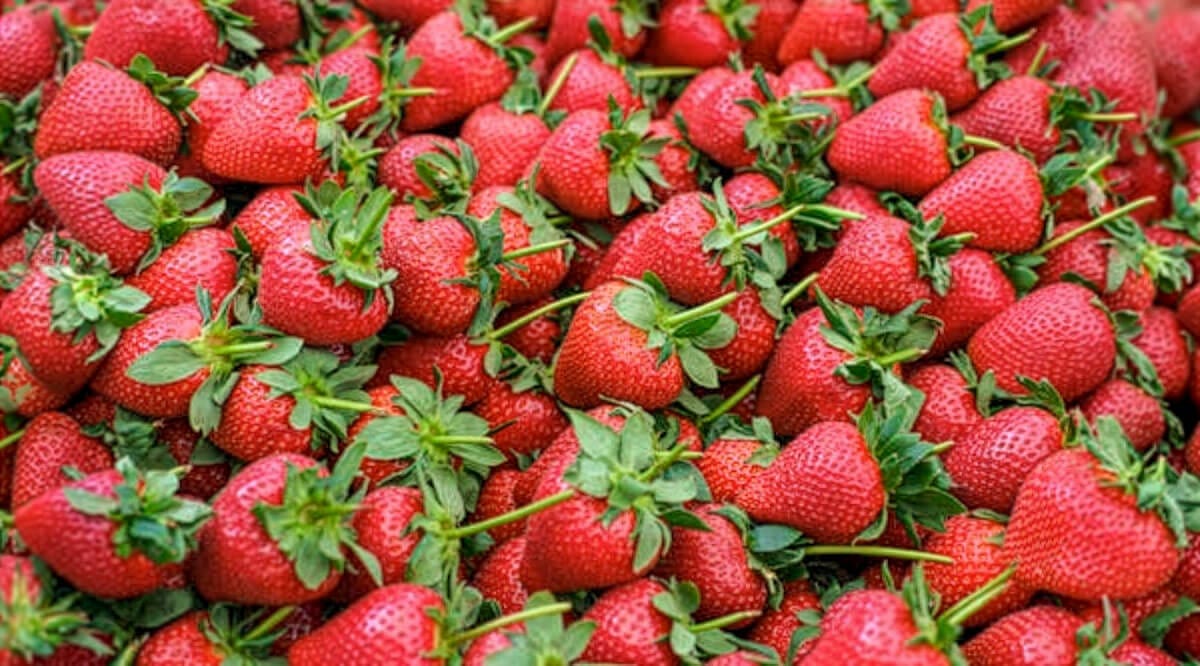
National California Strawberry Day celebrates the farming, history, and cultural importance of one of the most commercially significant fruits in the United States. National California Strawberry Day highlights how California became the dominant center of strawberry production and how that dominance reshaped consumer expectations about freshness, seasonality, and fruit availability.
The strawberry itself has a layered agricultural history. Wild strawberries were gathered in Europe and the Americas long before large-scale cultivation existed. These earlier berries were much smaller than modern commercial strawberries, but they were intensely fragrant and helped establish the fruit’s long-standing connection to spring and abundance.
The modern cultivated strawberry is not a simple wild fruit transferred into fields. It emerged through hybridization in eighteenth-century Europe, when breeders combined North American and South American varieties to produce a berry with improved size, yield, and sweetness. That breeding breakthrough laid the foundation for the global strawberry industry.
California entered that story through climate and scale. The state’s coastal regions offered mild temperatures, extended growing seasons, and fertile soil conditions that made strawberries unusually productive. Those environmental conditions helped California move from participant to leader in the strawberry market.
The ingredient microhistory at the center of National California Strawberry Day is the commercial strawberry plant itself. Modern varieties are bred for multiple goals at once: sweetness, firmness, transport durability, disease resistance, and visual appeal. That means today’s berries are not just agricultural products. They are carefully engineered crop outcomes shaped by decades of horticultural research.
Migration and labor also shaped California’s strawberry story. The state’s fruit economy depended heavily on farm labor, much of it performed by immigrant workers whose role is central to the success of the crop but often under-acknowledged in public celebration. National California Strawberry Day can be understood more honestly when the labor system behind the berry is part of the story.
National California Strawberry Day highlights a crop that is economically important far beyond dessert culture. California strawberries support farms, packing operations, transportation systems, grocery supply chains, processing industries, and restaurant menus. The berry is both a fresh-market fruit and a value-added ingredient used in yogurt, jam, frozen desserts, beverages, and baked goods.
Agriculturally, strawberries are demanding crops. They require careful irrigation, pest management, soil preparation, and timing. Unlike more durable fruits, strawberries bruise easily and have a short shelf life, which means speed matters from harvest to cooling to transport. That perishability is one reason California’s infrastructure became so important.
Technological inflection points made the state’s dominance possible. Refrigerated trucking allowed California strawberries to move across the country without collapsing into spoilage. Plasticulture systems, drip irrigation, breeding programs, and post-harvest cooling all improved consistency and scalability. Without those advances, the fruit would have remained more locally bound.
Sensory anthropology helps explain why strawberries became so culturally central. Their appeal is not only sweetness. It is the combination of bright acidity, soft flesh, vivid red color, and a recognizable aroma that signals ripeness before a bite is taken. Strawberries feel seasonal even when sold year-round, which gives them emotional power in the marketplace.
Regional comparison sharpens the point. Other places grow excellent strawberries, often with shorter local seasons and strong flavor reputations. California’s advantage was not exclusivity of quality. It was the ability to produce at scale and move fruit efficiently. National California Strawberry Day therefore reflects infrastructure as much as agriculture.
A common misconception is that the strawberry’s prominence in California is purely natural. Climate mattered, but so did research institutions, labor systems, logistics, packaging, and retail relationships. National California Strawberry Day is really about the meeting point between biology and distribution.
Ancient and premodern periods saw wild strawberries gathered in Europe and the Americas, valued for fragrance and seasonal sweetness rather than size or shipping durability. These early forms established the fruit’s long cultural appeal but did not yet support large-scale commercial farming.
In the eighteenth century, European horticulturists hybridized different strawberry species and created the basis for the modern cultivated strawberry. This was the key biological turning point that made larger, more uniform, and more productive berries possible.
During the nineteenth century, strawberry cultivation expanded in North America as fruit farming and market gardening grew alongside urban populations. Strawberries became more commercially relevant but were still constrained by perishability and transport limitations.
In the early twentieth century, California growers increasingly recognized that coastal growing conditions supported longer harvest windows and more stable production. This gave the state an early strategic advantage in berry farming.
Mid-twentieth-century refrigeration and trucking transformed the crop. Fruit could now be cooled quickly and shipped across long distances, allowing California strawberries to become a national product rather than a regional one.
Late twentieth-century breeding and irrigation advances improved firmness, yield, and shelf life, further consolidating California’s position. These changes made the strawberry more compatible with supermarket supply chains and broad retail distribution.
In the twenty-first century, California remains dominant, but the industry faces pressure from labor costs, water constraints, disease management, and climate variability. National California Strawberry Day now reflects not only success, but the ongoing challenge of sustaining that success.
National California Strawberry Day matters today because it draws attention to how modern fruit abundance is built. Consumers often experience strawberries as simple, cheerful produce, but behind that experience sits a system of breeding, labor, transport, cooling, packaging, and agricultural decision-making.
The holiday also matters because strawberries sit at the center of debates about water use, labor visibility, pesticide concerns, and sustainability. California’s agricultural success comes with environmental and economic pressures that shape the future of the crop. A serious observance should acknowledge both the fruit’s popularity and the complexity behind it.
Sensory appeal continues to drive the berry’s influence. Strawberries remain one of the clearest examples of a fruit whose aroma, color, and soft texture create immediate emotional recognition. They signal freshness, spring, and indulgence in a way few fruits manage so consistently.
National California Strawberry Day also helps clarify a broader agricultural truth: crop identity is not just about where something grows. It is about how regional farming systems, shipping networks, and market expectations shape the final product. California did not merely grow strawberries. It standardized the experience of buying them.
Another reason National California Strawberry Day matters is that it offers a way to talk honestly about labor. Strawberries are hand-harvested and highly labor-dependent. Any serious recognition of the crop should include the human effort required to bring fragile fruit from field to table.
National California Strawberry Day matters because it honors a fruit that became a national staple through regional advantage, scientific breeding, and logistical power. It is a day about strawberries, but also about the agricultural system that made those strawberries feel ordinary.
