National Clam Chowder Day
February 25, 2028

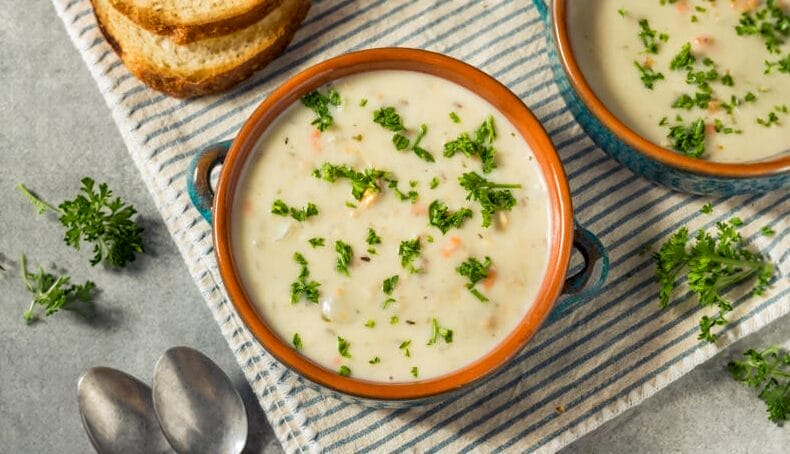
National Clam Chowder Day is observed annually on February 25 and celebrates a seafood soup that reflects coastal settlement, maritime labor, and regional identity in the United States. Clam chowder developed in northeastern coastal communities where shellfish were abundant and preservation techniques shaped everyday cooking.
The word “chowder” likely derives from the French term chaudière, referring to a large cooking pot used by fishermen. Early chowders were practical one-pot meals prepared aboard ships or in harbor towns, combining available seafood with salt pork and hard bread. These soups were designed for sustenance rather than refinement.
Clams became central to chowder in New England due to their accessibility along tidal flats and rocky shores. Indigenous peoples harvested shellfish long before European settlement, and colonial cooks adapted these ingredients into European-style stews. Over time, potatoes replaced hardtack as a thickening component, creating the familiar texture associated with modern clam chowder.
Regional distinctions emerged as the dish spread. New England clam chowder is characterized by a milk or cream base, while Manhattan clam chowder uses tomatoes. Rhode Island variations often omit dairy and tomatoes altogether. These differences reflect both local ingredients and culinary identity.
National Clam Chowder Day recognizes this evolution from working waterfront meal to emblematic regional specialty.
Clam chowder holds cultural significance because it symbolizes coastal resilience and community. Fishing communities relied on shared meals that could be prepared in large quantities and adapted to fluctuating catches.
In New England, clam chowder became associated with local pride. Restaurants, seaside stands, and home kitchens each claim distinct approaches, reinforcing regional identity. Debates between cream-based and tomato-based versions illustrate how food becomes shorthand for place.
The dish also reflects migration patterns. As people moved inland, canned clams and commercial distribution allowed chowder to spread beyond coastal areas. This accessibility transformed it from a local necessity into a national comfort food.
Clam chowder’s thick texture and savory depth make it well suited to colder climates, reinforcing its seasonal association with winter months.
National Clam Chowder Day highlights how regional dishes preserve maritime history and communal memory.
National Clam Chowder Day remains relevant because it connects contemporary diners with coastal heritage and sustainable seafood practices. Interest in local sourcing has renewed attention to shellfish harvesting and environmental stewardship.
The observance also underscores how regional cuisine shapes broader national food identity. Clam chowder’s multiple variations demonstrate that tradition can accommodate diversity without losing core structure.
In a culinary landscape driven by innovation, clam chowder endures through familiarity and depth of flavor. Its ingredients remain simple, yet its cultural meaning remains layered.
National Clam Chowder Day matters because it honors a dish that bridges maritime labor, regional pride, and enduring comfort.
