National Croissant Day
January 30, 2026

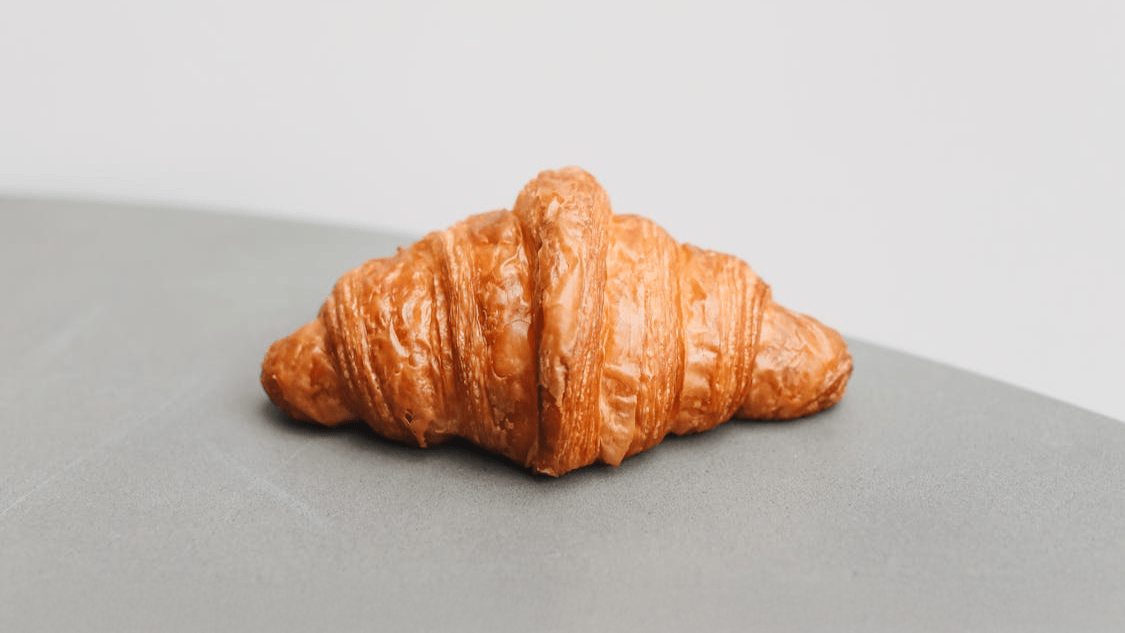
The croissant is one of the most recognizable pastries in the world, defined by its crescent shape, delicate flake and unmistakable butter aroma. While it is closely associated with France, its story begins elsewhere in Europe. Crescent shaped breads existed long before the croissant, most notably the Viennese kipferl, a yeasted pastry documented as early as the thirteenth century. Kipferl were denser and less buttery than modern croissants, but they established the iconic curved form that would later inspire French bakers.
One enduring legend ties the kipferl to the 1683 Battle of Vienna. According to the story, bakers working through the night heard Ottoman troops tunneling beneath the city walls and raised the alarm. After Vienna’s successful defense, bakers shaped pastries like the Ottoman crescent moon to celebrate victory. While historians debate the accuracy of this tale, it reflects how food myths often arise alongside national identity and memory.
The croissant as we know it took shape much later. In the early nineteenth century, Austrian baker August Zang opened a Viennese bakery in Paris, introducing Parisians to kipferl and other Austrian breads. French bakers admired the shape but began experimenting with technique. By incorporating laminated dough methods, which involve folding butter into dough through repeated rolling and resting, they transformed a simple crescent bread into something lighter, flakier and richer. Over time, the croissant became distinctly French, both in method and in reputation.
The defining characteristic of a croissant is its lamination. This process creates dozens of thin layers of dough separated by butter. When baked, moisture in the butter turns to steam, forcing the layers apart and producing a pastry that is crisp on the outside and honeycombed within. Lamination requires precision. Butter must remain cold enough to stay distinct yet pliable enough to roll without breaking through the dough.
This technique elevated the croissant from everyday bread to a symbol of skill and patience. Traditional croissants rely on just a few ingredients: flour, water, yeast, sugar, salt and butter. There is no shortcut that replaces time. The dough must rest between turns to relax the gluten and maintain structure. A well made croissant reflects the baker’s control over temperature, timing and handling.
In France, croissants became a staple of daily life rather than a special occasion indulgence. Bakeries bake them fresh each morning, and people stop in on their way to work to pick up a croissant and coffee. Over time, variations emerged. Pain au chocolat replaces the crescent shape with a rectangular form wrapped around dark chocolate. Almond croissants repurpose day old pastries with almond cream and sliced nuts. Savory versions are filled with ham and cheese. Despite these variations, the plain butter croissant remains the standard by which all others are judged.
The croissant also became a benchmark for professional training. In culinary schools and apprenticeships, mastering lamination is considered a rite of passage. A good croissant reveals itself when broken open. The interior should show an even honeycomb structure, not doughy layers or large voids. The exterior should shatter lightly under pressure, releasing the scent of butter before the first bite.
National Croissant Day, observed on January 30, is an invitation to slow down and appreciate craftsmanship in an era of convenience. Celebrating does not require baking from scratch, although many home bakers take on the challenge as a personal test of patience and skill. Making croissants at home can take two days, with periods of rolling, chilling and resting. The reward is not just the finished pastry, but the understanding gained through the process.
For those who prefer to celebrate by eating rather than baking, visiting a local bakery is a meaningful choice. Independent bakeries often produce croissants using traditional methods, sometimes fermenting dough overnight for deeper flavor. Supporting these bakeries helps preserve techniques that cannot be replicated by mass production. When choosing a croissant, look for a deep golden color, visible layers and a light feel despite its size.
Croissants are versatile. They can be eaten plain to appreciate the butter and fermentation, split and filled with jam, or paired with eggs and cheese for a more substantial meal. In many cultures, croissants have been adapted to local tastes, appearing with dulce de leche, custard or regional cheeses. This adaptability is part of their global appeal.
National Croissant Day is also an opportunity to reflect on how culinary traditions travel and evolve. What began as a Central European bread became a French icon and eventually a global staple. Today, croissants appear in cafés from Paris to Tokyo, each shaped by local interpretation while still honoring the same basic technique.
The croissant reminds us that some of the most beloved foods are born from refinement rather than invention. Butter and flour alone are ordinary. Through repetition, care and time, they become something extraordinary. On National Croissant Day, taking a moment to savor those layers is a small act of appreciation for centuries of bakers who believed that patience could be tasted.
