National Lobster Newburg Day
March 25, 2029

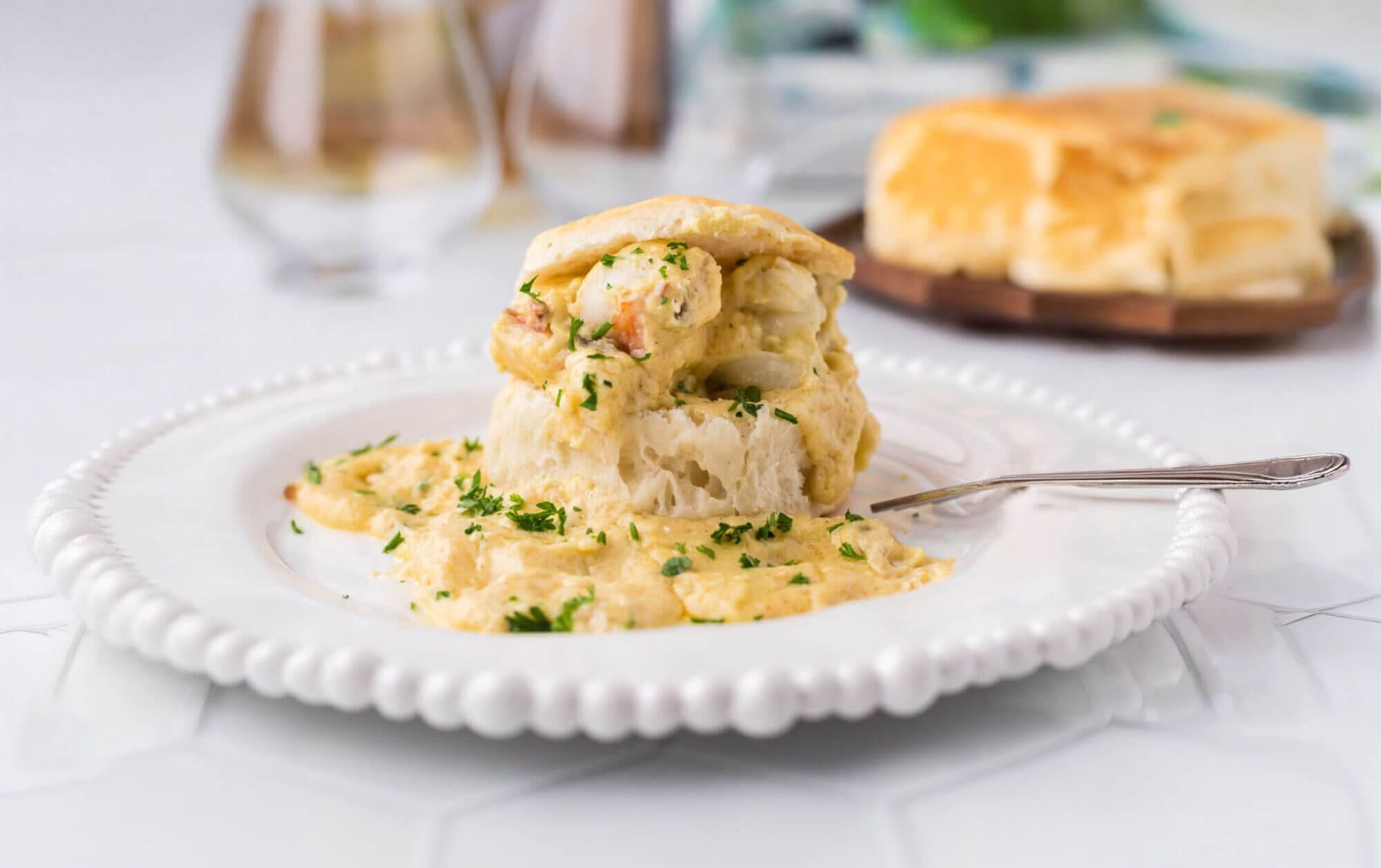
National Lobster Newburg Day is observed annually on March 25th throughout the United States, celebrating one of American fine dining’s most luxurious and historically significant dishes. This elegant seafood preparation features succulent lobster meat bathed in a rich, creamy sauce made with butter, cream, egg yolks, sherry, and a hint of cayenne pepper, traditionally served over toast points or puff pastry. The dish represents the pinnacle of Gilded Age excess and culinary sophistication, born in the opulent dining rooms of 19th-century New York City where wealthy industrialists and society figures gathered to see and be seen. National Lobster Newburg Day falls within the broader category of classic American cuisine celebrations, honoring dishes that shaped the nation’s culinary identity during pivotal historical moments. While primarily recognized in the United States, particularly in coastal regions where lobster fishing remains culturally and economically important, the observance celebrates a dish that epitomizes American fine dining’s evolution from European influences into something distinctly its own. Whether prepared in upscale restaurants by trained chefs or attempted at home by ambitious cooks, National Lobster Newburg Day invites participants to experience a taste of America’s gilded past.
The origins of Lobster Newburg are inseparably linked to Delmonico’s Restaurant, the legendary New York City establishment that defined American fine dining throughout the 19th century. Founded by the Swiss-born Delmonico family in 1837, Delmonico’s introduced Americans to sophisticated Continental cuisine, extensive wine lists, and the very concept of dining as theater and social performance. The restaurant became the preferred gathering place for New York’s elite, including figures like Mark Twain, Charles Dickens, and Diamond Jim Brady, who demanded elaborate dishes that showcased both culinary skill and expensive ingredients.
The most widely accepted origin story credits Lobster Newburg’s creation to a wealthy sea captain named Ben Wenberg, a regular patron of Delmonico’s in the 1870s. According to legend, Wenberg demonstrated a recipe for preparing lobster in a chafing dish tableside, combining lobster meat with cream, egg yolks, and sherry to create a rich, elegant sauce. Charles Delmonico, impressed by the preparation, added the dish to the menu as “Lobster à la Wenberg” in honor of its creator. The dish became an instant sensation among Delmonico’s clientele, who appreciated both its luxurious ingredients and theatrical tableside presentation.
The story takes a dramatic turn when Wenberg and Charles Delmonico reportedly had a falling out, the exact nature of which remains disputed by historians. Some accounts suggest a physical altercation in the restaurant, while others describe a business disagreement or social scandal. Regardless of the cause, Delmonico responded by removing Wenberg’s name from the dish. Rather than eliminating this profitable menu item entirely, he cleverly anagrammed the name, rearranging “Wenberg” to “Newburg,” and Lobster Newburg was born. This act of culinary revenge through wordplay ensured the dish’s immortality while erasing its creator from popular memory.
The technique itself represents a sophisticated application of classical French sauce-making adapted to American ingredients. The base sauce, enriched with egg yolks and cream, belongs to the family of liaison sauces where egg yolks provide both thickening and luxurious texture. The addition of sherry, a fortified wine popular in 19th-century America, adds complexity and slight sweetness that balances the richness. Cayenne pepper provides subtle heat that cuts through the cream’s heaviness. This combination of techniques demonstrated Delmonico’s kitchen mastery and helped establish American restaurants as capable of Continental-level sophistication.
Lobster Newburg’s popularity spread rapidly beyond Delmonico’s walls as other restaurants copied the dish and home cooks attempted their own versions. Cookbooks from the late 1800s and early 1900s featured numerous Lobster Newburg recipes, each with slight variations in technique or proportions. The dish became synonymous with special occasions and elegant entertaining, appearing on menus at weddings, anniversary dinners, and celebrations where hosts wanted to impress guests with culinary sophistication and ingredient expense. This widespread adoption cemented Lobster Newburg’s place in American culinary canon alongside other Delmonico’s innovations like Baked Alaska and Chicken à la King.
The timeline of Lobster Newburg traces American fine dining’s development and changing relationship with luxury foods. In 1837, Delmonico’s Restaurant opened in New York City, establishing the foundation for what would become America’s most influential restaurant. By the 1870s, the restaurant had moved to its famous location at Fifth Avenue and 26th Street, operating at the height of its cultural influence when Captain Ben Wenberg introduced his lobster preparation. Charles Delmonico added “Lobster à la Wenberg” to the menu around 1876, marking the dish’s official debut in American gastronomy.
The transformation to “Lobster Newburg” occurred shortly after, sometime between 1876 and 1879, following the Delmonico-Wenberg falling out. The renamed dish gained even greater popularity, becoming Delmonico’s signature seafood preparation and one of the most requested items on their extensive menu. By the 1880s, Lobster Newburg had spread to other high-end restaurants across America, appearing on menus in Boston, Philadelphia, Chicago, and San Francisco as each city developed its own fine dining scene modeled on New York’s example.
The 1896 publication of “The Epicurean” by Charles Ranhofer, Delmonico’s legendary chef from 1862 to 1896, codified the recipe and technique for professional and home cooks. Ranhofer’s comprehensive cookbook documented Delmonico’s entire repertoire, including the definitive Lobster Newburg preparation. This publication democratized access to previously secret restaurant techniques, allowing ambitious home cooks to attempt dishes once reserved for restaurant dining. The cookbook went through multiple printings and established Ranhofer as one of America’s first celebrity chefs.
Through the early 20th century, Lobster Newburg maintained its status as a special occasion dish, though its popularity gradually declined as American tastes shifted toward simpler preparations and away from heavy cream sauces. The mid-century trend toward lighter, more modern cuisine made dishes like Lobster Newburg seem old-fashioned and excessively rich. Julia Child’s influence in the 1960s and 1970s revived interest in classical French technique, bringing renewed appreciation for dishes like Lobster Newburg that demonstrated proper sauce-making skills. Contemporary restaurants occasionally feature Lobster Newburg as a heritage dish, honoring American culinary history while sometimes lightening the sauce or modernizing the presentation.
National Lobster Newburg Day matters because it preserves connection to a pivotal era in American culinary history. The Gilded Age, roughly spanning the 1870s through early 1900s, saw America transform from a nation of simple, frontier-influenced cooking to one capable of sophisticated haute cuisine rivaling Europe’s finest establishments. Lobster Newburg epitomizes this transformation, representing the moment when American restaurants developed distinctive dishes rather than merely copying French or Italian preparations. Celebrating this dish honors the chefs, restaurateurs, and diners who built America’s fine dining tradition from nothing.
The observance also highlights the importance of technique in cooking, particularly the classical French methods that underpin much of professional cuisine. Preparing proper Lobster Newburg requires understanding emulsion science, temperature control to prevent egg yolk curdling, and the delicate balance between richness and acidity. These skills transfer to countless other preparations, making Lobster Newburg an excellent teaching dish for aspiring cooks. National Lobster Newburg Day creates opportunities for culinary education, whether through cooking classes, restaurant demonstrations, or home kitchen experiments that build fundamental sauce-making competence.
From an economic perspective, the holiday celebrates lobster fishing communities and the sustainable seafood industry. Maine lobstermen, Massachusetts fishermen, and Canadian Maritime provinces depend on lobster as a cornerstone of their economies. While much lobster consumption today involves simpler preparations like steamed lobster or lobster rolls, dishes like Lobster Newburg remind consumers of lobster’s versatility and value beyond casual summer eating. Supporting restaurants and fishmongers who source sustainable, well-managed lobster stocks helps preserve both marine ecosystems and fishing heritage communities.
The dish also represents luxury and special occasion dining, qualities that matter even in an age of casual cuisine. Lobster Newburg demands attention, time, and quality ingredients. It cannot be rushed or made with shortcuts. This deliberate approach to cooking and dining stands counter to contemporary fast-casual trends, reminding us that some foods deserve ceremony and patience. National Lobster Newburg Day invites participants to slow down, invest effort in preparation, and treat dining as an event worthy of attention rather than mere fuel consumption.
Finally, National Lobster Newburg Day matters because it connects present-day eaters to a specific moment in New York City’s cultural history when the city emerged as America’s undisputed cultural capital. Delmonico’s wasn’t just a restaurant; it was an institution where business deals were struck, political alliances formed, and social hierarchies negotiated over elaborate multi-course meals. The stories embedded in dishes like Lobster Newburg, from Captain Wenberg’s tableside demonstration to Charles Delmonico’s clever name change, humanize culinary history and make it accessible. These narratives transform cooking from mechanical recipe-following into participation in ongoing cultural traditions, making National Lobster Newburg Day on March 25th an opportunity to taste history while honoring the creativity, skill, and sometimes petty feuds that shaped American cuisine.
