National Nougat Day
March 26, 2026

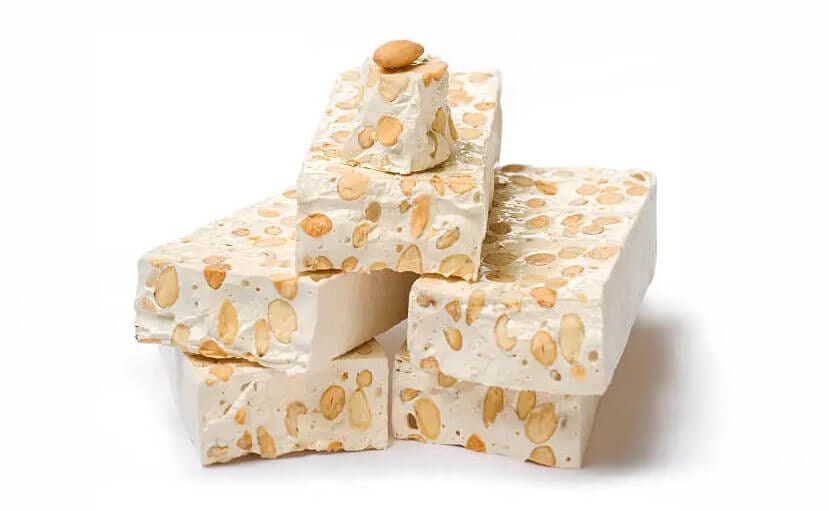
National Nougat Day celebrates a confection that sits at the intersection of agricultural production, sugar technology, and centuries of culinary refinement. National Nougat Day highlights how a mixture of sweeteners, aerated egg whites, and nuts evolved into a structurally complex candy with deep roots in Mediterranean and European traditions. Though often perceived as a simple candy bar component, nougat carries a long and technically rich history tied to both ingredient sourcing and confectionery innovation.
The ingredient microhistory behind National Nougat Day begins with honey, one of the oldest sweeteners used by humans. Before refined sugar became widely available, honey served as the primary binding agent in early nougat-like confections. Honey provided both sweetness and viscosity, allowing mixtures of nuts and other ingredients to hold together in a stable form. This early reliance on honey reflects agricultural systems centered around beekeeping and floral ecosystems.
The later introduction of refined sugar marked a major turning point in nougat production. Sugar refining techniques, which expanded significantly through global trade networks, allowed confectioners to control sweetness and texture with far greater precision. Sugar also enabled higher heat cooking processes that produced firmer, more stable nougat structures compared to honey-based versions.
Nuts are equally essential to the identity of nougat. Almonds, pistachios, and hazelnuts are the most common varieties used, each contributing distinct textures and flavor profiles. These nuts are cultivated in Mediterranean climates, where warm temperatures and specific soil conditions support their growth. The inclusion of nuts transforms nougat from a simple sweet into a layered product that combines fat, protein, and sugar into a cohesive confection.
Egg whites represent another critical innovation in nougat’s development. When whipped and incorporated into heated sugar or honey mixtures, egg whites introduce air into the confection, creating the characteristic light and chewy texture found in many nougat varieties. This aeration process is technically demanding and requires precise temperature control to prevent collapse or over-hardening.
National Nougat Day reflects the convergence of these elements: natural sweeteners, cultivated nuts, and controlled aeration techniques. Together, they form a confection that is both structurally complex and historically significant within the broader evolution of sweets.
National Nougat Day highlights how nougat depends on interconnected agricultural systems spanning multiple regions. Honey production relies on beekeeping and pollination ecosystems, while sugar production depends on crops such as sugarcane and sugar beets. Nut cultivation requires long-term agricultural investment, as trees take years to mature before producing viable yields.
Culturally, nougat has strong ties to Mediterranean and European traditions. Variations of nougat appear in countries such as Italy, France, and Spain, each with distinct ingredient ratios and textures. Some versions are soft and chewy, while others are firm and brittle. These differences reflect regional preferences as well as variations in available ingredients.
Sensory anthropology helps explain nougat’s enduring appeal. The combination of sweetness, nut richness, and aerated texture creates a layered eating experience. Nougat is neither fully solid nor entirely soft, occupying a middle ground that engages both bite resistance and chewiness. This balance contributes to its distinct identity among confections.
Technological inflection points significantly influenced nougat production. Advances in sugar refining allowed for more consistent results, while improvements in mixing equipment made it easier to incorporate air evenly. Temperature control became more precise with modern tools, reducing the risk of failure during production.
A misconception worth correcting is that nougat is a uniform product. In reality, there are multiple types of nougat, including white nougat made with egg whites and darker varieties that rely more heavily on caramelized sugar. Each type reflects different production methods and cultural preferences.
Economic resilience plays a role in nougat’s continued presence in global markets. Because it combines shelf-stable ingredients such as sugar and nuts, nougat can be stored and transported efficiently. This durability has made it a practical confection for both artisanal producers and large-scale manufacturers.
Ancient period: Honey-based confections combining nuts and sweeteners appear in early Mediterranean cultures, forming the conceptual foundation of nougat.
Middle Ages: Confectioners begin refining techniques for combining honey and nuts into more structured sweets, often prepared for special occasions.
16th to 18th centuries: Sugar refining expands through global trade, allowing confectioners to replace or supplement honey with sugar in nougat recipes.
18th century: Egg whites are incorporated into nougat mixtures, introducing aeration and creating lighter textures.
19th century: Regional variations of nougat become more distinct across Europe, with specific styles emerging in Italy, France, and Spain.
Early 20th century: Industrial confectionery production begins incorporating nougat into candy bars and mass-produced sweets.
Late 20th century to present: Nougat continues to evolve through both artisanal production and commercial manufacturing, maintaining relevance in global confectionery markets.
National Nougat Day matters because it highlights a confection that reflects both agricultural diversity and technological refinement. Nougat depends on ingredients sourced from multiple ecosystems, including bee populations, nut orchards, and sugar-producing crops. This interconnected system underscores the complexity behind a seemingly simple candy.
The holiday also provides an opportunity to reconsider nougat’s role within modern food culture. While often overshadowed by chocolate or caramel, nougat remains an essential component in many confections and continues to serve as a standalone product in artisanal markets.
Sensory anthropology reinforces nougat’s continued appeal. Its balance of sweetness, texture, and nut flavor creates a distinct eating experience that differs from other candies. This uniqueness helps sustain its relevance even as consumer preferences shift.
Modern production methods have made nougat more accessible, but they also introduce questions about ingredient sourcing and sustainability. Nut farming, sugar production, and honey harvesting all face environmental pressures that influence the future of the confection.
Another reason National Nougat Day matters is its connection to culinary heritage. Nougat represents a lineage of confectionery knowledge that spans centuries, linking modern consumers to historical food practices. This continuity adds cultural depth to what might otherwise be seen as a simple sweet.
National Nougat Day ultimately matters because it celebrates a confection shaped by time, technique, and global agricultural systems. It is a reminder that even small candies can carry complex histories rooted in both nature and human innovation.
