National Peach Melba Day
January 13, 2027

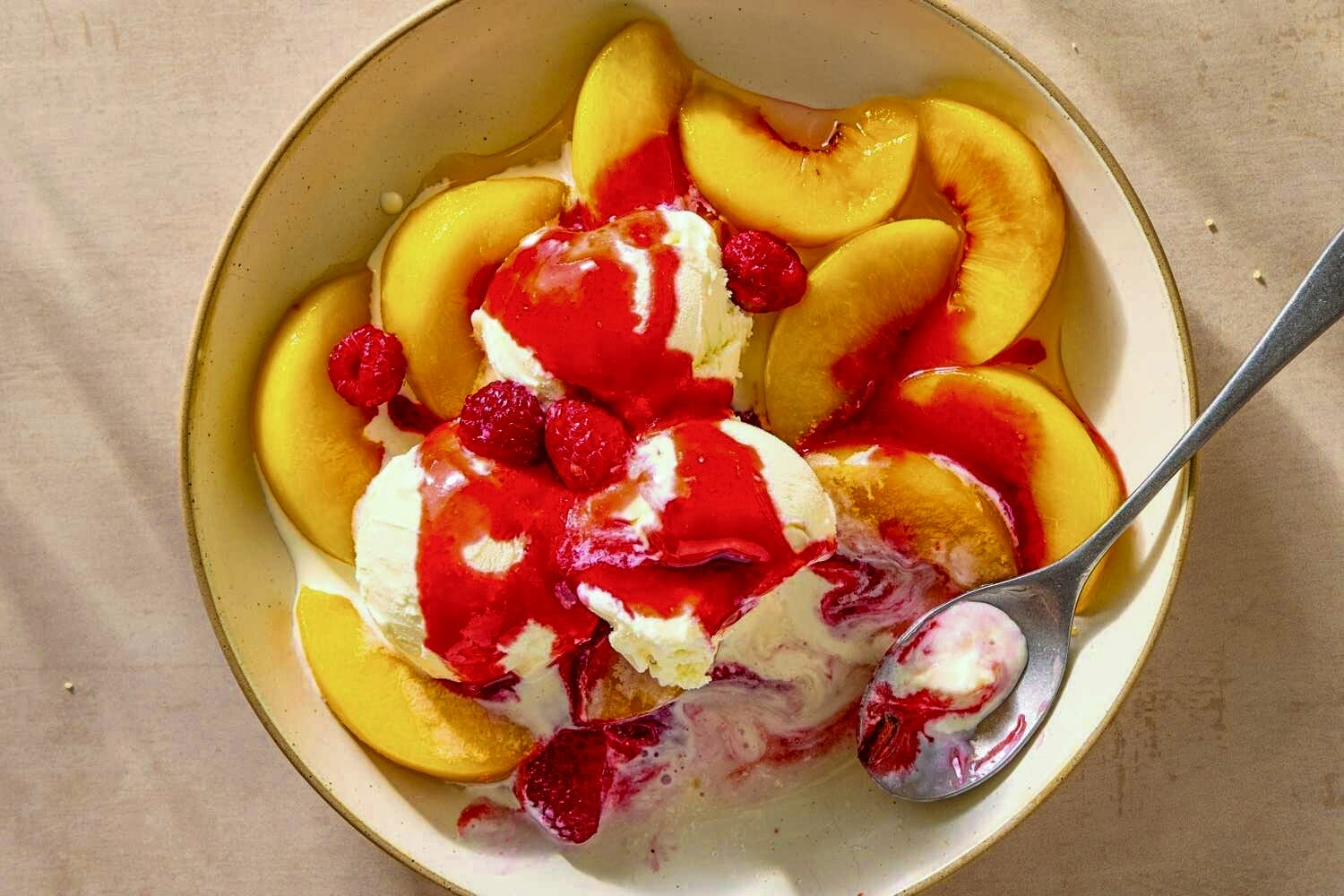
Peach Melba is one of the rare desserts whose history is as captivating as its flavor. Its creation is rooted in the cultural energy of late nineteenth century Europe, when opera, luxury hotels, and haute cuisine often intersected. The dessert was conceived by Auguste Escoffier, one of the most influential chefs in culinary history and a central figure in shaping modern French cuisine. At the time, Escoffier was working at the Savoy Hotel in London, a hub of artistic and social life.
The inspiration for Peach Melba was Dame Nellie Melba, an internationally celebrated Australian soprano whose performances drew devoted audiences. During one of her appearances at Covent Garden, she starred in Richard Wagner’s opera Lohengrin, a production that featured a dramatic swan motif on stage. Escoffier, deeply impressed by her voice and presence, decided to honor her with a dessert that matched her elegance.
His original presentation was theatrical. He served poached peaches resting on vanilla ice cream inside an ice sculpture shaped like a swan. The dessert was initially named Pêche au Cygne, or peach with swan, directly referencing the opera. Later, when Escoffier moved to the Ritz in Paris, he refined the dish into a simpler, more accessible form. The ice sculpture was removed, the flavors were streamlined, and the dessert was renamed Peach Melba in tribute to the singer herself. What remained was a perfectly balanced combination of fruit, cream, and bright acidity that quickly gained international recognition.
Peach Melba has lasted more than a century not because of extravagance, but because of restraint. The dessert relies on just a few elements, each chosen for how well it complements the others. Ripe peaches provide floral sweetness and soft texture. Vanilla ice cream offers richness and contrast in temperature. Raspberry sauce adds acidity and color, cutting through the cream and heightening the fruit flavors. Together, they create a dessert that feels light yet satisfying.
This balance reflects Escoffier’s broader culinary philosophy. He believed in clarity, seasonality, and respect for ingredients. Peach Melba is a textbook example of that approach. Nothing is hidden behind excessive sugar or heavy sauces. Each component is allowed to speak clearly, which is why the dessert remains appealing even as tastes evolve.
The dish also marked a shift in dessert culture. At a time when elaborate puddings and multi layered pastries were common, Peach Melba felt modern. It was fresh, chilled, and visually elegant without being overly ornate. Restaurants across Europe and later the United States adopted it, and it became a fixture on hotel and fine dining menus. Home cooks followed, drawn to a dessert that felt sophisticated yet achievable.
Over the decades, variations appeared. Some added toasted almonds for texture. Others introduced raspberry liqueur or substituted peaches with nectarines when peaches were out of season. While purists favor the original trio, these adaptations speak to the dessert’s flexibility. Peach Melba remains a framework rather than a rigid formula, which has helped it remain relevant across generations.
National Peach Melba Day on January 13 offers an opportunity to revisit this classic dessert with intention. While peaches are typically associated with summer, high quality frozen peaches or well preserved jarred peaches make it possible to prepare the dish year round. Taking the time to poach peaches gently in a light syrup allows their flavor to deepen while preserving their shape and color.
Preparation begins by peeling ripe peaches and simmering them briefly in water sweetened with sugar and lightly scented with vanilla or lemon peel. Once tender, the peaches are cooled completely. The raspberry sauce is equally straightforward. Fresh or frozen raspberries are warmed with a small amount of sugar, then blended and strained to remove seeds. The result is a vivid, tangy coulis that brings brightness to the dish.
Assembly should be simple and deliberate. Scoops of good vanilla ice cream are placed in chilled glasses or bowls, topped with peach halves or slices, and finished with a drizzle of raspberry sauce. The contrast of temperature and texture is part of the experience, so serving immediately is key. Optional additions such as sliced almonds or a splash of raspberry liqueur can be included, but restraint keeps the spirit of the dessert intact.
Celebrating Peach Melba is also a way to acknowledge the legacy of Auguste Escoffier and the cultural moment that gave rise to the dish. It represents a time when chefs, performers, and patrons shared the same spaces and inspired one another. More than just a dessert, Peach Melba is a reminder that food can tell stories, honor creativity, and endure when simplicity is treated with care. On January 13, serving Peach Melba is not only an act of cooking, but an invitation to savor a piece of culinary history.