National Pierogi Day
October 8, 2029

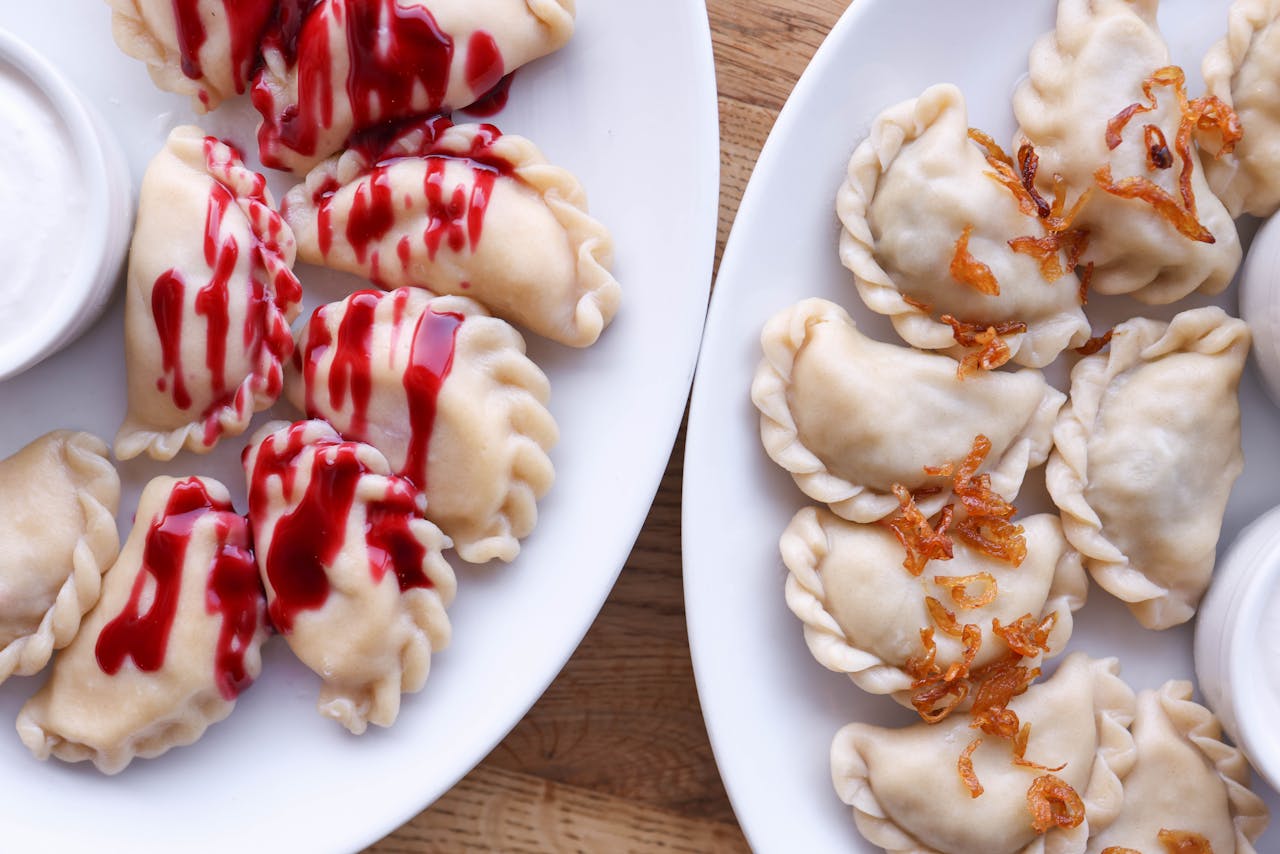
On October 8, dough is rolled, fillings are prepared, and pots of water come to a gentle boil in honor of National Pierogi Day. These half-moon dumplings—known as pierogi in Polish, varenyky in Ukrainian, and pirohy in Slovak—are beloved across Eastern Europe and have become a comforting staple in communities worldwide. While the holiday itself is a largely American invention, it pays tribute to a food whose history spans centuries and cultures.
Dumplings themselves likely originated in Asia. A Chinese legend credits a physician named Zhang Zhongjing with inventing jiaozi during the Eastern Han Dynasty to warm villagers suffering from frostbite. As trade routes crisscrossed Eurasia, the idea of wrapping dough around fillings traveled with merchants and missionaries. One Polish legend claims that Saint Hyacinth brought pierogi from Kyiv to Poland in the thirteenth century after tasting them in Kievan Rus. Another theory points to Turkish manti, boiled dumplings filled with meat, which may have inspired similar dishes across Eastern Europe. However they arrived, pierogi took root in Poland and became an enduring part of its food identity.
Early pierogi were peasant fare, stuffed with whatever the pantry afforded: potatoes, onions, sauerkraut, farmers’ cheese, mushrooms, or seasonal fruit. By the seventeenth century, pierogi appear in Polish cookbooks with variations for weddings, funerals, and holiday feasts. On Christmas Eve, many families make pierogi z kapustą i grzybami, filled with sauerkraut and dried mushrooms. In summer, pierogi z jagodami showcase sweet blueberries dusted with sugar and topped with sour cream. These traditions anchored pierogi to both everyday life and moments of celebration, making them a symbol of resilience and adaptability.
When Polish immigrants arrived in North America in the late nineteenth and early twentieth centuries, they carried pierogi traditions with them. Cities like Pittsburgh, Cleveland, and Chicago still host annual church bazaars where volunteers pinch thousands of dumplings to raise funds. Eastern European delis, diners, and restaurants keep pierogi on their menus, often served with butter-fried onions, sour cream, or bacon. Over time, pierogi have become a beloved comfort food for many Americans, crossing cultural lines while holding fast to their heritage.
Preparing pierogi is a communal act. Family members gather to roll out sheets of dough, cut circles, spoon filling, and crimp edges. The work creates rhythm and conversation, tying present gatherings to generations past. When the dumplings cook, they bob in the water like little moons before being tossed in butter until they glisten. The first bite reveals chewy dough and tender filling, whether savory or sweet. Making pierogi is as much about connection as it is about food.
National Pierogi Day is more than a food holiday—it’s an acknowledgment of resilience and tradition. These dumplings accompanied people on long journeys, nourished them in hard times, and rooted them in culture while adapting to new lands. Pierogi embody both humility and festivity, serving as everyday sustenance and holiday treat. To celebrate them is to celebrate the way food binds people together, carrying history forward in every bite.