National Saxophone Day
November 5, 2026

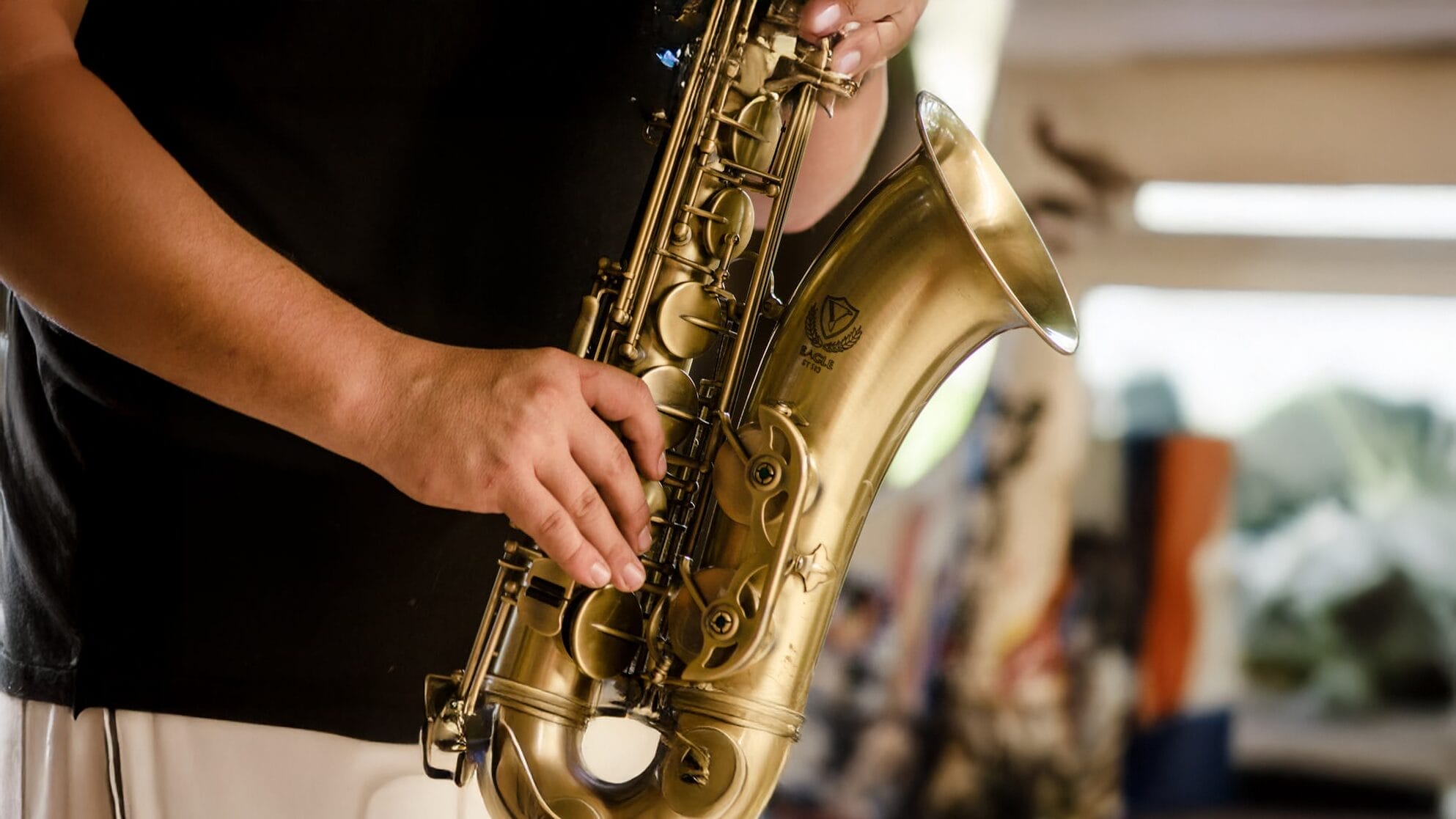
On November 6 each year, National Saxophone Day invites music lovers to pay homage to one of the most expressive instruments ever invented. With its smooth curves and brassy timbre, the saxophone bridges genres and generations, from New Orleans jazz to Parisian cafe tunes and modern pop. Whether you picture John Coltrane improvising on a smoky stage, an eighth grader squeaking out a scale at their first concert, or a street musician filling a subway with soulful sounds, the saxophone has a unique power to capture emotion. This holiday encourages us to listen, learn and perhaps even pick up the instrument ourselves.
The saxophone owes its existence to Belgian instrument maker Adolphe Sax. Born in 1814, Sax grew up surrounded by musical craftsmanship. In the early 1840s he set out to create an instrument that combined the projection of brass with the agility of woodwinds. After experimenting with various designs, he patented the saxophone in Paris in 1846. Though initially intended for classical orchestras and military bands, the instrument found its true voice in the hands of jazz musicians decades later. Sax’s invention earned both admiration and controversy among competitors, but his idea ultimately changed the course of music.
The saxophone’s journey has been anything but linear. It was embraced by French military bands and composers like Hector Berlioz but largely ignored by symphony orchestras. In the early 20th century, ragtime and jazz musicians in the United States adopted the instrument for its ability to bend notes and mimic the human voice. Legends such as Coleman Hawkins, Lester Young and Charlie Parker pushed the boundaries of technique and improvisation, while later artists like John Coltrane and Sonny Rollins took it to spiritual heights. Today the saxophone appears in rock, pop, funk, hip‑hop and classical crossover genres, proving its versatility.
Learning to play the saxophone fosters discipline and creativity, and its popularity in school bands continues to inspire young musicians. Meanwhile, professional saxophonists innovate with electronic effects and collaborate across musical cultures. The instrument symbolizes freedom of expression for many listeners, a sonic language that can convey heartbreak, joy and everything in between. National Saxophone Day is an opportunity to support music education, celebrate diverse musical traditions and recognize the craftsmanship behind each reed and key.
There’s a reason the saxophone often scores our most poignant movie moments or romantic ballads. Its range spans deep, husky lows and soaring highs, mirroring the range of human feeling. Perhaps you remember a family member playing jazz records on Sunday mornings, or you associate the sax’s wail with your first slow dance. Music binds us together, and this instrument has been a companion on many of life’s journeys.
National Saxophone Day reminds us that innovation can lead to beauty. From the workshop of Adolphe Sax to the world’s stages, this instrument has given voice to countless artists. Take a moment to listen carefully, to feel the vibrations of brass and reed, and to appreciate the craftsmanship and creativity that continue to make music a universal language.