National Something On a Stick Day
March 24, 2029

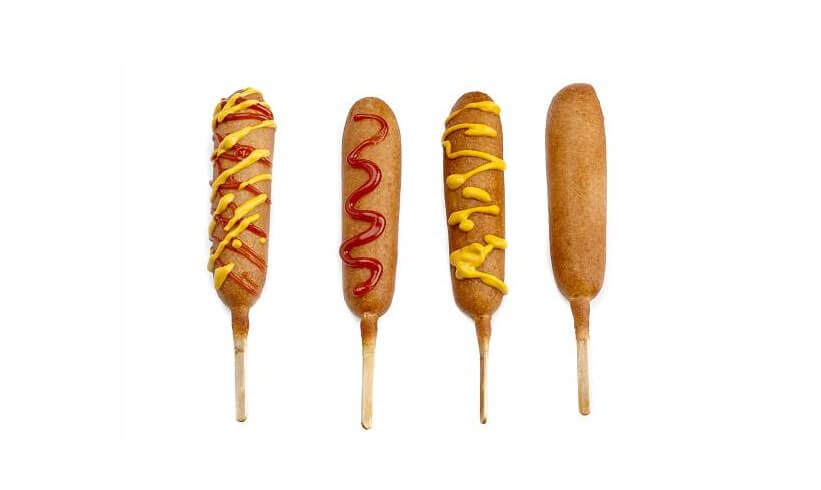
National Something on a Stick Day celebrates one of the oldest and most practical food formats in human history. National Something on a Stick Day highlights the act of placing food onto a skewer or stick for cooking, serving, and eating, a method that predates written history and appears in nearly every culture. While the modern version often evokes fair food such as corn dogs or festival snacks, the underlying technique connects directly to early human survival and cooking practices.
The core of this holiday is not a specific ingredient but a structural concept. The ingredient microhistory shifts depending on the food being skewered, but the consistent element is the use of a stick as both a cooking tool and a serving device. Early humans likely discovered that placing meat on sticks allowed it to be held over fire without direct contact with flames, reducing burning while improving control during cooking.
This method offered immediate advantages. Food could be rotated evenly, removed quickly, and eaten without additional tools. These qualities made skewered cooking particularly useful in environments where resources were limited and mobility was important. Over time, this simple innovation became embedded in culinary traditions across continents.
Migration played a major role in expanding the diversity of skewered foods. As communities moved and interacted, they carried cooking techniques with them. In the Middle East, skewered meats evolved into kebabs with layered spice profiles. In Southeast Asia, satay incorporated marinades and peanut-based sauces. In Japan, yakitori emphasized smaller cuts of chicken grilled with precision and seasoning.
The materials used for skewers also evolved. Early sticks were made from wood or plant stems. Later, metal skewers allowed for higher heat exposure and repeated use in more advanced cooking environments. Disposable wooden skewers re-emerged in modern times for convenience in street food settings.
National Something on a Stick Day reflects how a simple tool transformed into a universal culinary format. It is not tied to one region or one dish, but to a shared human approach to cooking that continues to adapt across time.
National Something on a Stick Day highlights how skewered foods function at the intersection of agriculture, cooking technique, and public dining culture. Because the format is flexible, it can incorporate meats, vegetables, fruits, grains, and even confections. This adaptability allows skewered foods to reflect local agricultural systems while maintaining a consistent structure.
Agriculturally, skewered foods often rely on accessible and portionable ingredients. Meat can be cut into smaller pieces, vegetables can be grouped for even cooking, and fruits can be arranged for visual appeal. This makes skewered foods efficient in both preparation and consumption, especially in environments where speed and portability matter.
Sensory anthropology explains the appeal of skewered foods through multiple layers. Grilling or frying enhances flavor through caramelization, while the physical format makes food easier to handle. There is also a performative aspect. Watching food being grilled on skewers or served on sticks adds a visual dimension that enhances the eating experience.
Regional comparisons demonstrate how the format adapts to cultural preferences. Middle Eastern kebabs often emphasize spice blends and marinated meats. Southeast Asian satay focuses on layered flavors and dipping sauces. Latin American street foods incorporate grilled meats and vegetables, while Western fair foods use battering and deep frying to create items such as corn dogs and fried desserts.
A misconception worth correcting is that food on a stick is primarily novelty or entertainment-based. In reality, it represents one of the most practical and historically significant cooking methods. Its association with fairs and festivals is a modern development layered on top of a much older tradition.
Economic resilience is a defining feature of skewered foods. They require minimal equipment, can be produced quickly, and are often sold at accessible price points. This makes them central to street food economies around the world, where they provide both livelihoods and affordable meals.
Prehistoric period: Early humans use sticks to cook meat over open flames, creating one of the earliest controlled cooking methods.
Ancient civilizations: Skewered cooking appears across regions including the Middle East, Asia, and the Mediterranean.
Medieval period: Skewered meats and vegetables become common in both rural and urban cooking.
Early modern period: Trade routes spread spice blends and cooking techniques, influencing regional skewered dishes.
19th and 20th centuries: Street food cultures expand, increasing the visibility of skewered foods in public markets.
Late 20th century: Fair and festival foods popularize items such as corn dogs and deep-fried skewered desserts.
21st century: Skewered foods remain central to global street food and continue to evolve through fusion cuisine.
National Something on a Stick Day matters because it highlights a format that connects ancient cooking practices with modern food culture. It demonstrates how a simple technique can remain relevant across thousands of years while adapting to new ingredients and environments.
The holiday also reflects the importance of portability in food design. As modern life emphasizes convenience, foods that can be eaten without utensils continue to gain popularity. Skewered foods meet this demand while preserving their historical roots.
Sensory anthropology reinforces the format’s appeal through its combination of flavor, texture, and visual presentation. The act of eating directly from a stick adds a tactile dimension that differs from plated meals.
National Something on a Stick Day also provides an opportunity to reconsider how food innovation works. Many modern food trends are framed as new, but this format shows that some of the most effective ideas are ancient and enduring.
Economic resilience remains strong, particularly in street food markets where skewered foods provide affordable and efficient options for both vendors and consumers.
National Something on a Stick Day matters because it celebrates a universal method of cooking that continues to shape how people prepare, share, and experience food.
