National Spanish Paella Day
March 27, 2026

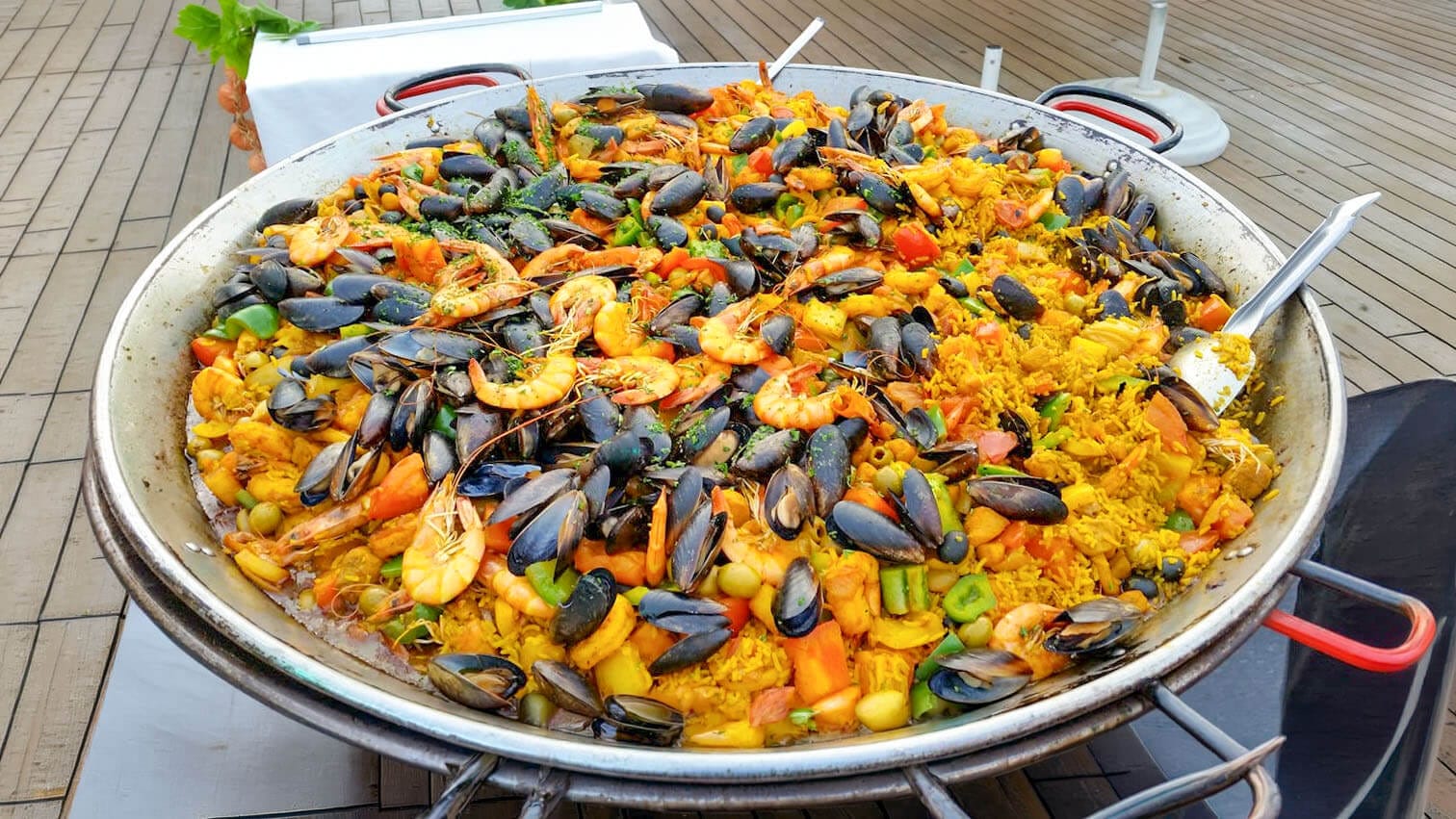
National Spanish Paella Day celebrates a dish that reflects agricultural history, regional identity, and communal cooking traditions. National Spanish Paella Day highlights paella as more than a recipe. It is a representation of Spanish rice cultivation, ingredient diversity, and shared meals prepared in large, open pans.
The ingredient microhistory behind paella begins with rice. Rice cultivation in Spain traces back to Moorish agricultural influence, which introduced irrigation systems and crop varieties suited to Mediterranean climates. This allowed rice to become a staple ingredient in regions such as Valencia.
Paella developed as a practical dish prepared by workers in agricultural fields. Ingredients varied based on availability, often including vegetables, beans, and locally sourced meats such as rabbit or chicken. This flexibility made paella adaptable and resource-efficient.
The cooking vessel, a wide shallow pan, plays a critical role in the dish’s identity. Its shape allows rice to cook evenly while developing a distinct layer at the bottom known for its texture and flavor.
Migration and regional exchange influenced paella’s variations. Coastal regions incorporated seafood, while inland areas emphasized meats and vegetables. These differences reflect local ecosystems and food availability.
National Spanish Paella Day reflects how a dish rooted in agriculture and practicality became a symbol of cultural identity.
National Spanish Paella Day highlights the agricultural systems behind its ingredients. Rice farming, vegetable cultivation, and livestock production all contribute to the dish.
Sensory anthropology explains paella’s appeal through its combination of textures and flavors. The rice absorbs broth and spices while forming distinct layers during cooking.
Regional comparisons reveal multiple paella styles, including seafood-based and meat-based variations.
A misconception worth correcting is that paella must include specific ingredients. Traditional versions vary widely depending on region.
Technological factors such as cooking equipment influence preparation.
Economic resilience appears in paella’s adaptability to available ingredients.
Medieval period: Rice cultivation introduced to Spain through Moorish influence.
Early modern period: Rice becomes a staple crop in Valencia.
18th–19th centuries: Paella emerges as a regional dish.
20th century: Paella gains national and international recognition.
Late 20th century: Variations expand globally.
21st century: Paella remains a symbol of Spanish cuisine.
Present day: Paella continues evolving while maintaining cultural roots.
National Spanish Paella Day matters because it represents the relationship between agriculture and cuisine.
Modern supply chains support paella ingredients globally.
Sensory anthropology reinforces its appeal.
Misconceptions about authenticity are clarified through regional diversity.
Economic resilience ensures paella’s continued popularity.
National Spanish Paella Day matters because it celebrates a dish tied to cultural heritage.
