National Sticky Bun Day
February 21, 2026

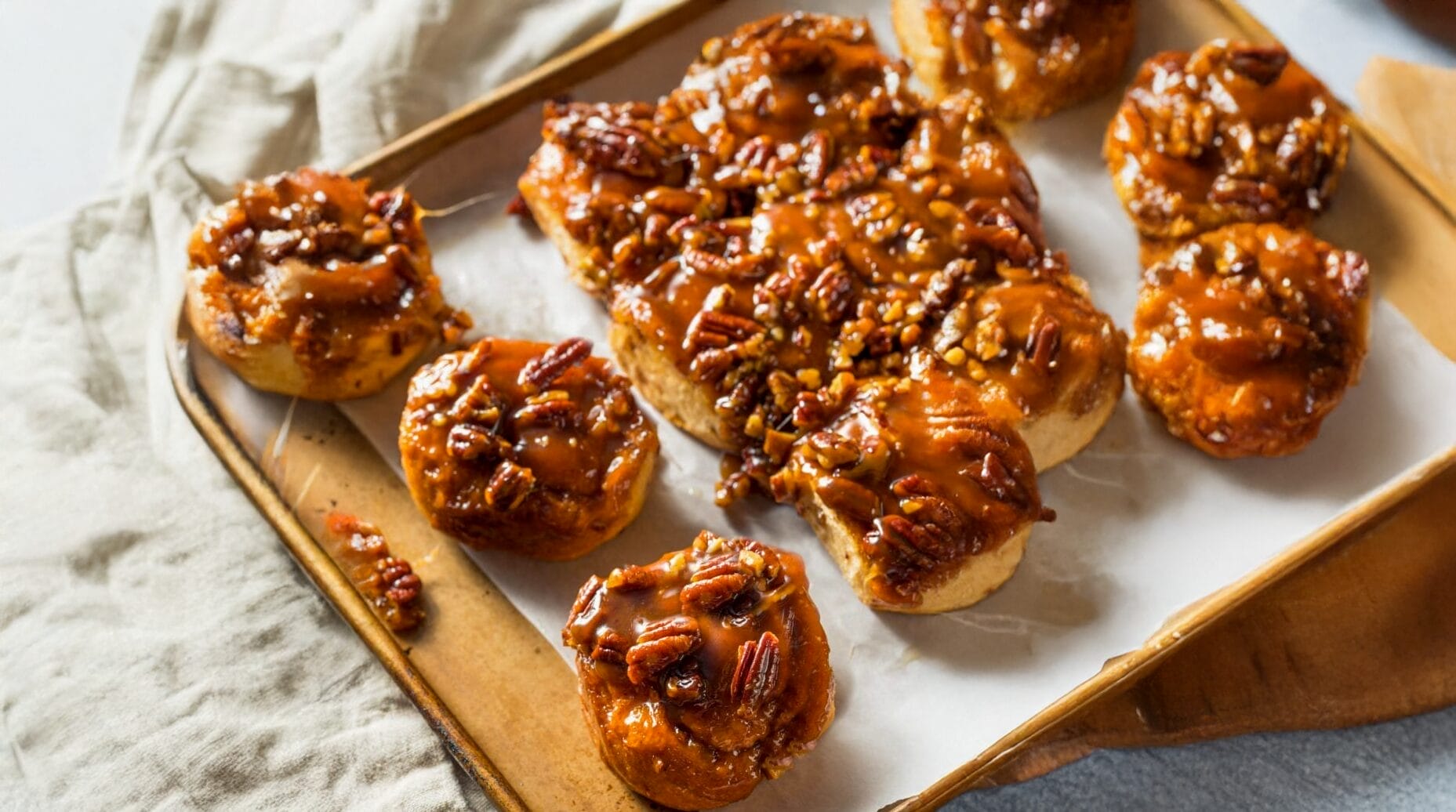
National Sticky Bun Day is observed annually on February 21 and centers on one of the most enduring sweet breads in American baking traditions. Sticky buns, sometimes referred to as caramel buns, trace their roots to European yeast-based pastries that were brought to North America by German immigrants during the eighteenth century. These settlers, commonly known as the Pennsylvania Dutch, adapted Old World baking techniques to New World ingredients, laying the foundation for what would become the modern sticky bun.
The original German pastries that inspired sticky buns included schnecken, a spiral-shaped yeast roll often filled with sugar, butter, and spices. When German-speaking immigrants settled in Pennsylvania, they modified these recipes using locally available ingredients such as brown sugar, butter, and nuts. Over time, the topping evolved into a rich caramel glaze, often studded with pecans or walnuts, poured into the pan before baking so that it coated the rolls when inverted.
By the nineteenth century, sticky buns had become a staple in regional bakeries and home kitchens, particularly in Pennsylvania and surrounding states. They were commonly served for breakfast, at church gatherings, and during holidays, occupying a space between bread and dessert. Unlike cakes, sticky buns relied on yeast rather than chemical leavening, which gave them a distinctive texture and required time, patience, and skill to prepare.
National Sticky Bun Day does not commemorate a single historical event or individual. Instead, it recognizes the longevity of a baked good that has survived cultural change, industrialization, and shifting tastes. The observance reflects how certain foods endure not because of novelty, but because of familiarity and tradition.
Sticky buns occupy a meaningful place in American food culture, particularly as an example of how immigrant cuisines become localized and eventually mainstream. What began as a regional specialty tied to Pennsylvania Dutch communities gradually spread through bakeries, diners, and cookbooks across the United States. As it traveled, the sticky bun absorbed regional variation, with differences in size, sweetness, nut choice, and spice.
Unlike many desserts designed for presentation, sticky buns are inherently informal. They are meant to be pulled apart, eaten by hand, and enjoyed while warm. This informality has helped cement their role as comfort food, associated with mornings, family gatherings, and communal tables rather than special occasions alone.
The sticky bun also reflects broader themes in baking culture. Yeast breads require planning and time, standing in contrast to quick breads and packaged sweets. As such, sticky buns often carry associations with home baking, patience, and care. Even when purchased from bakeries, they evoke the idea of something made slowly rather than assembled quickly.
National Sticky Bun Day highlights this culinary lineage without prescribing how the bun should be made or enjoyed. It allows space for both traditional recipes and modern interpretations, including variations with cream cheese frosting, alternative sweeteners, or different fillings. In doing so, the observance acknowledges that food traditions remain alive by adapting rather than remaining fixed.
National Sticky Bun Day remains relevant because it celebrates a food that bridges past and present. In an era dominated by convenience foods and rapid consumption, sticky buns represent a slower approach to eating and baking. They remind people of the value of time-intensive processes and shared meals.
The observance also reinforces the cultural importance of regional foods. Sticky buns are deeply tied to place, particularly the American Northeast, yet they have become familiar nationwide. National Sticky Bun Day provides an opportunity to recognize how regional identities contribute to a broader national food culture.
On a personal level, the day often serves as a prompt for indulgence without excess. Sticky buns are rich, but they are also meant to be savored rather than consumed casually. This balance aligns with contemporary conversations about mindful eating and intentional enjoyment.
Ultimately, National Sticky Bun Day matters because it honors continuity. It recognizes that some foods persist not because they are reinvented endlessly, but because they remain satisfying in their original form. The sticky bun endures as a reminder that tradition, when well made, does not require justification.