National Tortellini Day
February 13, 2026

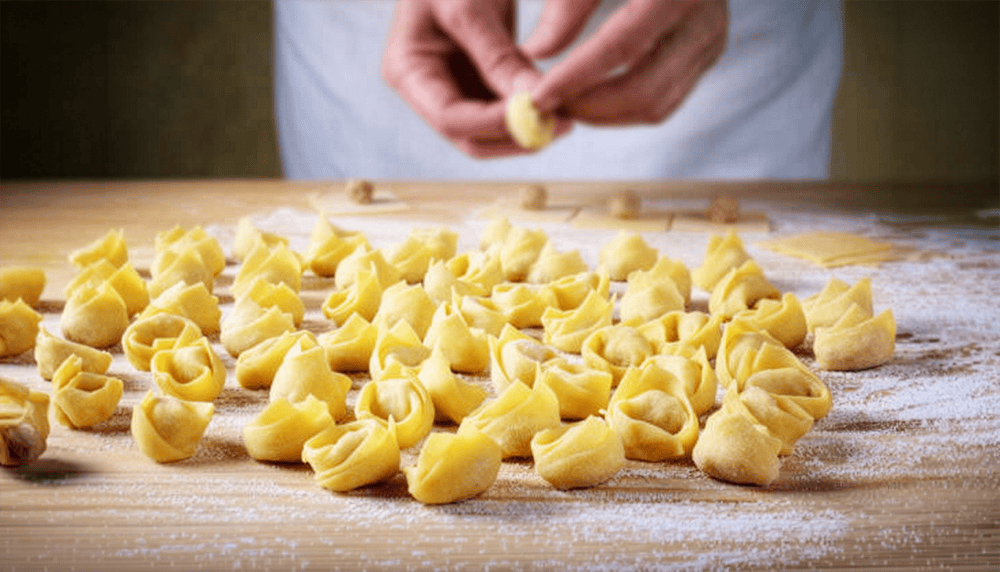
National Tortellini Day is observed annually in early February and centers on a pasta shape deeply embedded in Italian regional identity, culinary mythology, and domestic tradition. Tortellini originated in the Emilia Romagna region of Italy, particularly in and around Bologna and Modena, where filled pasta became a defining element of local cuisine.
The earliest forms of filled pasta developed as practical solutions to stretching ingredients. Dough served as a vessel to encase small amounts of meat, cheese, or vegetables, allowing cooks to create filling meals from limited resources. Over time, these practical preparations evolved into highly specific regional forms, each with distinct shapes, fillings, and cultural meaning.
Tortellini are distinguished by their small size and ring-like shape, traditionally folded by hand. Folklore surrounding tortellini often emphasizes craftsmanship and ritual, reflecting the care required to produce uniform pieces. While legends vary, they consistently reinforce the idea that tortellini are a product of place, patience, and inherited knowledge.
As Italian cuisine spread globally through migration, tortellini traveled with it. Outside Italy, the dish adapted to new ingredients and contexts, sometimes served with sauces rather than in broth, while retaining its recognizable form.
National Tortellini Day reflects this layered history, recognizing tortellini as both a regional specialty and an internationally familiar food.
Tortellini carry cultural significance because they embody the relationship between food and regional identity. In their place of origin, they are closely tied to family gatherings, holidays, and shared labor, particularly during winter months.
The dish also reflects values of precision and restraint. Tortellini are intentionally small, emphasizing balance rather than abundance. Their fillings are measured, and their preparation rewards consistency and attention.
Culinarily, tortellini demonstrate how form influences experience. Their shape affects texture, cooking time, and how broth or sauce interacts with the pasta.
National Tortellini Day highlights how traditional foods encode skill, memory, and communal participation.
National Tortellini Day remains relevant because it draws attention to food traditions grounded in technique rather than trend.
The observance encourages appreciation for handmade processes that persist despite industrial alternatives.
In a global food culture that often prioritizes speed, tortellini represent deliberateness and continuity.
The day matters because it honors a dish that carries regional identity forward through repetition and care.