National New England Clam Chowder Day
January 21, 2028

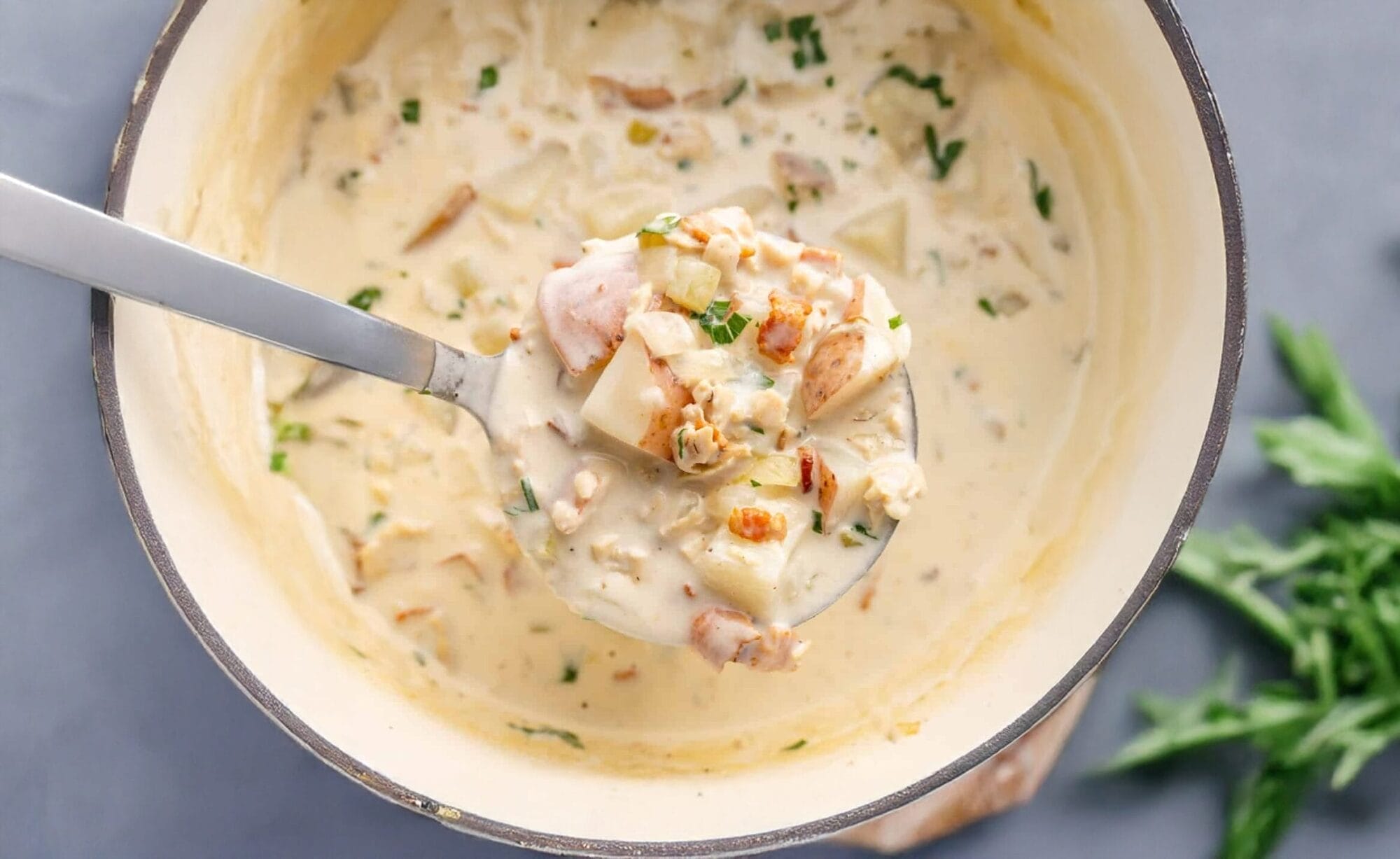
New England Clam Chowder Day honors a dish that is inseparable from the rocky coastline, working harbors and cold Atlantic waters of the northeastern United States. Long before chowder appeared in cookbooks, coastal communities relied on clams as a dependable source of food. Indigenous peoples along the Atlantic shore harvested hard shell clams and soft shell clams from tidal flats, steaming them over fires or adding them to simple broths. When European settlers arrived in the 17th century, they adopted these practices and adapted them using familiar ingredients brought from home.
The word chowder likely traces back to the French term chaudière, meaning a large pot or cauldron. Fishermen cooked stews in heavy vessels aboard ships or along the shore, layering ingredients as they became available. Early chowders were practical meals built from salt pork, onions, potatoes and seafood. Milk or cream was not always present. In fact, some early versions used water or fish stock. What defined chowder was not its color but its method, a slow simmer that allowed flavors to meld while feeding many people at once.
As dairy farming expanded in New England, milk and cream became more accessible. These ingredients softened the briny intensity of clams and created a richer texture. By the 18th and 19th centuries, cream based clam chowder had become closely associated with New England kitchens, boarding houses and seaside inns. Crackers were often layered into the pot to thicken the broth, a technique still reflected today in the customary topping of oyster crackers.
Regional identity played a strong role in shaping chowder traditions. While New England chowder leaned toward milk or cream, other coastal areas developed their own interpretations. Manhattan clam chowder emerged with tomatoes and a clear broth, reflecting different immigrant influences and ingredient availability. The contrast sparked debates that continue today, with New England chowder standing as a symbol of tradition and restraint. New England Clam Chowder Day celebrates this specific lineage and the communities that refined it over generations.
Authentic New England clam chowder is built on balance. The goal is not to overwhelm the clams but to support them. At its foundation are clams, typically chopped quahogs or other hard shell clams, along with their liquor. This briny liquid provides depth and connects the dish directly to the sea. Potatoes add body and starch, thickening the chowder naturally as they break down during cooking.
Salt pork or bacon is traditionally rendered at the beginning to release fat and savory flavor. Onions are softened in this fat until translucent, forming an aromatic base. Flour may be added to create a light roux, though some purists prefer relying on potatoes alone for thickening. Milk or cream is stirred in gently, never boiled, to maintain a smooth texture.
Seasoning in New England clam chowder is intentionally restrained. Black pepper is common, as is a bay leaf during simmering. Herbs are minimal. Many cooks believe that heavy seasoning distracts from the clams. Butter is often added at the end for richness. The finished chowder should be thick but spoonable, creamy without being heavy, and fragrant with the scent of the ocean.
Consistency has long been a point of pride. Chowder that is too thin is dismissed as soup, while chowder that is overly thick risks becoming gluey. Achieving the right texture requires patience and attention, qualities that reflect the dish’s working class roots. New England Clam Chowder Day highlights this craftsmanship and the quiet skill involved in turning humble ingredients into something enduring.
Modern variations exist, but tradition remains strong. Some cooks substitute cream for milk or add celery for extra aroma. Others insist on fresh clams rather than canned. While preferences vary, the core principles remain unchanged. New England clam chowder is meant to comfort, nourish and connect people to place.
New England Clam Chowder Day offers an invitation to slow down and cook with intention. Preparing chowder from scratch is a tactile experience. Scrubbing clams, listening for the pop of shells as they steam open and chopping potatoes by hand all ground the cook in the process. The aroma that fills the kitchen as onions soften in rendered pork fat signals that something steady and familiar is underway.
Those who live near the coast may choose to buy clams from a local fishmonger, supporting regional fisheries and ensuring freshness. Inland cooks can still make excellent chowder using quality canned clams and bottled clam juice. What matters most is care, not proximity to the ocean.
Celebrating does not require perfection. Chowder is forgiving and communal by nature. Serve it with crusty bread or oyster crackers, perhaps alongside a simple salad. Share it with family
