Orthodox Holy Saturday
April 4, 2026

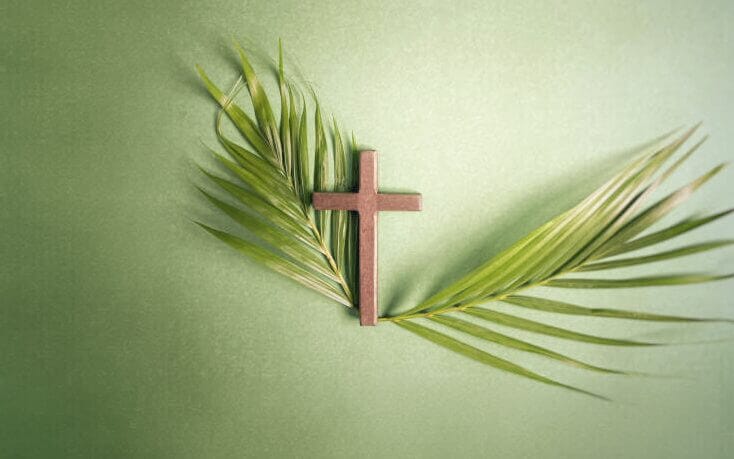
Orthodox Holy Saturday, known formally as Holy and Great Saturday in Eastern Orthodox tradition, represents the culmination of Holy Week observances before the midnight celebration of Pascha, the Orthodox term for Easter. Observed on the Saturday between Good Friday and Easter Sunday according to the Julian or Revised Julian calendar used by most Orthodox churches, this day commemorates Christ’s descent to Hades and his victory over death itself. Orthodox Holy Saturday is celebrated by approximately 220 million Orthodox Christians worldwide, including the Greek Orthodox, Russian Orthodox, Serbian Orthodox, Romanian Orthodox, and other autocephalous churches that comprise Eastern Orthodoxy. The observance falls within the broader context of Orthodox Holy Week, which follows distinct liturgical patterns and theological emphases that differentiate it from Western Christian practice. Unlike Western traditions that emphasize waiting and mourning on Holy Saturday, Orthodox theology centers this day on Christ’s active triumph in the realm of the dead, celebrating his harrowing of Hades and liberation of righteous souls. This theological focus transforms Orthodox Holy Saturday from a day of quiet anticipation into a celebration of cosmic victory, creating one of the most distinctive and joyful observances in the Orthodox liturgical year.
Orthodox Holy Saturday theology centers on the doctrine of Christ’s descent to Hades, known as the Harrowing of Hell or the Anastasis in Greek. This teaching holds that during the time between his death and resurrection, Christ descended to Hades not as a defeated victim but as a triumphant victor who shattered the gates of death and liberated the souls imprisoned there. The theological basis draws from several biblical passages, including 1 Peter 3:18-20, which describes Christ preaching to “the spirits in prison,” and Ephesians 4:8-10, which speaks of Christ descending “into the lower parts of the earth” and leading “captivity captive.”
The Orthodox interpretation emphasizes that Hades in this context refers not to the hell of eternal punishment but to Sheol, the shadowy realm where all the dead resided before Christ’s redemptive work opened the gates of Paradise. According to Orthodox teaching, even righteous souls like Abraham, Moses, and the prophets waited in this intermediate state until Christ’s descent liberated them. The Harrowing of Hades thus represents the moment when Christ’s salvific work extended backward through time, offering redemption even to those who died before his incarnation and creating the possibility of salvation for all humanity regardless of when they lived.
The iconic representation of this event occupies central place in Orthodox theology and art. The traditional Anastasis icon depicts Christ standing on the broken gates of Hades, often shown as crossed boards beneath his feet, while pulling Adam and Eve from their tombs by their wrists. The forceful gesture symbolizes that salvation comes through Christ’s power rather than human merit. Surrounding figures typically include Old Testament patriarchs, prophets, and righteous souls, all emerging from their graves. This image appears prominently in Orthodox churches and serves as the primary Easter icon, more significant than depictions of the empty tomb favored in Western Christianity.
The liturgical expression of this theology shapes Orthodox Holy Saturday’s distinctive character. While Western churches observe Holy Saturday as a day of quiet mourning and waiting, Orthodox churches celebrate it as the beginning of Pascha rejoicing. The Vesperal Divine Liturgy of St. Basil, celebrated on Saturday morning, includes fifteen Old Testament readings that recount salvation history from creation through the Exodus, connecting Christ’s descent to the larger narrative of God’s redemptive action. The tone shifts dramatically from Good Friday’s somber lamentation to Saturday’s triumphant proclamation, with liturgical colors changing from black or dark purple to white or gold.
The theological emphasis on Christ’s active victory during Holy Saturday influences Orthodox understanding of death itself. Rather than viewing death as merely the cessation of life or separation of soul from body, Orthodox theology sees Christ’s descent as transforming death’s very nature. Christ entered death as a place or state and conquered it from within, making death itself the pathway to life for those united with him. This theology offers comfort to believers facing mortality, asserting that death has been fundamentally altered by Christ’s passage through it and no longer represents ultimate defeat or separation from God.
The earliest Christian communities in Jerusalem and throughout the Eastern Mediterranean observed the period between crucifixion and resurrection with prayer and fasting, though specific liturgical forms had not yet crystallized. By the fourth century, as documented in the writings of Cyril of Jerusalem and other Church Fathers, elaborate Holy Week services had developed in Jerusalem that included specific observances for Saturday. These Jerusalem practices heavily influenced liturgical development throughout the Eastern Christian world, as pilgrims carried these traditions back to their home regions in Asia Minor, Greece, Syria, and Egypt.
The Byzantine Empire’s emergence as Christianity’s political and cultural center during the fifth and sixth centuries brought further liturgical elaboration and standardization. The development of the Byzantine Divine Liturgy established patterns that would shape Orthodox worship for centuries. Hymnographers like St. Romanos the Melodist in the sixth century and St. John of Damascus in the eighth century composed elaborate liturgical poetry for Holy Week, including specific hymns for Holy Saturday that celebrated Christ’s descent to Hades. These poetic compositions became integral to Orthodox liturgy, transforming worship into theological education through sung prayer.
The Great Schism of 1054 that divided Eastern and Western Christianity solidified distinct liturgical traditions, with Orthodox churches maintaining and developing their particular Holy Week observances independently from Western developments. The fall of Constantinople to the Ottoman Turks in 1453 placed many Orthodox Christians under Islamic rule, yet they preserved their liturgical traditions with remarkable tenacity. Under Ottoman dominance, Holy Week observances became particularly important expressions of Christian identity and cultural continuity, with Holy Saturday’s celebration of Christ’s victory over death carrying special significance for communities facing political oppression.
The Russian Orthodox Church, which achieved autocephaly and became Orthodoxy’s largest branch by the 16th century, developed particularly elaborate Holy Week traditions that influenced Orthodox practice globally. Russian monasteries like those at Mount Athos maintained rigorous liturgical standards, preserving ancient practices while adapting them to local contexts. The Russian tradition emphasized extended vigil services and strict fasting disciplines, creating Holy Week observances of remarkable intensity and duration that continue in many Orthodox communities today.
The 20th century brought tremendous upheaval to Orthodox Christianity through communist persecution in Russia and Eastern Europe, yet also witnessed Orthodox expansion through immigration to Western Europe, North America, and Australia. Orthodox communities in diaspora faced challenges maintaining traditional practices in secular, predominantly Western Christian cultures. Many adapted by condensing lengthy services while preserving essential elements, creating tension between liturgical purists and those seeking accessibility for contemporary believers. The fall of communism in Eastern Europe and the former Soviet Union in the late 20th century enabled revival of Orthodox practice in regions where it had been suppressed, leading to renewed interest in traditional Holy Week observances including Orthodox Holy Saturday’s distinctive celebrations.
Orthodox Holy Saturday matters because it offers a radically different theological framework for understanding the space between death and resurrection than Western Christianity typically provides. While Western traditions emphasize waiting, mourning, and silence on Holy Saturday, Orthodoxy proclaims triumph, liberation, and cosmic victory. This alternative perspective enriches global Christian understanding by demonstrating that the same biblical narrative supports multiple valid theological interpretations, each offering distinct spiritual insights and pastoral resources. The Orthodox emphasis on Christ’s active conquest of death rather than passive waiting provides particularly powerful resources for believers facing grief, illness, or mortality.
The day’s liturgical celebration of the Harrowing of Hades addresses fundamental questions about salvation’s scope and God’s justice. The teaching that Christ descended to liberate righteous souls who died before his coming asserts that salvation depends on God’s mercy rather than historical accident of birth timing. This theology offers hope regarding the fate of those who never encountered Christian teaching, suggesting that God’s redemptive work extends beyond conventional boundaries. For Orthodox believers, this cosmic scope of salvation reflects God’s character as infinitely merciful and just, working throughout history to draw all people toward reconciliation.
Orthodox Holy Saturday’s communal celebrations create distinctive expressions of Christian unity and cultural identity. In traditionally Orthodox countries like Greece, Romania, and Georgia, Holy Saturday observances involve entire communities in shared liturgical participation that transcends individual piety. The Vesperal Liturgy brings together families across generations, creating occasions for transmitting faith traditions and cultural practices. For Orthodox diaspora communities in Western countries, Holy Saturday observances serve as vital expressions of ethnic and religious identity, connecting immigrants and their descendants to ancestral homelands and ancient traditions.
The rich iconographic tradition associated with Orthodox Holy Saturday provides visual theology that communicates complex doctrinal concepts through accessible imagery. The Anastasis icon’s depiction of Christ forcefully pulling Adam and Eve from their graves offers immediate visual understanding of salvation as divine initiative rather than human achievement. This democratization of theology through art makes sophisticated theological concepts accessible to all believers regardless of literacy or education, fulfilling the icon’s traditional role as “theology in color” that teaches through contemplation and worship rather than abstract argument.
Orthodox Holy Saturday ultimately matters because it insists that death has been transformed by Christ’s passage through it, offering believers a framework for facing mortality with hope rather than fear. The day’s celebration teaches that death no longer represents ultimate defeat or separation but has become the very pathway to resurrection life for those united with Christ. This theology addresses contemporary anxieties about mortality in an age when medical advances have made death seem like failure rather than natural culmination of earthly life. By celebrating Christ’s descent to Hades on Holy Saturday, Orthodox Christianity affirms that no darkness exceeds God’s reach, no death lies beyond redemption’s scope, and no soul exists so lost that Christ cannot liberate it. This message of cosmic hope resonates powerfully in a world marked by violence, injustice, and seemingly insurmountable evil, insisting that Christ has conquered even death itself and will ultimately restore all things.

