World Nutella Day
February 5, 2027

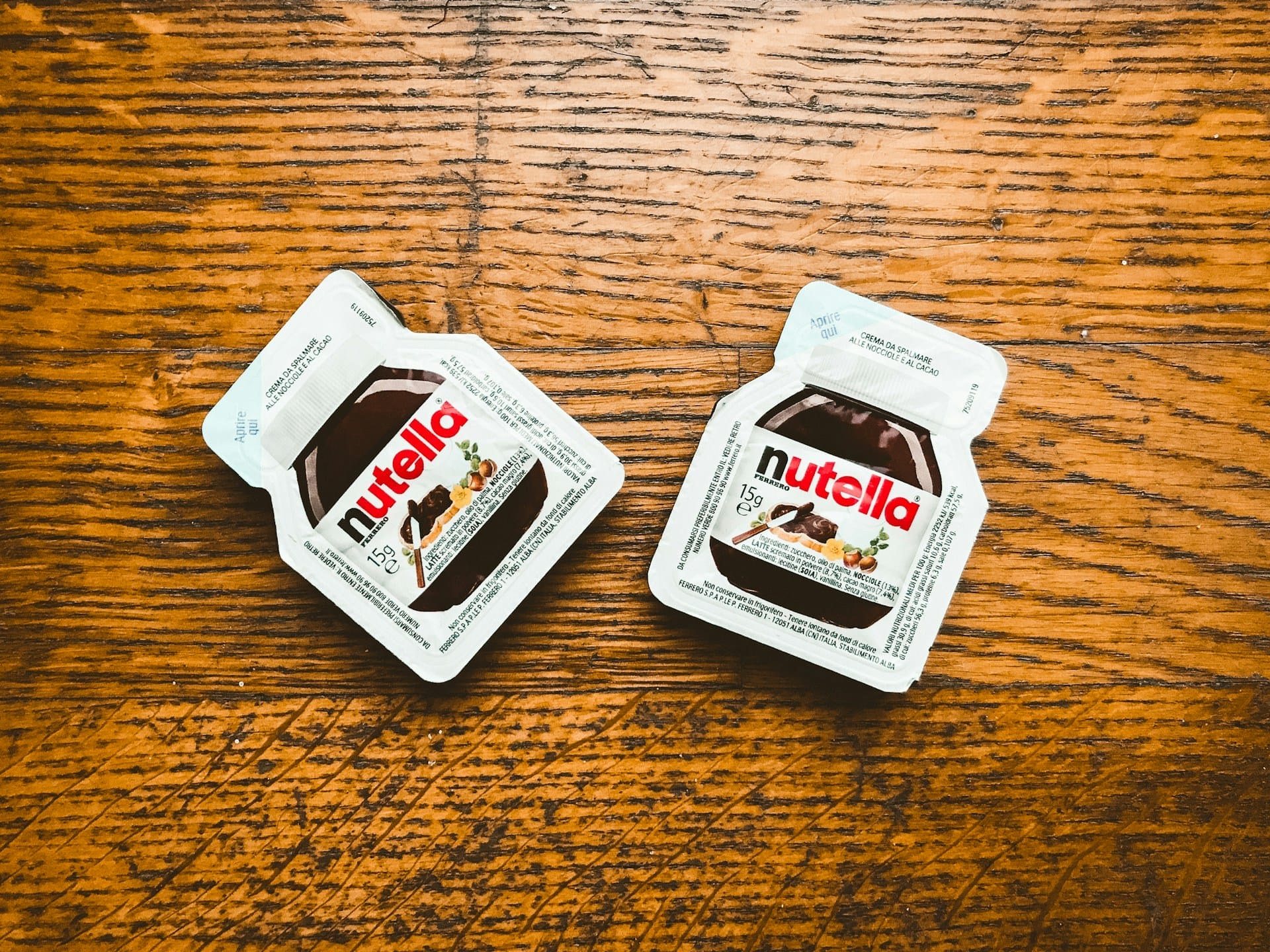
Nutella’s story begins not with indulgence, but with necessity. In the aftermath of World War II, much of Europe faced food shortages, and cocoa was scarce and expensive. In the Piedmont region of northern Italy, hazelnuts were plentiful. Local confectioners had long used them in sweets, and pastry maker Pietro Ferrero saw an opportunity to stretch limited cocoa supplies by blending them with roasted hazelnuts and sugar. The result was a dense, chocolate-hazelnut paste called Pasta Gianduja, named after a traditional Piedmontese carnival character associated with sweets.
This early version was sold in solid blocks that could be sliced and placed on bread. It was affordable, filling, and deeply comforting at a time when luxury foods were out of reach for many families. In 1951, Pietro’s son Michele Ferrero refined the concept into a smoother, more spreadable product called Supercrema. This version better suited the daily routines of Italian households, where bread with something sweet on top was a common breakfast or snack for children.
The final transformation came in 1964, when the Ferrero company reformulated the spread to improve texture, shelf stability, and flavor, and rebranded it as Nutella. The name combined the English word “nut” with an Italian-sounding ending that felt friendly and modern. Nutella quickly spread beyond Italy into Germany, France, and eventually the rest of Europe, becoming a pantry staple. Its success was driven not by novelty alone, but by consistency. Every jar tasted the same, smooth and balanced, with no overpowering bitterness or sweetness. What began as a practical solution to scarcity evolved into a product associated with comfort, childhood, and everyday pleasure.
Nutella’s rise coincided with major cultural shifts in postwar Europe. As economies recovered and consumer goods became more accessible, families embraced products that were reliable and easy to use. Nutella fit perfectly into this moment. It required no preparation, appealed to children and adults alike, and worked across meals and occasions. Spread on bread, spooned onto crepes, or eaten straight from the jar, it became embedded in daily life rather than reserved for special events.
Unlike many sweets, Nutella positioned itself as a familiar companion rather than a treat meant for restraint. Advertising focused on family breakfasts, shared moments, and simple joy. In France, Nutella became inseparable from crepes sold at markets and festivals. In Germany, it was paired with hearty breads. In Italy, it became synonymous with merenda, the afternoon snack that bridges lunch and dinner. As the product entered global markets, these associations traveled with it, giving Nutella a sense of warmth and nostalgia even in places where it was newly introduced.
World Nutella Day emerged from this emotional connection. In 2007, American blogger Sara Rosso, living in Italy, created the unofficial holiday on February 5 as a way for fans to share their love for the spread. The idea resonated instantly. People posted recipes, childhood memories, and creative uses for Nutella online. What made the celebration unique was its grassroots nature. It was not launched by a corporation, but by consumers who felt a personal attachment to the product.
Over time, Ferrero acknowledged the holiday and began participating, but its heart remains community-driven. World Nutella Day highlights how food products can transcend their ingredients and become cultural symbols. Nutella represents comfort during hard times, creativity in the kitchen, and shared rituals across generations. Its hazelnut base also points back to regional Italian traditions, reminding people that global products often have deeply local roots.
World Nutella Day is celebrated in countless ways, ranging from simple to elaborate. For many, the most authentic way to mark the occasion is also the simplest. A slice of toasted bread spread with Nutella, paired with coffee or milk, mirrors how millions of people around the world first experienced it. This everyday ritual underscores Nutella’s role as a comfort food rather than a luxury item.
Others take the opportunity to explore Nutella’s versatility in baking and desserts. It can be swirled into brownie batter, folded into muffin dough, layered into cakes, or used as a filling for pastries and cookies. Nutella-stuffed pancakes and crepes are popular celebratory dishes, especially in households with children. Because the spread is already balanced in sweetness and fat, it integrates easily into recipes without much adjustment.
More adventurous cooks experiment with unexpected pairings. Nutella with a pinch of flaky sea salt highlights the contrast between sweet and savory. Spread thinly on warm brioche or croissants, it melts into the crumb and creates a rich but restrained bite. Some even pair Nutella with fruit like strawberries, bananas, or pears to add freshness and acidity. These combinations demonstrate how a familiar ingredient can feel new again when approached creatively.
World Nutella Day also invites reflection on how food innovation emerges from limitation. Nutella exists because someone chose to adapt rather than abandon an idea when ingredients were scarce. That spirit of creativity remains relevant. Whether you are baking, sharing stories online, or introducing Nutella to someone tasting it for the first time, the celebration is about connection as much as flavor.
At its core, World Nutella Day honors the idea that food can carry history, memory, and joy in a single spoonful. It reminds us that small comforts matter, and that even a modest jar of hazelnut spread can link people across countries and generations. Celebrating Nutella is less about indulgence and more about appreciating how simple pleasures endure.