National Pretzel Day
April 26, 2026

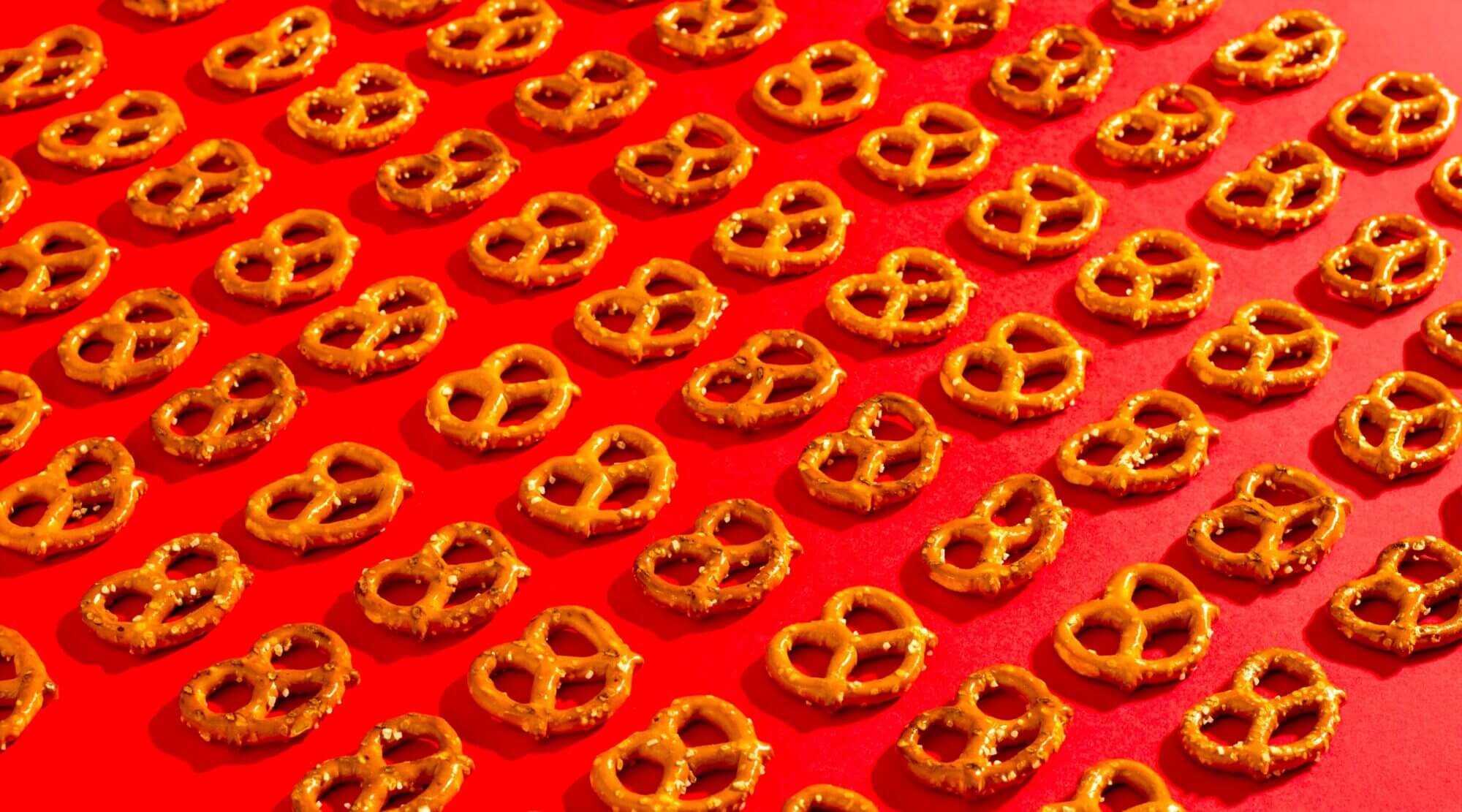
National Pretzel Day is observed annually on April 26th throughout the United States, celebrating the distinctively twisted bread product that combines chewy texture, characteristic knot shape, and salt-topped surface into one of humanity’s oldest and most recognizable snack foods. This baked goods holiday honors pretzels in their many forms, from soft Bavarian pretzels served warm with mustard to crunchy hard pretzels sold in bags at grocery stores and sporting events. Unlike celebrations focused on sweet baked goods, National Pretzel Day recognizes a savory bread with deep historical roots extending back over a millennium to European monasteries. The observance is primarily recognized in the United States, where pretzels occupy important positions in snack culture, from Philadelphia soft pretzel vendors to the ubiquitous presence of hard pretzels at bars and parties nationwide. This pretzel celebration falls within the broader category of bread and snack food observances but distinguishes itself through pretzels’ unique shape, alkaline bath treatment, and cultural significance spanning religious symbolism to commercial snack food dominance. Whether enjoyed as street food, dunked in cheese sauce, twisted into traditional knot shape, or eaten straight from the bag, National Pretzel Day invites bread lovers and snack enthusiasts to appreciate a food that has maintained essential character across centuries while adapting to changing contexts and tastes.
Pretzels trace their origins to early medieval Europe, with the most commonly cited legend crediting Italian monks in the early 600s. According to tradition, monks created pretzels from leftover dough, shaping it to resemble arms crossed in prayer, the traditional position for Christian prayer during that era. The three holes formed by the twisted shape supposedly represented the Holy Trinity, giving the bread religious symbolism appropriate for distribution to children as rewards for learning prayers. The name “pretzel” derives from Latin “pretiola,” meaning “little reward,” supporting this origin story.
German-speaking regions adopted and refined pretzel making throughout the Middle Ages, developing the distinctive techniques that define pretzels today. The crucial innovation involved dipping shaped dough into lye solution before baking, creating the characteristic dark brown crust, chewy texture, and slightly bitter flavor that distinguish pretzels from ordinary bread. This alkaline bath, whether using lye (sodium hydroxide) or food-grade baking soda, gelatinizes the dough’s surface starches, preventing significant rising during baking while creating the glossy, crisp exterior that pretzel enthusiasts prize.
Pretzels gained commercial and cultural significance in southern Germany, particularly Bavaria, where they became symbols of bakers’ guilds. The pretzel shape appeared on bakery signs and guild emblems, representing the profession itself. Bavarian bakers developed regional styles, from large soft pretzels served as meal accompaniments to smaller hard versions suitable for long storage. The tradition of eating pretzels with beer emerged in German beer halls and gardens, where the salty bread encouraged drinking while providing sustenance that absorbed alcohol and prevented intoxication on empty stomachs.
German and Swiss immigrants brought pretzel-making traditions to America beginning in the 18th century, establishing bakeries in Pennsylvania and other regions with significant German populations. Pennsylvania became particularly important to American pretzel culture, with Philadelphia emerging as soft pretzel capital and Lancaster County developing significant hard pretzel manufacturing. These regional concentrations created distinct American pretzel traditions that persist today, from Philadelphia street vendors selling soft pretzels with mustard to Pennsylvania Dutch hard pretzel production that supplies much of the nation’s bagged pretzels.
The timeline of pretzels in American food culture reflects immigration patterns, industrialization, and changing snack preferences. In the 1700s and early 1800s, German and Swiss immigrants established pretzel bakeries in Pennsylvania and other settlements, producing pretzels primarily for ethnic communities familiar with the tradition. These early pretzels remained largely regional specialty items unknown to most Americans outside areas with significant German populations.
The mid-1800s brought the first commercial pretzel bakeries that began distributing beyond immediate localities. Julius Sturgis founded what is recognized as America’s first commercial pretzel bakery in Lititz, Pennsylvania, in 1861, establishing production techniques that allowed for larger-scale manufacturing while maintaining quality. The factory’s success demonstrated pretzels’ commercial viability and inspired other entrepreneurs to enter pretzel production. By the late 1800s, hard pretzels had begun appearing in general stores and markets beyond Pennsylvania.
The early 1900s brought mechanization that dramatically increased production capacity and reduced costs. Automated pretzel-twisting machines replaced hand-shaping for hard pretzels, allowing single facilities to produce thousands of pounds daily. This industrialization coincided with growing national distribution networks created by railroads and improved preservation techniques. Hard pretzels’ durability during shipping and long shelf life made them ideal products for national distribution, and by the 1920s, Pennsylvania-made pretzels reached stores across America.
The post-World War II era saw pretzels establish themselves in American snack culture alongside potato chips and other savory options. Soft pretzels gained popularity at sporting events, movie theaters, and shopping malls, where vendors prepared them fresh and served them hot with mustard or cheese sauce. Hard pretzels became bar staples, offered free to encourage beer consumption, and party foods, served alongside chips and dips. The 1960s and 1970s brought flavored varieties including honey mustard, butter, and eventually more adventurous options like cinnamon sugar and chocolate-covered versions.
Contemporary pretzel culture includes artisan soft pretzel shops serving Bavarian-style versions, mass-market hard pretzel brands competing for supermarket shelf space, and innovative preparations incorporating pretzels into other foods like pretzel buns for burgers or crushed pretzels as recipe ingredients. National Pretzel Day likely emerged through grassroots enthusiasm and commercial promotion, providing dedicated recognition for a snack that had evolved from medieval religious symbol to ubiquitous American snack food.
National Pretzel Day matters because it celebrates a food that has maintained essential identity across more than a thousand years while adapting to changing contexts. The basic pretzel formula and distinctive shape have persisted from medieval monasteries to modern snack factories, demonstrating that some foods get fundamentals right and require little improvement beyond technical refinement. The holiday honors this continuity and the preservation of traditional techniques like lye baths that distinguish authentic pretzels from mere twisted bread.
The observance highlights pretzels’ unique position bridging religious tradition, artisan craft, and industrial snack food production. Few foods span such diverse contexts successfully, functioning equally well as spiritual symbols, street food, and mass-market snacks. This versatility demonstrates food’s capacity to serve multiple cultural functions simultaneously, with meanings shifting based on context while the physical item remains essentially unchanged. The holiday provides opportunity to discuss food’s symbolic dimensions beyond nutrition and taste.
From a culinary perspective, National Pretzel Day celebrates the chemical magic that transforms simple dough into distinctive food through alkaline treatment. The lye or baking soda bath creates Maillard reactions during baking that produce complex flavors and the characteristic dark brown color impossible to achieve through ordinary baking. Understanding this food science helps bakers appreciate why authentic pretzel making requires specific techniques and why shortcuts produce inferior results. The holiday encourages deeper engagement with pretzel production methods rather than merely consuming finished products.
The regional dimension adds cultural depth, as American pretzel traditions vary significantly by geography. Philadelphia soft pretzels represent distinct style from New York versions, while Pennsylvania hard pretzels differ from West Coast interpretations. These regional variations demonstrate how immigrant foods adapt to local preferences and available ingredients while maintaining connection to original traditions. The holiday provides opportunity to explore regional food cultures and the factors that create local specialties.
National Pretzel Day also matters as celebration of snack foods that serve social functions beyond mere hunger satisfaction. Pretzels appear at parties, sporting events, and bars as foods that encourage gathering and conversation while providing something to occupy hands and mouths during social interaction. The shared experience of eating pretzels together creates bonding opportunities and marks occasions from casual gatherings to major sporting events. In celebrating pretzels, we honor not just a snack but the social contexts it facilitates, the immigrant traditions it preserves, and the recognition that foods earning survival across centuries typically deserve their longevity through delivering something essential that passing trends cannot match.