National Champagne Day
December 31, 2029

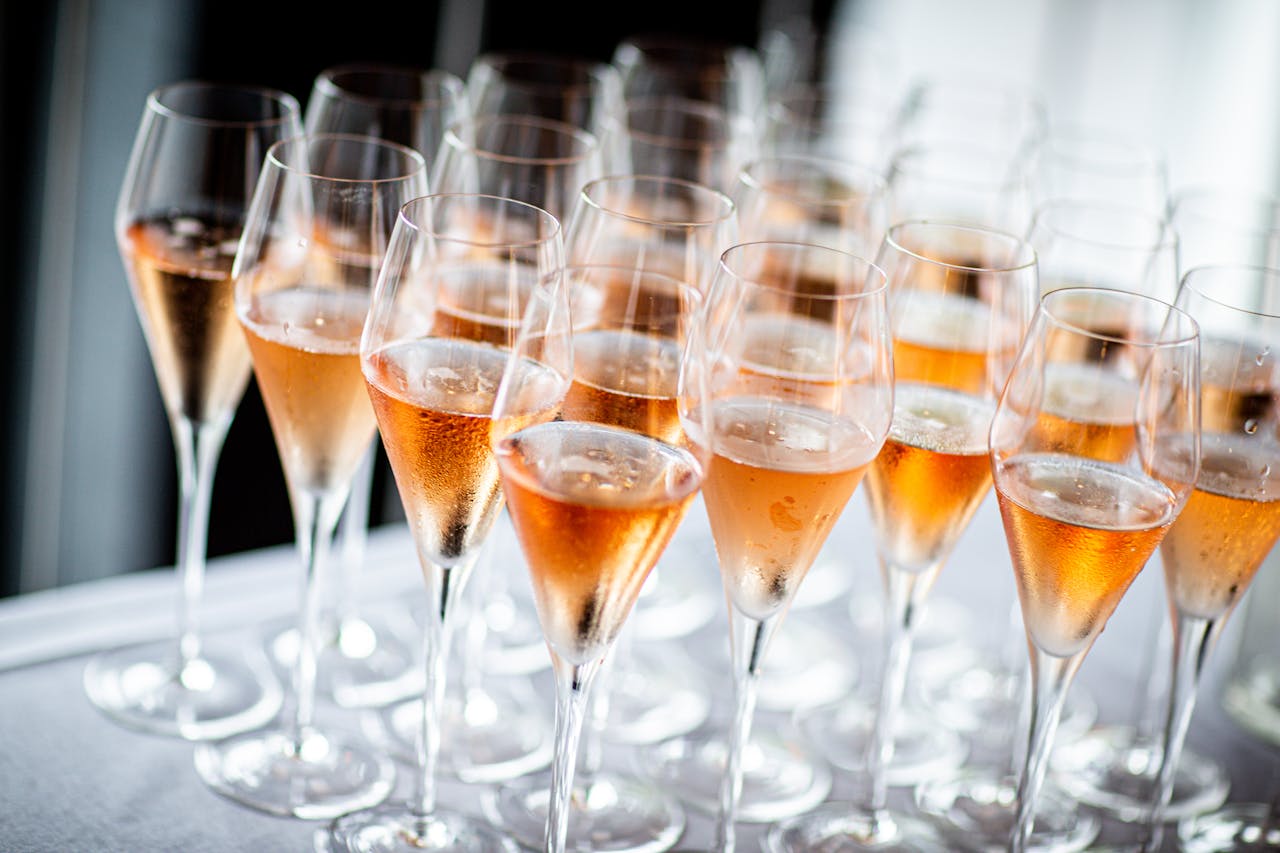
Champagne has become shorthand for celebration itself. The gentle pop of a cork, the rush of bubbles climbing the glass, and the soft clink of flutes are rituals that signal something meaningful is about to happen. Birthdays, weddings, championships, and especially New Year’s Eve feel incomplete without it. Yet behind Champagne’s festive reputation lies a story shaped not by instant success, but by centuries of trial, patience, and human ingenuity.
The story begins in the rolling hills of northeastern France, in a region known simply as Champagne. Long before bubbles were celebrated, this area produced still wines made primarily from Pinot Noir and Chardonnay grapes. In the 17th century, harsh winters often halted fermentation prematurely. When spring arrived and temperatures rose, fermentation would restart inside sealed bottles, producing carbon dioxide and, unintentionally, bubbles.
At the time, this secondary fermentation was considered a flaw. Bottles exploded in cellars, corks shot across rooms, and winemakers referred to sparkling wine as “the devil’s wine.” A Benedictine monk named Dom Pierre Pérignon, cellar master at the Abbey of Hautvillers, did not invent Champagne as legend claims, but he did refine critical techniques such as grape blending, vineyard management, and bottle selection that improved wine stability and quality.
By the early 18th century, winemakers began pursuing sparkle intentionally. Improvements in glassmaking created thicker bottles capable of withstanding pressure, while imported corks from Portugal provided reliable seals. These advances made it possible to trap carbon dioxide safely, turning a once-feared accident into a defining feature.
Women played a pivotal role in transforming Champagne into a global icon. Widows such as Barbe-Nicole Clicquot Ponsardin (Veuve Clicquot) and Louise Pommery took over Champagne houses and introduced innovations that shaped modern production. Madame Clicquot perfected riddling, a process that clarifies wine by gradually moving yeast sediment to the bottle’s neck for removal. Madame Pommery championed brut Champagne, favoring dryness over the sweeter styles popular at the time.
As Champagne’s reputation grew in the 19th century, it became associated with royalty, wealth, and refinement. Houses such as Moët & Chandon, Bollinger, and Taittinger exported bottles across Europe, reinforcing Champagne’s image as a drink of achievement and romance. Behind the scenes, vineyard workers tended vines through frost, rain, and chalky soils that impart the wine’s signature minerality and acidity.
To protect this identity, France later established strict legal definitions. Only sparkling wine produced within the Champagne region using the traditional method can legally bear the name. This protection preserves not just branding, but centuries of regional knowledge and labor.
National Champagne Day is observed on December 31, a fitting moment to honor a wine defined by patience and time. Each bottle represents years of effort: grapes harvested in early autumn, base wines blended for balance, a second fermentation in bottle, and extended aging on yeast lees that creates flavors of brioche, almond, citrus, and apple.
When a bottle is opened at midnight, the release of bubbles is more than spectacle — it is the culmination of a long process finally allowed to breathe. Champagne mirrors the turning of the year itself: endings, beginnings, and quiet anticipation wrapped in celebration.
Champagne endures not because it is extravagant, but because it tells a story of refinement through persistence. From accidental fermentation to deliberate mastery, it embodies how time, care, and collaboration transform uncertainty into joy. On National Champagne Day, whether you open an iconic bottle or a modest one shared among friends, you are participating in a ritual that honors craftsmanship, history, and the optimism of beginning again.
